Beauty Bag vs Makeup Bag: Understanding the Product Category Overlap
Executive Summary
A beauty bag and a makeup bag are, in commercial terms, the same product: a soft or semi-structured pouch sold to carry colour cosmetics and small personal-care items. The two names are near-synonyms and there is no construction test that separates one from the other. What does differ is the shopper each name attracts, the size band each name implies, and the interior treatment buyers specify under each label.
The practical difference is therefore naming rather than engineering. Makeup bag is the higher-volume search language in United States marketplaces, where the phrase make up bags for women draws roughly 80,000 monthly searches and custom makeup bag draws 5,400 to 6,600. Beauty bag reads slightly more premium and is common in gifting, subscription boxes and department-store copy. A retailer should pick the term by channel, keep it consistent across label and listing, and specify size, lining and hardware on the tech pack rather than relying on the name, because the name carries no specification authority at all.
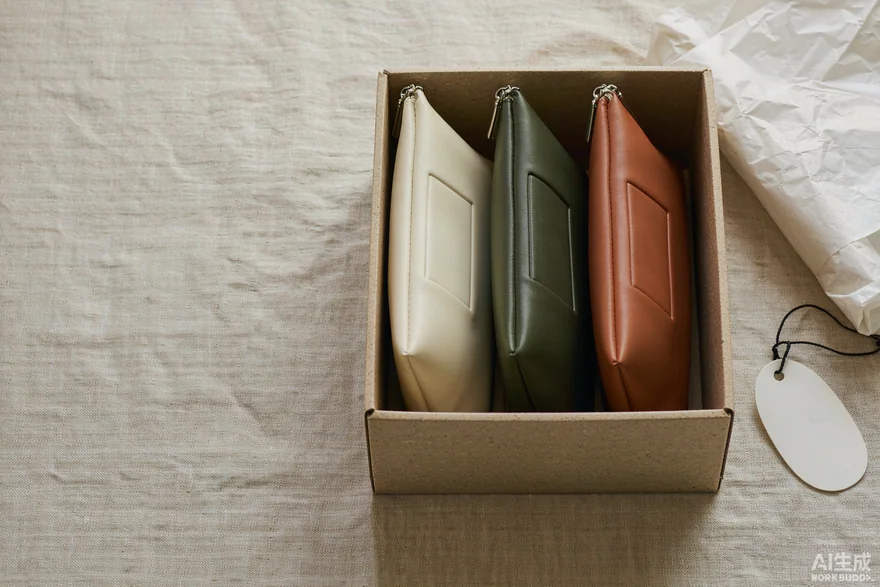
What the Two Names Actually Mean, and Where the Overlap Ends
Stated plainly: a beauty bag and a makeup bag are near-synonyms. Both describe a soft or semi-structured pouch, usually 18 to 26 cm wide, with a zip closure, a lining and one or two internal pockets. No construction feature reliably separates them, and a buyer who asks two suppliers to quote a beauty bag and a makeup bag of the same dimensions will receive two quotations for the same object. Treating the names as different products is the most common way a first-time buyer over-complicates a range plan.
The overlap ends in four places, and all four are commercial rather than structural. First, search language: shoppers in United States marketplaces type makeup bag far more often than beauty bag, while beauty bag performs better in gift and subscription contexts. Second, size band: beauty bag skews slightly larger, 22 to 26 cm, because it is expected to hold skincare as well as colour. Third, interior treatment: a bag sold as a beauty bag more often gets a wipe-clean lining and elastic loops. Fourth, price expectation: beauty bag tolerates a higher ticket.
| Question | Beauty bag | Makeup bag | Verdict for the buyer |
|---|---|---|---|
| Are they a different product? | No | No | One construction, two labels |
| Typical width band | 22-26 cm | 18-24 cm | Specify centimetres, never rely on the name |
| Usual interior | Wipe-clean lining, elastic loops | Single compartment plus slip pocket | Interior is specified, not inherited from the term |
| Dominant channel | Gifting, subscription, department store | Marketplace, drugstore, e-commerce | Pick the term per channel |
| Price tolerance | Higher; reads as premium | Lower; reads as everyday | Term affects achievable retail price |
| Common shell | 420D-600D nylon, quilted or printed | 300D-420D polyester or nylon | Overlap is substantial |
Because the names describe the same object, the risk for a buyer is not choosing the wrong product but fragmenting demand. A retailer who lists the same pouch twice, once as a beauty bag and once as a makeup bag, splits review history, splits ranking signals and confuses returning customers. The duplication is rarely deliberate; it happens when a sourcing team and a listing team work from different vocabularies. One naming convention, agreed before artwork, prevents it.
There is one further nuance worth recording on the brief. Beauty bag is also used as an umbrella for the broader category, covering vanity cases, hanging organisers and train cases, whereas makeup bag almost always means a pouch. If a catalogue contains structured formats, positioning beauty bag as the category name and makeup bag as the product name keeps the architecture clean and avoids a structured case appearing under a pouch heading.
The reverse trap also exists. A buyer who assumes the two names are exact equals may miss that a supplier has quietly quoted two different constructions under the two labels: a boxed bag under beauty bag and a flat pouch under makeup bag. The safeguard is to specify once and quote twice, sending an identical tech pack under both names and checking that the returned unit prices match within a few cents.
For the sourcing brief itself, the useful discipline is to ban the two names from the specification entirely. Dimensions, denier, lining route, zip gauge, hardware finish and carton count should be stated as numbers. The name belongs only on the label artwork and the listing copy, where it does commercial work; on the tech pack it does nothing except create room for interpretation.
- The two terms describe one construction; only the shopper and the channel differ
- Beauty bag skews 22-26 cm and premium; makeup bag skews 18-24 cm and everyday
- Never list one pouch under both names: it splits reviews and ranking signals
- Use beauty bag as the category word and makeup bag as the product word in a mixed catalogue
Size Bands, Linings and Interior Treatment
Since the names do not define the product, the specification has to. Three variables do the real work: the size band, the lining route and the interior architecture. Getting these three right on the tech pack matters more than any naming decision, because they drive unit cost, carton pack-out and the review score a product earns after three months on a marketplace.
| Attribute | Beauty bag convention | Makeup bag convention | Effect on unit cost |
|---|---|---|---|
| Width band | 22-26 cm | 18-24 cm | Each 2 cm of width adds roughly 4-7 per cent to fabric cost |
| Depth | Boxed gusset 8-12 cm | Flat or shallow gusset 4-8 cm | A boxed base adds one panel and 2-3 minutes |
| Lining | TPU-laminated or PEVA, 0.12-0.18 mm | Plain polyester taffeta 190T | Laminated lining adds $0.18-$0.45 per unit |
| Interior | 4-8 elastic loops, one zipped pocket | One slip pocket | Each loop adds under $0.05, but 3-5 minutes of labour |
| Shell | 420D-600D nylon, often printed or quilted | 300D-420D polyester | Nylon costs 15-25 per cent more than polyester at equal denier |
| Closure | Two-puller zip on a wide opening | Single-puller top zip | A second puller adds $0.06-$0.12 |
The lining decision deserves particular attention because it is the single most-returned specification in this category. A plain polyester lining stains permanently the first time a foundation bottle or a lip balm leaks, and the resulting one-star review mentions the word lining. A TPU-laminated or PEVA lining at 0.12 to 0.18 mm wipes clean, costs $0.18 to $0.45 more per unit, and removes a whole class of complaint. For anything sold above $12 retail it is difficult to justify the saving.
Interior architecture should follow the contents, not the name. A pouch intended for brushes needs elastic loops sized to the brush handle, typically 12 to 20 mm wide, and a flap or a lid panel to keep bristles off the zip tape. A pouch intended for palettes needs a flat, undivided base wide enough for a 15 cm palette. A pouch intended for skincare needs upright bottle sleeves. Designing the interior around a named contents list produces a better product than designing it around a category label.
There is also a dimensional rule that saves rework. Whatever the name, a pouch should be specified by external dimensions, gusset depth and usable internal width, because the effective interior is typically 10 to 15 mm narrower than the external measurement once seam allowances and lining are counted. A buyer who specifies 24 cm externally and expects to fit a 24 cm palette will be disappointed, and the disagreement usually surfaces only after bulk has been cut.
Finally, weight matters in the e-commerce channel. A 22 cm pouch in 420D nylon with a laminated lining and six loops weighs roughly 140 to 190 g empty. Moving to 600D with a quilted foam layer takes it to 230 to 290 g, which changes the shipping weight band on some marketplace fulfilment programmes. The specification sheet should state a target empty weight alongside the dimensions, with a tolerance of plus or minus 10 g, so a mid-production fabric substitution does not silently change the fulfilment cost.
Colour and print planning interacts with the same decision. Because both names typically sell across several seasonal prints rather than several shapes, the economical programme is one approved shape carrying four to six print colourways, each meeting the 500-piece minimum. That structure keeps sampling inside the 6 to 10 working day window per colourway and avoids re-entering a full sample cycle for what is effectively an artwork change.
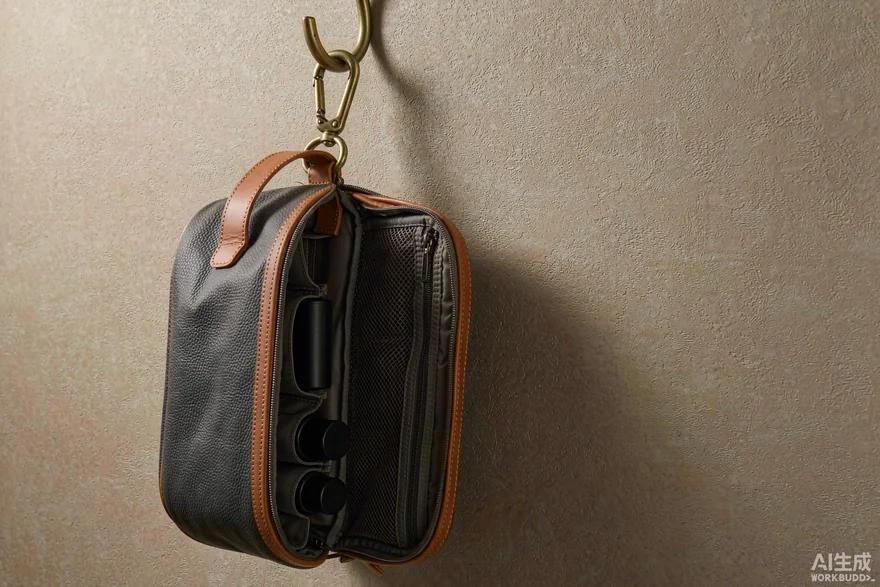
Search Language, Listing Strategy and Regional Usage
Because the two names are synonyms, the naming decision is really a search decision, and search behaviour differs by marketplace and by region. The published figures available for this category are uneven: make up bags for women draws roughly 80,000 monthly searches, custom makeup bag around 5,400 to 6,600 monthly, and travel bag for toiletries close to 110,000 monthly. No comparable published figure is normally quoted for beauty bag, which is itself evidence that it is the weaker search term in marketplaces.
| Region or marketplace | Term that ranks | Supporting term for bullets | Term to keep off the front panel |
|---|---|---|---|
| US marketplace | Makeup bag | Cosmetic bag, beauty bag | Vanity case, unless the product is rigid |
| UK and EU marketplace | Cosmetic bag | Makeup bag, wash bag for wet items | Train case on a soft pouch |
| Australia and New Zealand | Makeup bag | Cosmetic bag | Toiletry bag, which reads as travel-only |
| Gift and subscription channels | Beauty bag | Cosmetic bag gift | Makeup bag, which reads as everyday |
| Department-store own brand | Beauty bag | Cosmetic pouch | Makeup bag on a premium-priced item |
The practical rule is to separate the front-panel term from the supporting terms. The front-facing title should carry the high-volume term for the target marketplace; the bullets and the backend fields carry the synonyms. That approach captures both vocabularies without creating two listings for one product, and it keeps the review history consolidated. A buyer should resist the temptation to run two listings to test which name converts; the ranking penalty from split reviews outweighs the information gained.
Regional usage also affects image and copy decisions rather than product decisions. Shoppers searching makeup bag expect to see cosmetics in the product photography; shoppers searching beauty bag respond better to skincare bottles and a lifestyle setting. The same pouch can serve both with two photography sets and identical specifications, which is usually cheaper than developing two products. Where a brand sells in both the United Kingdom and the United States, one pouch with two listing variants is the standard answer.
One caution on translation. In several European markets the local term maps closer to beauty case or vanity case than to pouch, and a direct translation of makeup bag can read as juvenile. Buyers selling into Germany, France or the Netherlands should check the local category norm before finalising copy, because a mistranslated term can push a premium item into a teenage price expectation.
Seasonal behaviour differs by term as well. Gifting concentrates into the fourth quarter, so beauty bag demand peaks later and harder than makeup bag demand, which is flatter and driven by replacement rather than by occasion. A buyer holding one pouch for both channels should plan inventory against the gift peak and expect the everyday channel to absorb the remainder over the following two quarters.
Bundle logic is the last naming lever. A two-piece set sold as a beauty bag set commands a higher ticket than the same two pouches sold separately, because the word set reframes the purchase as a gift. Where a brand already holds two sizes meeting the same specification, boxing them as a pair is often the cheapest way to move the average order value without any change to the tech pack.
- Put the high-volume term in the title and the synonyms in the bullets
- Never run two listings for one pouch to test which name converts
- Photography should match the term: cosmetics for makeup bag, skincare for beauty bag
- Check the local category norm in EU markets before translating either term
Labelling, Briefing and the Programme Figures Behind Both Names
Once the term is chosen, it has to be locked into three documents: the tech pack, the label artwork and the carton marking. These are produced at different times by different people, and inconsistency between them is the most common cause of a reprint. A single naming block at the top of the brief, stating the label term, the listing term and the category term, resolves it.
| Labelling decision | Recommended choice | Consequence of getting it wrong | Check before artwork release |
|---|---|---|---|
| Sewn-in label wording | Match the construction, not the search term | Shopper disputes the listing as misleading | Compare label text against the tech pack dimensions |
| Hangtag front | Use the listing term for the target marketplace | Lower conversion on the target channel | Confirm the target marketplace before print |
| Category breadcrumb | Beauty bag at category level | Structured formats sit under a pouch heading | List every format in the catalogue before fixing |
| Carton marking | Use the internal style code, not a consumer term | Warehouse picks the wrong SKU | Cross-check style codes against the order sheet |
| Care label | Fibre content and country of origin only | Customs queries on a mixed shipment | Verify against the destination market rules |
The commercial figures behind either name are identical, because the product is identical. Minimum order quantity is 500 pieces per style and colourway, sampling runs 6 to 10 working days for a pouch of this type, and bulk production runs 35 to 50 days after sample approval. Inspection is at AQL 2.5 under ISO 2859-1, shipment is FOB Xiamen, and payment is T/T 30 deposit with 70 against bill of lading.
Print and branding method is the one area where the brief should go beyond the standard figures. A screen-printed logo on a 420D nylon pouch costs very little at 500 pieces and survives normal use; a heat-transfer print allows photographic artwork but can crack after repeated folding; woven labels cost more per unit and read as premium. Print durability is assessed under AATCC test methods, and colour fastness of a dyed shell under the ISO 105 series.
Compliance should also be settled before the first order rather than after it. A pouch sold into the United States falls under the Consumer Product Safety Improvement Act where it is marketed to children, and into the European Union under REACH. A recycled-content claim on the shell is only defensible with traceable documentation under the Global Recycled Standard.
Buyers frequently ask whether a single pouch can carry both names on the same hangtag. It can, and for a brand selling across two marketplaces it is often the correct answer: the front panel carries the primary term, the reverse or the bullet area carries the synonym. What should be avoided is two separate SKUs for one physical product, because that doubles the minimum order commitment against the 500-piece rule and splits every downstream signal.
Zipper terminology and gauge should be stated on the brief using the vocabulary in ASTM D2053. Naming the gauge and the tape type removes the most common ambiguity in pouch quotations, where a #3 and a #5 zip are frequently confused.
The B2B Customisation View
The commercial logic behind makeup bags and toiletry bags is simple to state and hard to execute: hold the unit cost, hold the colour, hold the delivery window.
Commercial parameters stay fixed across the range: MOQ 500 pieces per style and colourway, prototype turnaround 6–10 working days (extended to 12–15 for multi-panel or moulded builds), bulk lead time 35–50 days from approved sample, AQL 2.5 inspection to ISO 2859-1, FOB Xiamen, T/T 30 deposit and 70 against bill of lading.
For makeup bags and toiletry bags, that coordination matters most in the two weeks between packing and vessel loading, when documentation errors cost more than any material decision.
Which Brand Types Benefit Most
Which brand types benefit from the naming decision depends on where they sell rather than on what they buy. Start-up brands usually launch one pouch in two sizes and should put the marketplace term on the listing and the construction term on the label, because a launch budget rarely stretches to two SKUs and the 500-piece minimum applies per style and colourway. Established brands with an existing catalogue usually treat beauty bag as the category word and re-use one approved specification across several seasonal prints, which keeps sampling at 6 to 10 working days per colourway instead of per shape. Retailers running private label face a different problem: their own sourcing vocabulary and their listing team's vocabulary are frequently not the same, and the reconciliation has to happen before artwork rather than after launch.
- Retailers and private-label teams: fix one naming convention across sourcing and listing teams, or the same pouch will appear twice in the catalogue and split its review history into two weaker listings.
- E-commerce and marketplace sellers: lead with makeup bag in United States titles and cosmetic bag in United Kingdom titles; put the synonym in the bullets, never in a second listing.
- Gift and subscription-box buyers: beauty bag carries the premium reading and suits a 22-26 cm pouch with a wipe-clean lining and elastic loops at a higher retail ticket.
- Hospitality and amenity programmes: neither term is usually needed; a plain amenity pouch with room-category printing keeps unit cost inside the $0.45-$1.80 band.
- Programme coordinators running multi-market launches: QUANZHOU JUNYUAN BAGS has coordinated bag programmes since 2014, with team experience in bag development and export since 2004, which helps keep one specification consistent across several listing languages.
- Subscription-box and gift-set buyers: the premium reading of beauty bag supports a higher ticket, so a 22-26 cm pouch with a wipe-clean lining and elastic loops is the safer specification for that channel.
Frequently Asked Questions
If the two terms mean the same product, why do quotations come back at different prices?
They should not, unless the brief implied different specifications. A quotation gap usually means the size band, lining route or hardware was read differently from the name. Buyers should quote from a tech pack with dimensions in centimetres, shell denier and lining type stated, so both names return the same number and the comparison is genuine.
Should a beauty bag be larger than a makeup bag in the same range?
That is the convention rather than a rule. Beauty bag usually sits at 22 to 26 cm and makeup bag at 18 to 24 cm, which gives the range a visible step without a second tooling cost. A buyer should still state centimetres on the brief, because the name alone does not control the cutting die or the gusset depth.
Which term converts better on a United States marketplace listing?
Makeup bag is the higher-volume term in United States marketplaces, where the phrase make up bags for women draws roughly 80,000 monthly searches. Beauty bag performs better in gifting and subscription channels. The usual solution is makeup bag in the title and beauty bag in the bullets, on one consolidated listing, and the same photography set serving both.
Can one pouch be listed under both names without splitting reviews?
Yes, if it is one listing with both terms, not two listings. Put the primary term in the title and the synonym in the bullets and backend fields. Two separate listings for one physical pouch split review history and ranking signals, and double the exposure to the 500-piece minimum per colourway, which is the more expensive of the two mistakes.
Does the 500-piece minimum apply to each named variant separately?
The minimum applies per style and colourway, so two physical variants count as two separate commitments of 500 pieces each. A single pouch sold under two names is one style, provided the specifications are identical. Buyers should confirm with the sourcing partner whether a print change counts as a new colourway before committing to the order.
What lining should a pouch specified as a beauty bag use?
A TPU-laminated or PEVA lining at 0.12 to 0.18 mm, because a beauty bag is expected to carry skincare as well as colour cosmetics and will eventually meet a leaking bottle. The laminated route adds $0.18 to $0.45 per unit and removes the staining complaints that a plain taffeta lining reliably generates within weeks of first use.
How wide do elastic loops need to be for makeup brushes?
Loops sized 12 to 20 mm wide suit most brush handles, with the wider end for kabuki and powder brushes. The loops should be stitched to a reinforced panel rather than to the lining alone, and a flap or lid panel should sit between the bristles and the zip tape so the ferrules do not snag.
Is a wipe-clean lining worth the extra cost at a $9 retail price?
Usually yes. A stained lining is one of the most common causes of a one-star review in this category, and the review explicitly names the lining. At $0.18 to $0.45 extra per unit against a typical unit cost band that starts near $0.45, the upgrade is a small share of the retail price and a large share of the review score.
How is print durability checked on a pouch before bulk production?
Print durability is assessed under AATCC test methods, which cover crocking and laundering, and shell colour fastness under the ISO 105 series. A buyer should name the specific method on the brief and require a test report on the pre-production sample rather than accepting a visual check on a photographed sample, which shows colour but not adhesion.
Can a single hangtag carry both terms legally?
Yes. There is no restriction on printing two descriptive terms for one product. The caution is commercial rather than legal: the front panel should carry one clear primary term, with the synonym in a secondary position, otherwise the shopper reads the packaging as unfocused and conversion on the shelf drops measurably in side-by-side testing. One listing should therefore carry both terms.
How long does sampling take when only the print changes?
A print-only change on an approved shape normally stays inside the 6 to 10 working day sampling window, because no new cutting die or tooling is needed, and the artwork can be struck off on an approved base. A shape, gusset or hardware change pushes the programme into a fresh sample cycle and should be planned as a separate milestone.
How many pouches of this type fit in one export carton?
A 22 to 24 cm soft pouch typically packs 24 to 36 pieces per export carton, depending on gusset depth and whether each piece is polybagged. A boxed version with an 8 to 12 cm gusset drops to roughly 20 to 26. Carton count should be confirmed before freight is quoted, because it drives landed cost per unit more than the unit price does.
Is a recycled-content claim on the shell verifiable?
Only with documentation. A recycled claim should be backed by traceable certification under the Global Recycled Standard, and the transaction certificate should reference the specific fabric order. Without it, marketplaces and European retailers increasingly treat the claim as unsupported, and the listing may have to be amended after launch, which is far more expensive than certifying the fabric at the point of order.
What inspection level applies to a first 500-piece pouch run?
AQL 2.5 under ISO 2859-1 is the normal level, which fixes the sample size and the acceptable number of minor and major defects. At 500 pieces the sample is proportionally larger than at 5,000, so a first run should be inspected carefully, because defects found after shipment cost more to resolve than defects found before it.
What are the payment and shipment terms for a mixed beauty and makeup bag order?
Shipment is FOB Xiamen and payment is T/T 30 deposit with 70 against bill of lading. A mixed order of two sizes in one colourway can move as one shipment, but each style is inspected as its own lot, so the inspection plan should list every SKU separately even on a single bill of lading.
People Also Ask
Is a beauty bag bigger than a makeup bag?
By convention, yes, but only slightly. Beauty bag usually implies 22 to 26 cm wide with a boxed gusset, while makeup bag implies 18 to 24 cm and often a flatter profile. Because the names are near-synonyms, a buyer should specify external dimensions and gusset depth in centimetres rather than relying on the term to set the size of the cutting die.
Can I use a beauty bag as a pencil case or tech pouch?
Yes. The construction is identical, so a 22 cm pouch with a wipe-clean lining works equally well for pencils, cables or chargers. The only consideration is the interior: elastic loops sized for brushes will not hold pens securely, so a flat undivided interior suits a repurposed pouch better, and a darker lining hides ink marks far more effectively in daily stationery use.
Which material lasts longest in a makeup bag?
Nylon at 420D to 600D outlasts polyester of the same denier in abrasion resistance, and a laminated lining outlasts plain taffeta against leaks. A quilted shell with a foam layer adds structure and protects the contents but weighs noticeably more and takes longer to dry. For a bag that travels daily, 600D nylon with a TPU-laminated lining is the usual answer.
Should I list my pouch as a beauty bag or a cosmetic bag?
Cosmetic bag is the safest default for United Kingdom and European listings and is widely understood in the United States as well. Beauty bag reads more premium and suits gift positioning. Makeup bag is the highest-volume United States search term. Put the primary term in the title and the other two terms in the bullets, on one listing only. rather than duplicating the SKU
Request a Sample or a Written Quotation
Send the silhouette, dimensions, material preference and logo artwork, and the programme team will return a written quotation with MOQ, sampling window, bulk lead time and inspection standard.
Email: [email protected] · WhatsApp: +86 177 5002 0688