Best Leather Makeup Bags 2026: Luxury Options for Retailers
Executive Summary
The best leather makeup bags for retailers in 2026 are defined by grade, finish and construction rather than by the word leather alone, because that word covers full grain hide, corrected grain, split with a coating, bonded fibre and wholly synthetic polyurethane. The direct answer is that a retail-ready luxury programme is specified in five places: the hide grade and thickness in millimetres, the finish and its colour fastness behaviour under ISO 105, the edge treatment, the hardware plating and weight, and the lining — and the visible difference between a £40 bag and a £120 bag is almost entirely in those five.
Retailers should also treat documentation as part of the product. Leather carries specific chemical obligations in the EU, and a dark, unsealed hide that rubs off onto a light lining or onto clothing is the defect most likely to generate returns in this category. Programmes run at 500 pieces per style and colourway, with 12-15 working day sampling for constructions using cast hardware, 35-50 day bulk production after approval, inspection to AQL 2.5 under ISO 2859-1, FOB Xiamen and T/T 30 deposit, 70 against bill of lading.
What leather means in a cosmetic bag specification
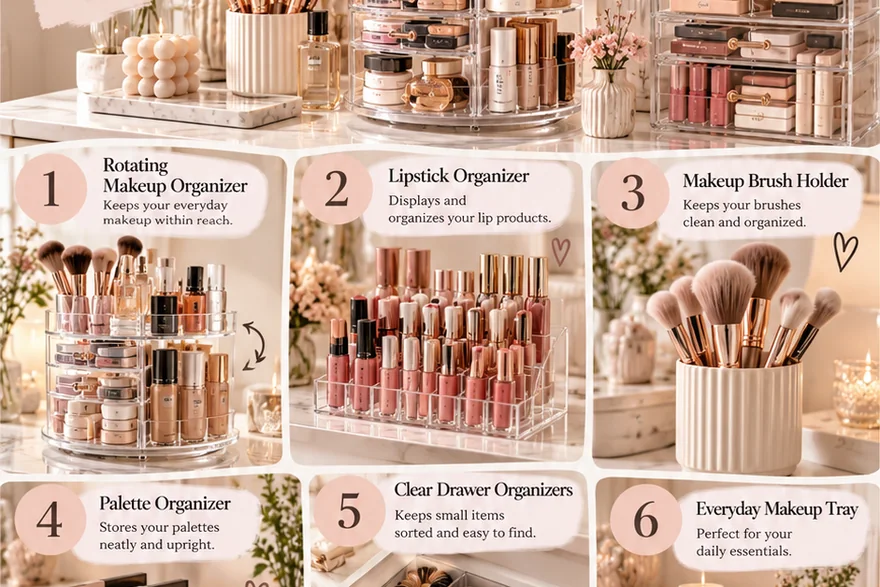
Leather is a material family, not a single material. A full grain bovine hide retains its outermost surface with only the hair removed, so it shows natural grain and develops a patina. Top grain leather has the surface lightly corrected to remove faults. Corrected grain leather is sanded and finished with pigment for uniformity. A split is the lower layer of the hide, usually coated to give it a face. Bonded leather is reconstituted fibre in a binder. Polyurethane and PVC coated fabrics are not leather at all, and calling them vegan leather is a positioning decision that should be stated plainly on the packaging.
| Material | Typical thickness | Hand and appearance | Cost index | Retail positioning |
|---|---|---|---|---|
| Full grain bovine | 1.0-1.4 mm | Natural grain, develops patina, hide-to-hide variation | High | Premium, department store, gift |
| Top grain bovine | 0.9-1.2 mm | Lightly corrected, more uniform, still leather-hand | Medium to high | Mid-premium, own-brand ranges |
| Corrected grain, pigmented | 0.8-1.2 mm | Uniform surface, heavier finish, less breathable | Medium | High-street multiples |
| Split with PU coating | 0.7-1.0 mm | Suede-backed with a coated face | Low to medium | Entry leather price shelf |
| Polyurethane coated fabric | 0.6-0.9 mm | Consistent, embossable, no hide variation | Low | Vegan positioning, promotional |
| Microfibre polyurethane | 0.6-0.9 mm | Soft hand, low weight, close to leather | Medium | Premium vegan |
| PVC coated fabric | 0.5-0.8 mm | Firmer hand, high gloss options | Low | Entry price, structured shapes |
| Bonded leather | 0.8-1.2 mm | Reconstituted fibre with binder, flat hand | Low | Avoid where durability is claimed |
Thickness is the first number to pin down, because it decides whether a bag holds its shape without interlining. A soft 0.7 mm split slouches; a 1.2 mm full grain pouch stands up on a shelf with minimal support. The coated options are characterised mechanically under ASTM D751, the standard test methods for coated fabrics, which is the right reference when a specification needs to describe coating adhesion, tear behaviour or flexibility on a PU or PVC face.
- State the grade in the specification: full grain, top grain, corrected, split or synthetic.
- Thickness in millimetres decides whether the bag needs interlining to stand up.
- Hide variation is a feature of full grain and a defect in corrected grain.
- Vegan positioning should be stated on the packaging, not implied by the word leather.
- Bonded leather is the option to avoid wherever a durability claim is made.
Tannage, finish and the ISO 105 questions retailers ask
A retailer's technical team will ask about colour behaviour before it asks about appearance, because colour transfer is the complaint that reaches the customer service desk. The reference framework is the ISO 105 series on colour fastness, published by the ISO technical committee for textile colour fastness, which sets out separate parts for rubbing, light, water, perspiration and laundering. Results are assessed against a grey scale running from 1 to 5, and the useful specification move is to name the part and the buyer's expectation rather than to ask whether the leather is colour fast.
| Risk | Relevant ISO 105 part | What it measures | Specification decision |
|---|---|---|---|
| Dye rubbing onto a light lining or clothing | ISO 105-X12 | Colour transfer under dry and wet rubbing | Require a sealing finish on dark shades; test the lining as a separate material |
| Fading in a shop window or a lit shelf | ISO 105-B02 | Colour change under artificial light | Set the expectation by shade; bright and pale shades behave differently |
| Water spotting in a bathroom or from a spill | ISO 105-E01 | Colour change and transfer in water | Specify a protective finish on pale and suede-like leathers |
| Contact with hand cream and perspiration | ISO 105-E04 | Colour change under acid and alkaline perspiration | Relevant wherever the bag is handled daily; include the lining contact |
| Care instructions on the sewn-in label | ISO 105-C06 | Colour change in a domestic laundering cycle | Only if the label permits washing; otherwise the label should say wipe-clean |
| Coating loss on a PU-faced split | Coating adhesion and flex checks under ASTM D751 | Coating behaviour after rubbing and folding | Name the method; do not rely on an adjective |
Tannage sits underneath all of this. Chrome tanning is quick, produces a soft, supple hide with good dye uptake and dominates the volume market; vegetable tanning is slower, produces a firmer hide that patinas and is used where a natural or artisan story is sold; a combination retannage sits between the two. The choice affects the hand, the weight, the price and the colour range available, and it should be stated on the specification sheet because a buyer who asks only for a colour will receive whatever tannage is cheapest that week.
Edge treatment is the detail that separates a premium bag from a mid-market one at arm's length. A raw cut edge looks unfinished and frays. A burnished edge is sanded, dampened and rubbed smooth, and suits a veg-tanned or firm hide. Edge paint is applied in several coats with drying between each, and gives a sealed, uniform line that suits a corrected grain leather or a coated split. A turned edge — the leather folded over and stitched — is the most labour-intensive and the most durable, and it is the option worth specifying on a bag retailing above the mid-market shelf.
Stitching and lining complete the specification. A stitch density of 7 to 9 stitches per inch is typical in this category, with a bonded nylon or polyester thread in the #69 to #92 range, and a backstitch at every stress point such as a puller tab or a D-ring. Skiving — thinning the leather at a fold — reduces bulk at the seams and is what allows a tight, clean edge line. Linings run from a lightweight polyester twill around 80 g/m² through cotton canvas to a microfibre suedette, and the lining is visible in almost every product photograph, so it carries more perceived value than its cost suggests.
Hardware, structure and the construction details that read as luxury
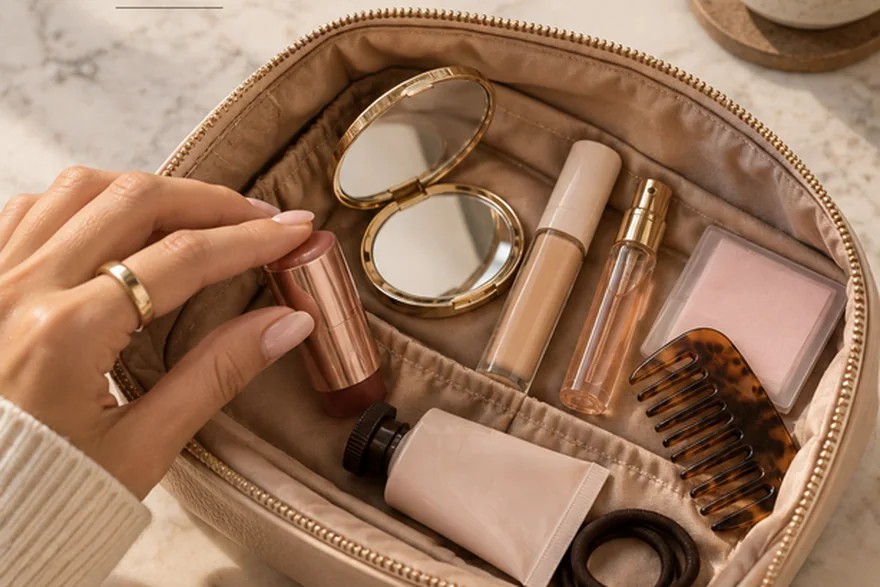
Shoppers judge a leather bag by weight, by the sound of the closure and by the alignment of the stitch line, and all three are hardware and construction outcomes. A light bag with a thin plating reads as cheap regardless of the hide. The specification therefore needs to cover the closure, the plating, the base protection and the internal structure, each with a named option rather than a descriptive adjective.
| Element | Specification options | Failure mode | Buyer note |
|---|---|---|---|
| Main closure | Metal #5 zipper; polished metal teeth; #5 coil with a leather puller; magnetic snap; turn-lock | Plating wears at the slider; magnets weaken; turn-locks loosen | A metal #5 with a leather puller tab suits most premium briefs |
| Plating | Nickel, gunmetal, light gold, brass, brushed antique | Plating rubs off at contact points within months | Specify the plating and ask for a rub check on the sample |
| Base protection | Four or five metal studs; a reinforced board; a moulded tray | An unprotected base scuffs and loses shape | Studs are the cheapest visible upgrade on a structured bag |
| Structure | Unstructured; interlined; framed with a metal or moulded frame | Internal foam creases permanently if too thick | Interlining of 0.8-1.5 mm foam or EVA sheet suits a standing pouch |
| Lining attachment | Fully lined and turned; glued in; loose drop-in | Glue fails in a warm bathroom and the lining sags | A turned lining is worth the labour above the mid-market shelf |
| Logo application | Blind deboss; hot foil stamp; metal plate; screen print | Foil lifts on a soft hide; a plate adds weight and catches | A small blind deboss reads premium at the lowest cost |
| Puller and tabs | Leather tab with a rivet; cast metal puller; branded slider | Rivets pull through a thin tab without a washer | A washer behind the rivet prevents the usual failure |
Base protection deserves more attention than it gets. A leather makeup bag lives on a bathroom counter, a dressing table and a hotel shelf, and the base is where it is abraded and where any moisture sits. Four metal studs, a reinforced base board and a slight recess so the studs rather than the leather take the load will keep a bag looking new for far longer than a heavier hide alone. The same logic applies to the corners on a structured vanity case, where a covered corner or a turned seam outlasts a butted joint.
Interior layout should be specified around the actual contents. A makeup bag carries items of very different sizes: a compact, a mascara tube roughly 13 cm long, a lipstick, palettes up to 15 x 10 cm, and brushes. Elastic loops at 12 mm or 20 mm hold brushes and tubes upright; a slip pocket holds a palette; a zip pocket holds small items that would otherwise sit loose. A single open compartment looks generous in a photograph and performs poorly in use, which is why the better retail programmes specify at least one loop bank and one zip pocket.
Odour and hand feel are the two qualities a photograph cannot convey and a customer notices immediately. Some corrected grain finishes carry a chemical note for weeks after production, and some bonded materials smell strongly in a warm room. Specifying a low-odour finish and adding a simple check at sample approval — sealed bag, 24 hours at room temperature, then open and compare against a retained reference — costs nothing and prevents the review that says the bag smells cheap.
Cost architecture, compliance and retail readiness
Leather programmes are costed differently from textile ones, because the hide is priced by area and the usable yield from a hide varies with the grade. A specification that calls for large, unmarked panels costs more per piece than one that allows panels with natural variation, even when the same grade is used. Understanding which line items actually move the unit cost is what lets a retailer hold a price shelf without quietly downgrading the hide.
| Cost driver | Effect on unit cost | Trade-off |
|---|---|---|
| Hide grade and cut selection | The largest single material line | A higher grade reduces usable yield and raises cost per piece |
| Panel count and pattern complexity | More panels mean more cutting waste and labour | A gusseted shape costs more than a flat pouch of the same volume |
| Edge treatment | Edge paint needs several coats and drying time | Turned edges look best and cost the most; raw cuts cost least and fail early |
| Hardware specification | Cast metal and custom plating carry tooling and minimums | Stock hardware in a custom plating colour is cheaper than a new casting |
| Lining material | Suedette and cotton canvas cost more than polyester twill | The lining is visible in photography and drives perceived value |
| Logo application | A deboss needs a die; foil needs a die and a foil colour | A small blind deboss is the cheapest premium-looking option |
| Retail packaging | Dust bag, rigid box, tissue, barcode label | Often the difference between a gift-ready item and a shelf item |
Compliance is where leather programmes most often stall. REACH restricts chromium VI in leather articles that come into contact with the skin, and a tanned hide can generate chromium VI under heat and humidity if the tannage is not managed, so EU-bound programmes need a documented test result on the specific lot rather than a general assurance. The regulation framework is set out by the European Chemicals Agency, and a chromium VI declaration should be requested at the same time as the sample.
Two further documents round out a retail-ready file. OEKO-TEX Standard 100 gives a retailer-facing assurance on harmful substances in the finished article, covering linings, threads, prints and hardware coatings as well as the hide; the certificate number should be verified on the issuing body's own register. Where the bag is sold in the United States and marketed to children, CPSIA lead and phthalate limits apply, and the age grading should be stated on the enquiry so the correct testing is quoted.
The commercial frame around all of this is fixed. Programmes run at 500 pieces per style and colourway, which matters more in leather than in textiles because each colourway is a dye lot and hide-to-hide shade variation has to be managed within it. Sampling takes 12-15 working days for a construction using cast hardware or a turned edge, against 6-10 working days for a simple panel-and-zip pouch. Bulk production runs 35-50 days after sample approval; inspection is to AQL 2.5 under ISO 2859-1; shipment is FOB Xiamen with T/T 30 deposit and 70 against bill of lading.
Leather is a natural material and some variation is expected, so the inspection plan has to distinguish acceptable hide character from actual defects. Scars and vein marks in a stated position are character; a scratch through the finish, a missed edge-paint pass, an unaligned stitch line and a loose rivet are defects, and they should be classified as major at AQL 2.5 before the inspection is booked.
The B2B Customisation View
Teams developing cosmetic pouches, vanity cases and beauty organisers benefit from deciding the closure, the lining and the logo application before the pattern is drafted, because each choice constrains the next.
Standard terms: 500 pieces minimum per style and colourway, 6–10 working days for sampling (12–15 for complex builds), 35–50 days bulk production, AQL 2.5 inspection under ISO 2859-1, FOB Xiamen, T/T 30 deposit / 70 balance.
As a sourcing and programme-management company, QUANZHOU JUNYUAN BAGS holds the specification, the inspection record and the shipment schedule together, which is exactly the coordination work a single-factory relationship rarely covers.
Which Brand Types Benefit Most
Leather programmes suit different buyers for different reasons, and the grade choice follows the channel. Start-up brands rarely begin in full grain; a top grain or a coated split at 500 pieces per style and colourway lets a first collection reach the shelf with a leather story at a workable cost, and the move to full grain is easier once the pattern is proven. Established brands with an existing accessories line usually specify a full grain or top grain hide matched to a handbag or small-leather-goods range, because the shared hardware plating and stitch density are what make the pieces read as one family. Retailers and department store buyers care most about consistency across a dye lot and about the documentation pack, which pushes them towards corrected grain or top grain with a uniform finish and a complete REACH and OEKO-TEX file. E-commerce sellers competing on perceived value should spend on the lining, on base studs and on the puller, because those are the details visible in a review photograph, and should avoid bonded leather entirely. Gift and corporate buyers gravitate to the mid-grade hides with a blind deboss and a dust bag, where the presentation carries the perceived value, the bag itself is never the headline item, and a mid-grade hide keeps the unit cost inside a gift budget.
- Start-up brands: top grain or coated split first, then full grain once the pattern is proven.
- Established brands: a hide matched to an existing accessories range, sharing hardware plating and stitch density.
- Retailers: uniform corrected or top grain with a complete REACH chromium VI and OEKO-TEX documentation file.
- E-commerce sellers: budget towards the lining, base studs and the puller, and avoid bonded leather entirely.
- Gift and corporate buyers: a mid-grade hide with a blind deboss and a dust bag, where presentation carries the perceived value.
Frequently Asked Questions
What minimum applies to a leather makeup bag with a custom debossed logo?
The minimum is 500 pieces per style and colourway, and a deboss does not change it, though it does add a die and one setup step. Because leather colourways are dye lots, running two colourways means two lots of 500 and two shade approvals. Buyers should decide the colourway count before sampling, because adding a second colour after approval restarts the shade-matching step.
How long does sampling take for a leather vanity case with cast metal hardware?
A leather vanity case with cast hardware or a turned edge falls into the complex bracket at 12-15 working days, against 6-10 working days for a simple panel-and-zip pouch. Casting a puller or a turn-lock is the long pole, because the tooling precedes the assembly sample. Bulk production then runs 35-50 days after sample approval, so a seasonal launch should be planned from the longer window.
Which leather thickness suits a structured makeup bag?
A bag that has to stand on a shelf without slumping wants 1.0-1.4 mm in a full grain or top grain hide, optionally with a 0.8-1.5 mm interlining. Below about 0.9 mm the shell needs substantial support to hold a shape, and below 0.7 mm a coated split will slouch. Thicker is not automatically better: above 1.4 mm the bag becomes heavy and the folds bulk at the seams unless the leather is skived.
How is chromium VI in leather documented for the EU market?
REACH restricts chromium VI in leather articles that contact the skin, and the appropriate document is a test report on the specific production lot rather than a general assurance from the tannery. Buyers should request the chromium VI declaration at the same time as the sample, because a failed result is only useful before the hide is cut. The report should name the lot and the article type.
What colour fastness questions should a retailer ask about a dark leather makeup bag?
The first is rub-off: ISO 105-X12 measures colour transfer under dry and wet rubbing, and a dark, unsealed hide is the usual offender. The second is light behaviour under ISO 105-B02 for shelf and window display. The third is water spotting under ISO 105-E01, because these bags live in bathrooms. Naming the part and the expectation in the specification is more useful than asking for colour fast leather.
Should the lining of a leather makeup bag be suedette or polyester twill?
Suedette, a microfibre with a soft nap, gives the premium hand and hides scuffing, and suits bags above the mid-market shelf. A polyester twill around 80 g/m² costs less, resists staining better and suits an entry leather price point. The lining is visible in nearly every product photograph, so the choice carries more perceived value than the cost difference suggests, and it should be fixed at sampling.
What stitch density suits a leather makeup bag?
Seven to nine stitches per inch is typical, with a bonded nylon or polyester thread in the #69 to #92 range and a backstitch at every stress point such as a puller tab or a D-ring. Denser stitching looks fine but perforates the leather and weakens the seam line. The specification should also state the seam allowance and whether the edges are skived, because those decide how flat the seams lie.
Which edge finish lasts longest on a leather cosmetic bag?
A turned edge — the leather folded over and stitched — is the most durable and the most expensive, and it suits bags above the mid-market shelf. Edge paint applied in several coats with drying between each gives a sealed uniform line and suits corrected grain and coated splits, but it can crack at a fold if applied too thickly. A raw cut edge is the cheapest and fails first.
How is a vegan leather makeup bag specified differently from a PU bag?
Technically they are the same family: a polyurethane or microfibre polyurethane coating on a textile base, specified by thickness, base fabric and coating behaviour under ASTM D751. The difference is commercial — vegan positioning should be stated on the packaging and the listing rather than implied, and buyers should avoid wording that suggests a leather content. Microfibre PU gives a softer hand and a more premium result than a standard PU coating.
What causes lining delamination in leather makeup bags?
Delamination usually traces to adhesive choice and to heat: a glue that fails in a warm bathroom lets a glued-in lining sag away from the shell. A turned and stitched lining does not depend on adhesive at all, which is why it is specified on better bags. Buyers should state the attachment method in the specification and check it after a warm-storage test rather than only at room temperature.
How should a leather makeup bag be graded for defects at inspection?
The plan has to separate hide character from defects. Scars, vein marks and natural grain variation within a stated position are character; a scratch through the finish, a missed edge-paint pass, an unaligned stitch line, a loose rivet and a plating fault are defects and should be classified as major at AQL 2.5 under ISO 2859-1. Buyers should send that classification with the inspection booking, not after the report.
What hardware plating options suit a premium leather makeup bag?
Nickel, gunmetal, light gold, brass and brushed antique are the common plating colours, and the specification should name one plus a salt-spray or rub expectation, because plating wear at the slider and at the puller contact point is the usual complaint. Stock hardware in a custom plating colour costs less than a new casting and is the right choice below a certain volume; a custom casting suits an established range.
Does a leather makeup bag need OEKO-TEX certification?
It is not a legal requirement, but many retailers ask for it because Standard 100 covers the finished article — hide, lining, thread, print and hardware coatings — rather than the fabric alone. Where it is requested, the certificate number should be verified on the issuing body's own register, and the product scope should name leather articles. It sits alongside the REACH chromium VI report rather than replacing it.
How does hide variation affect a 500-piece leather programme?
Every hide differs, so a 500-piece run has to manage shade and grain within a dye lot. The specification should state which variation is acceptable and where — for example, natural grain on the sides but no scars on the front panel — because that statement is what an inspector grades against. Without it, a buyer and a production team will disagree about whether a given panel is character or a defect.
People Also Ask
Is genuine leather the same as full grain leather?
No. Genuine leather is a broad trade term meaning the product contains leather, and it can describe a corrected grain, a split or a coated construction. Full grain is a specific grade: the outermost surface of the hide is intact with only the hair removed. A buyer should specify the grade in millimetres and by name rather than accept the umbrella term on a quotation.
How do you clean a leather makeup bag?
Most leather cosmetic bags are specified as wipe-clean rather than washable, and the sewn-in label should say so. A soft dry cloth handles dust, a slightly damp cloth handles marks, and a conditioner suited to the finish restores suppleness. Suede and napped finishes need a brush rather than water. Care instructions should match the actual construction, because leather with an interlining or a glued lining does not survive immersion.
Do leather makeup bags stain from makeup?
They can, and the risk is higher on pale and unfinished hides and on suede-like splits. A protective finish, a darker lining and a wipe-clean care label reduce it. From a sourcing side, ISO 105-E01 for water and ISO 105-E04 for perspiration and hand-cream contact are the parts to cite in the specification, because makeup spills behave like oils rather than like water.
Is PU leather better than real leather for a makeup bag?
It depends on the brief. Polyurethane coated fabric is consistent, embossable, lighter and cheaper, and it handles a spill better than an unfinished hide, which suits an entry price shelf and a vegan position. Leather wins on patina, hand and longevity. The honest comparison is by specification — thickness, coating behaviour under ASTM D751, edge treatment and hardware — not by the label.
Request a Sample or a Written Quotation
Send the silhouette, dimensions, material preference and logo artwork, and the programme team will return a written quotation with MOQ, sampling window, bulk lead time and inspection standard.
Email: [email protected] · WhatsApp: +86 177 5002 0688