Pantone Color Matching for Custom Makeup Bags
Executive Summary
Pantone colour matching for a custom makeup bag means translating one brand reference into seven different substrates — shell fabric, coating, lining, zipper tape, webbing, thread and hardware — each with its own recipe and its own achievable tolerance. It is not a single match. A realistic target is Delta E of 1.0-2.5 against the reference on dyed shell fabric, 1.5-3.0 on a PU coating, 2.0-4.0 on webbing and thread, and 3.0-5.0 on metal hardware, where gloss makes instrument readings misleading.
The workflow is a dip, not a decision. A lab dip on the production base cloth takes 7-12 working days per round, and most shades settle on the second round after 5-8 more. Custom dye lots carry a fabric minimum, often 300-800 m, which at the 500-piece-per-style-and-colourway minimum adds roughly 0.05-0.25 USD per bag and falls away above about 5,000 pieces. Colour fastness is assessed separately under the ISO 105 series, and the whole colour package then runs inside the standard calendar of 6-10 working days sampling and 35-50 days bulk.
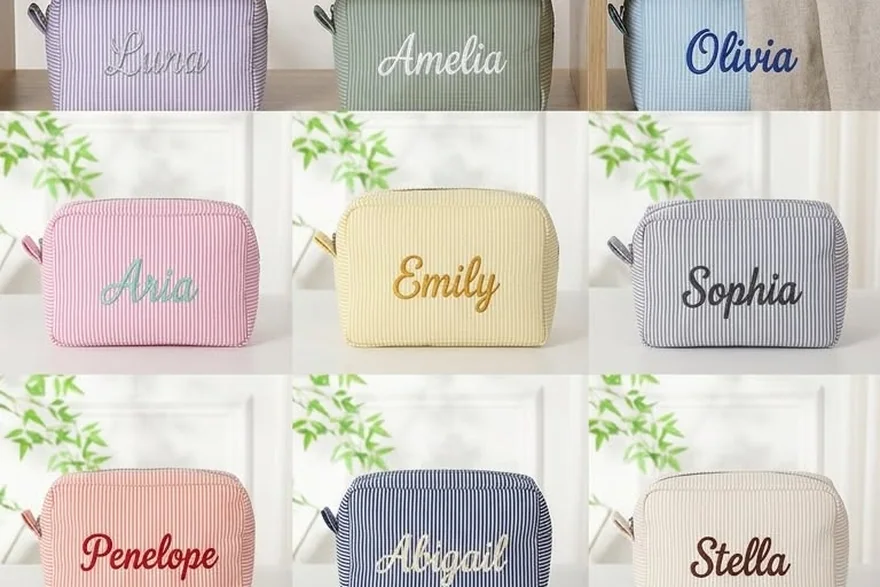
What Pantone matching means when the substrate is fabric
A Pantone reference is a standard for ink on paper. It tells a printer exactly which pigment mix produces a given shade on a given stock under defined conditions, and it works because both the ink and the stock are controlled. A cosmetic bag is not paper. Its shell is a dyed or coated textile, its lining is a different textile, its zipper tape is a woven narrow fabric, its hardware is metal or plated plastic, and each of those materials reaches colour by a different industrial process with its own limits.
Three Pantone systems therefore appear in one bag programme. Pantone Fashion, Home and Interiors, with TCX references on cotton, is the standard for textiles and is the right reference for shell fabric, lining and webbing. The Pantone Matching System, with C for coated and U for uncoated, is the right reference for print artwork, hangtags and packaging. Pantone Plastics, with PQ or Q references, is the right reference for moulded parts, silicone patches and coated hardware.
Matching is measured, not judged. A spectrophotometer compares the sample against the approved standard and returns a Delta E value, which is the size of the colour difference in perceptual units. For dyed textiles, a Delta E of 1.0 or below is close to imperceptible to most observers; 1.0-2.0 is a good commercial match; 2.0-3.0 is visible on close comparison but usually acceptable; and above 3.0 is visible across a room. Buyers should decide their tolerance in writing before the first dip rather than after it.
Why the effort is worth it: a makeup bag is a colour-led purchase. Marketplace and search data show buyers shopping by colour language as much as by function, with terms such as make up bags for women drawing roughly 80,000 monthly searches and travel bag for toiletries about 110,000. A brand whose rose-gold shade drifts between production runs is not selling the product it marketed, and colour inconsistency is among the most common causes of a rejected pre-production sample.
Matching by material family: seven recipes for one brand colour
The practical reality of a makeup bag programme is that one brand colour becomes several recipes. The shell is dyed or pigment-coated, the lining is dyed separately on a lighter fabric, the binding and webbing are either matched from a shade card or custom-dyed, the thread is chosen from a stock range, and the zipper puller is either plated or moulded. Each has a different achievable tolerance and a different lead-time consequence, and the goal is a coordinated appearance rather than seven identical readings.
| Component | Matching method | Realistic tolerance | Lead-time effect | Watch-out |
|---|---|---|---|---|
| Shell fabric, polyester or nylon | Lab dip on the production base cloth; dye recipe scaled to the lot | Delta E 1.0-2.5 against TCX | 7-12 working days per dip round | The same recipe reads differently at 300D, 600D and 900D |
| PU or TPU coating | Pigment dispersion mixed into the coating batch | Delta E 1.5-3.0 | 10-15 working days for a custom batch | Batch-to-batch drift; book the entire run at once |
| Lining, 210T taffeta | Stock shade card first, custom dye second | Delta E 1.5-3.0 | 0 days stock, 8-14 days custom | A lighter fabric reads lighter at the same recipe |
| Zipper tape and teeth | Stock colour card first; custom dyed tape second | Delta E 2.0-3.5 | 0 days stock, 15-25 days custom | Tape shade and slider finish rarely match exactly |
| Webbing and binding | Nearest stock shade; custom dye above about 2,000 m | Delta E 2.0-4.0 | 0 days stock, 10-15 days custom | Narrow woven tape reads darker than the shell at the same recipe |
| Thread | Stock shade; custom dye rarely economic | Delta E 2.0-4.0 | 0-15 days | A single stitch line reads lighter than the bulk shade |
| Metal or plated hardware | Anodising or plating to a plastics chip | Delta E 3.0-5.0 | 12-20 working days | Gloss and metallic effect distort instrument readings |
Fastness is a separate question from match, and it is where makeup bags have a specific problem. A cosmetic bag meets foundation, lipstick, mascara and nail polish, so the relevant tests are colour fastness to rubbing, to washing, to perspiration and to light. The ISO 105 series on colour fastness sets out the methods, and many buyers additionally reference specific AATCC test methods in the technical pack. A shade that matches perfectly but crocks at grade 3 is a failed shade.
Darker and mid-tone linings are a functional choice as well as a design one. A pale 210T lining shows every lipstick mark, while a mid-grey or chocolate lining at the same price hides staining between cleanings. Buyers launching a light-coloured bag should ask for wet and dry crocking grades on the lining specifically, and should consider a wipe-clean coated lining rather than a taffeta, because cleanability is part of how the product is judged after purchase.
The commercial rule behind the table is that stock colours are free in both money and time, and custom colours are not. Every custom match adds a dip round, a dye-lot minimum and a surcharge. Buyers should therefore rank components by visibility: the shell and the logo deserve a custom match, while the thread, the binding and the internal elastic can usually be taken from the nearest stock shade without a customer ever noticing.
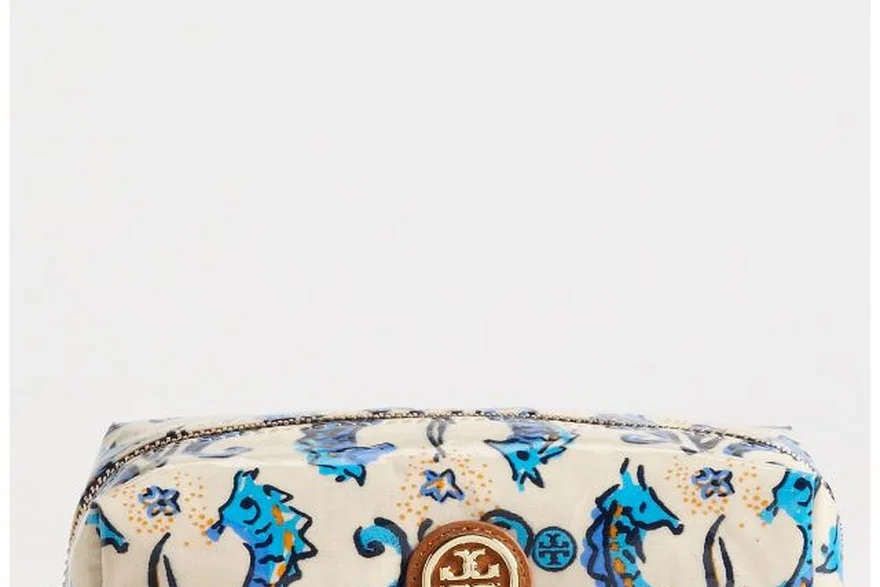
Lab dips, tolerance and the metamerism problem
A lab dip is a hand-prepared sample of the dye recipe on the actual production base cloth, usually A4 to A3 in size. It is the only meaningful evidence available before bulk dyeing, because a paper chip, a monitor swatch and a thread wind all lie about how a shade will read on the finished fabric. Dips are produced in twos and threes, spanning the target so the buyer can choose a direction rather than simply accepting or rejecting one attempt.
| Check | Condition | Acceptance guidance | Why it otherwise fails |
|---|---|---|---|
| Dip size | Hand-dyed swatch on production base cloth | Minimum 10 x 10 cm, folded twice before reading | Small swatches read 0.5-1.0 Delta E lighter |
| Primary light source | D65 daylight cabinet | Delta E of 2.0 or less against the approved standard | Office lighting hides metamerism entirely |
| Secondary source | TL84 or CWF, typical retail lighting | Delta E of 3.0 or less | A recipe matched under D65 diverges under store lighting |
| Third source | Incandescent, source A | Visual check, no objectionable flip | Warm sources shift reds, browns and oranges |
| Instrument geometry | Spectrophotometer, d/8 geometry | Record whether SCI or SCE mode was used | SCI and SCE can differ by 0.5-1.0 Delta E on the same sample |
| Lot consistency | First, middle and last piece of the dye lot | Delta E of 2.0 or less between pieces | Tail-end drift in long dye lots is common |
Metamerism is the reason three light sources matter. Two samples are metameric when they match under one light and differ under another, which happens because the dye recipe reaches the same visual result by a different spectral route. It is common when a fabric is matched to a paper reference, because paper is brightened with optical agents that fabric does not have. A dip approved in an office under fluorescent light can look wrong in a shop and wrong again in daylight.
- Approve dips on the production base cloth, never against a paper chip or a monitor render
- Approve under at least two light sources, ideally three: D65, TL84 or CWF, and incandescent
- Set the tolerance and the measurement method in writing before the first dip is produced
- Keep a sealed reference swatch, cut from the approved dip, for pre-production and bulk comparison
- Book the full dye lot at once; a second lot at 500 pieces per colourway rarely repeats the first exactly
Tolerances should be component-specific rather than global. Demanding Delta E 1.0 across every component raises cost without visible benefit, because the eye compares the shell, the logo and the zipper as a composition, not a thread against a spectrophotometer. A workable written standard is Delta E 2.0 on the shell, 3.0 on the lining and trims, and a visual-only check on hardware, with a sealed reference swatch governing any disagreement.
Constancy between components matters more than absolute accuracy on any single one of them. The eye reads a bag as a composition: if the shell, the binding and the zipper tape all sit slightly warm or slightly cool relative to the reference in the same direction, the result looks intentional. Mixed directions, such as a warm shell with a cool binding, read as a mistake even when every component is inside its own tolerance.
Approval workflow, fastness testing and the production calendar
Colour runs on its own track inside the production calendar, and it is the track that most often slips. Two dip rounds, a fastness panel and a sample build must all complete before bulk dyeing can start, and bulk dyeing itself is a gateway: until the lot is dyed, nothing can be cut. Buyers who plan a programme by counting only the 35-50 days of bulk production routinely underestimate the colour lead time sitting in front of it.
| Stage | Activity | Working days | Decision at the end |
|---|---|---|---|
| Reference selection | Buyer names TCX, PMS or PQ references per component | 1-3 | Freeze the reference list |
| Stock shade check | Compare references against existing shade cards | 1-2 | Use stock shades or proceed to custom |
| Lab dip round one | Dye lab produces two or three dips around the target | 7-12 | Choose the closest direction |
| Lab dip round two | Refined recipe on the production base cloth | 5-8 | Approve, or accept the nearest stock shade |
| Fastness testing | Rubbing, washing, light and perspiration per ISO 105 and AATCC | 5-10 | Pass at the grade stated in the tech pack |
| Sample build | Bag constructed with the approved components | 6-10 | Pre-production sample approval |
| Bulk dyeing and production | Full lot booked, cut, sewn and inspected | 35-50 | Release at AQL 2.5 under ISO 2859-1 |
The cost of custom colour is modest but real, and it is concentrated at low volume. A lab dip costs roughly 15-40 USD per shade per round. A custom dye lot carries a fabric minimum, commonly 300-800 m depending on construction, which at 500 pieces adds approximately 0.05-0.25 USD per bag; above about 5,000 pieces the same surcharge approaches zero because the lot is amortised across the run. Stock shades on the lining, binding, thread and elastic avoid all of it.
Tolerances, costs and lead times are illustrative planning ranges for a mid-market makeup bag programme, not quotations. Achievable Delta E depends on fibre, denier, finish and shade family: neons, metallics and very pale neutrals are harder than mid-tones. Buyers should confirm the tolerance, the light sources and the fastness grades in writing before the first dip, and judge each programme against a sealed reference swatch.
The two decisions that keep a colour programme on schedule are both made before the first dip. First, decide in writing which components get a custom match and which take the nearest stock shade, because that determines both cost and calendar. Second, decide the tolerance and the light sources, because a dip that is rejected for an unspecified reason starts another 5-8 working day round. Colour is the part of a bag programme where vagueness is most expensive and where ten minutes of specification saves two weeks.
The third decision, taken at the same time, is what happens if the bulk lot misses tolerance. The answer belongs in the tech pack: an acceptance band, a re-dye clause stating who pays for a second lot, and a price-adjustment fallback if the shade is acceptable at a discount. Deciding this at approval stage costs nothing; deciding it after 2,000 bags have been cut is a dispute with no clean outcome.
The B2B Customisation View
Programme planning for cosmetic bags starts with the end market: a hotel amenity run and a beauty-retail launch ask for completely different construction and compliance evidence.
Planning figures used across the programme: MOQ 500 pieces per style and colourway, 6–10 working days sampling (12–15 when moulding or multi-layer lamination is required), 35–50 days bulk lead time, AQL 2.5 to ISO 2859-1, FOB Xiamen, T/T 30/70.
The programme-management model exists because most import problems are documentation problems, and documentation is what this office produces and holds.
Which Brand Types Benefit Most
Colour strategy differs by buyer because the risk of inconsistency differs by channel. A start-up brand is usually built around one signature shade and cannot afford a second dip round, so the priority is choosing a stock shade close to the brand colour and reserving custom matching for the shell alone. An established brand manages a palette across seasons and needs sealed reference swatches and written tolerances so that a re-order twelve months later matches the original. Retailers carry private-label ranges where shelf lighting dictates the approval conditions. Colour also interacts with quantity in a way that catches first-time buyers. Because a custom dye lot carries its own fabric minimum, a small programme effectively pays twice, once for surplus fabric and once for the dip rounds. The cheapest colour decision available to a new brand is usually a stock shade on the shell with a custom-matched logo on top.
- Start-up brands: match the shell and the logo, take stock shades for lining, binding and thread; a single custom dye lot at 500 pieces can add 0.05-0.25 USD per bag.
- Established brands: keep a sealed reference swatch for every shade in the range and specify Delta E and light sources in the tech pack, so re-orders repeat without re-approving.
- Retailers: approve dips under the lighting actually used in store, typically TL84 or CWF, and record fastness grades on the lining where make-up staining is visible.
- E-commerce sellers: ask for D65-approved photography references, because returns driven by colour mismatch are more expensive than a second dip round.
- Gift and hospitality buyers: use stock shades wherever possible; seasonal programmes rarely have 7-12 working days per dip round available twice.
- Wholesalers and distributors: approve and store a sealed reference swatch per shade, because a re-order twelve months later is matched against that swatch rather than against a memory.
Frequently Asked Questions
Which Pantone system should be used for a fabric cosmetic bag?
Pantone Fashion, Home and Interiors with TCX references, because those are dyed on cotton and are the textile industry's common language. Use Pantone Matching System C or U references for printed artwork, hangtags and packaging board, and Pantone Plastics PQ or Q chips for moulded parts, silicone patches and coated hardware. Naming the right system per component is what prevents a printer and a dyer working to incompatible references.
How close can a fabric match get to a Pantone reference?
On dyed polyester or nylon shell fabric, Delta E of 1.0-2.5 against a TCX reference is realistic, with 1.0 or below being close to imperceptible. Coated fabrics run 1.5-3.0, narrow woven tape and thread 2.0-4.0, and metal hardware 3.0-5.0 where gloss distorts readings. Very pale neutrals, neons and metallics are the hardest families and should be given wider tolerances from the start.
How long does a lab dip take for a custom makeup bag?
Seven to twelve working days for the first round on the production base cloth, and five to eight for a refined second round. Most shades settle within two rounds, so a custom colour adds roughly 12-20 working days before sampling can start. Fastness testing adds a further 5-10 working days where it is required, which is why colour should be planned as its own track ahead of the 35-50 day bulk window.
What is a lab dip and why not approve from a Pantone book?
A lab dip is a hand-dyed swatch of the recipe on the actual production base cloth, typically A4 to A3. A Pantone book is ink on paper, and paper is optically brightened in ways fabric is not; the same pigment formula reads differently on 600D polyester than it does on a coated chip. Approving from a book is the most common cause of a pre-production sample that looks wrong despite matching on paper.
How many light sources should a colour approval use?
At least two, ideally three: D65 daylight as the primary, TL84 or CWF for retail lighting, and an incandescent source for a warm-light check. A workable standard is Delta E of 2.0 or less under D65 and 3.0 or less under the secondary source, with no objectionable flip under incandescent. Two samples that match under one light and differ under another are metameric, which is exactly what multi-source approval detects.
Does a custom Pantone colour increase the minimum order quantity?
It raises the fabric minimum rather than the bag minimum. The bag minimum stays at 500 pieces per style and colourway, but a custom dye lot typically requires 300-800 m of fabric depending on construction. If a 500-piece order consumes less than that, the surplus is either paid for or held, which is the source of the 0.05-0.25 USD per bag surcharge seen at low volume.
How much does custom colour matching cost per bag?
Illustratively, a lab dip runs 15-40 USD per shade per round, and the dye-lot surcharge adds roughly 0.05-0.25 USD per bag at 500 pieces, falling to near zero above about 5,000 pieces as the lot is amortised. Stock shades cost nothing extra on any of those lines. Buyers on a tight budget should custom-match the shell and logo only and take stock shades for lining, binding, thread and elastic.
Can the zipper tape be matched to the shell fabric?
Often to within Delta E 2.0-3.5, but not exactly, because zipper tape is a narrow woven polyester that takes dye differently from the shell. The practical route is to select from the tape supplier's shade card first, which costs nothing and takes no extra time, and go to custom-dyed tape only if the gap is visible, which adds 15-25 working days and a tape minimum.
What colour fastness grades should a makeup bag meet?
A common commercial target is grade 4 for dry crocking, grade 3-4 for wet crocking and grade 4 for colour change after washing, assessed under the ISO 105 series or the equivalent AATCC methods. Makeup bags deserve particular attention on the lining, because foundation, lipstick and nail polish stain a pale taffeta permanently. A wipe-clean coated lining is often a better answer than a higher fastness grade on a fabric that will still stain.
Why does the same Pantone shade look different between production runs?
Dye-lot variation. Even with an identical recipe, water quality, dye-stuff batch, temperature profile and dwell time shift the result slightly, and long lots drift between the first and last metres. The controls are booking the full lot at once, checking the first, middle and last piece at Delta E 2.0 or less, and keeping a sealed reference swatch from the approved dip to compare against future runs.
Should metal hardware be specified with a Pantone reference?
Yes, but with realistic expectations. Anodised aluminium and plated zinc can be directed towards a Pantone Plastics chip, yet gloss and metallic effect make instrument readings unreliable, so a Delta E of 3.0-5.0 is normal and a visual check under daylight is more useful than a number. Hardware matching typically adds 12-20 working days and should be started while dips are running rather than after.
What is metamerism and how does it affect bag approvals?
Metamerism is when two samples match under one light source and differ under another, because their pigments reach the same visual result by different spectral routes. It is common when fabric is matched to a paper reference. The consequence is a dip approved in an office that looks wrong in a shop. Approving under three sources, D65, TL84 or CWF and incandescent, is the standard defence and costs one extra minute per approval.
How should colour be specified in the technical pack?
Per component: a named Pantone reference with the system stated, the substrate it applies to, the acceptable Delta E, the light sources for approval and the required fastness grades with their test method. Adding a note on which components may use the nearest stock shade is equally useful. A pack that simply says match to brand colour leaves every one of those decisions to be argued after the first dip arrives.
Can a buyer approve colour from a photograph of the sample?
Not reliably. Camera white balance, screen calibration and ambient light all shift the rendered shade, typically by more than the 1.0-2.0 Delta E tolerance being worked to. Photographs are useful for recording construction and placement, but colour approval needs either a physical dip in the buyer's hands under a known light source, or an instrument reading taken with a stated geometry and SCI or SCE mode.
What happens if the bulk dye lot does not match the approved dip?
It is measured against the sealed reference swatch at the tolerance agreed in writing, typically Delta E 2.0 or less on the shell under D65. Inside tolerance, the lot is accepted; outside it, the options are re-dyeing, which restarts a 7-12 working day cycle, or acceptance at a negotiated price adjustment. This is why inspection at AQL 2.5 under ISO 2859-1 should include a colour check against the reference, not only construction and workmanship.
People Also Ask
What is a lab dip in textile manufacturing?
A lab dip is a small hand-dyed swatch, typically A4 to A3, produced on the actual production base cloth to show how a dye recipe will look in bulk. It is the reference against which the buyer approves colour. Dips are usually produced two or three at a time around the target, take 7-12 working days for the first round and 5-8 for a refinement, and should be approved under at least two light sources.
How do you match Pantone to fabric?
Give the dyer a TCX reference from Pantone Fashion, Home and Interiors and the exact base cloth, then approve a lab dip rather than a paper chip. Match is measured as Delta E against the reference: 1.0-2.5 is realistic on polyester or nylon, 1.5-3.0 on coated fabric and 2.0-4.0 on narrow tape. Confirm fastness separately, since a perfect match that crocks at grade 3 is a failed shade.
What is a good Delta E tolerance for textiles?
Delta E of 1.0 or below is imperceptible to most observers, 1.0-2.0 is a good commercial match, 2.0-3.0 is visible on close comparison but usually acceptable, and above 3.0 is visible across a room. A workable written standard for a bag programme is 2.0 on the shell, 3.0 on lining and trims and a visual check on hardware, each measured under named light sources.
Why does colour look different in store than in daylight?
Because of metamerism and because retail lighting is not daylight. TL84 and CWF sources have different spectral content from D65, so two dye recipes that match under one can separate under the other. Paper references make it worse, since paper contains optical brighteners that fabric does not. Approving dips under D65 plus a retail source, typically TL84, is the standard way to catch the difference before bulk.
Request a Sample or a Written Quotation
Send the silhouette, dimensions, material preference and logo artwork, and the programme team will return a written quotation with MOQ, sampling window, bulk lead time and inspection standard.
Email: [email protected] · WhatsApp: +86 177 5002 0688