Real Estate & Mortgage Cosmetic Bags: Client Closing Gifts
Executive Summary
Real estate and mortgage cosmetic bags are makeup, toiletry or grooming pouches given to clients at or shortly after closing, carrying an agent's or brokerage's identity in a deliberately restrained way. They work because, unlike the conventional closing bottle or gift basket, a pouch is used daily rather than consumed or shelved, keeping the brand visible in a bathroom or a suitcase long after the transaction closes. Three decisions determine whether the gift lands: a neutral palette that suits any interior, quiet branding that does not read as advertising, and timing that places it at closing or in the post-move window.
A typical specification is a 22 x 14 x 8 cm pouch in 420D to 600D polyester or a linen-look blend, with a tonal print, a side-seam woven label or a blind deboss, presented in a folding carton or rigid box with an insert card. Programmes begin at 500 pieces per style and colourway, sampling takes 6-10 working days, bulk runs 35-50 days after approval, and inspection follows AQL 2.5 under ISO 2859-1. Shipment is FOB Xiamen with payment T/T 30 deposit, 70 against bill of lading. Most agencies order once or twice a year rather than per transaction.
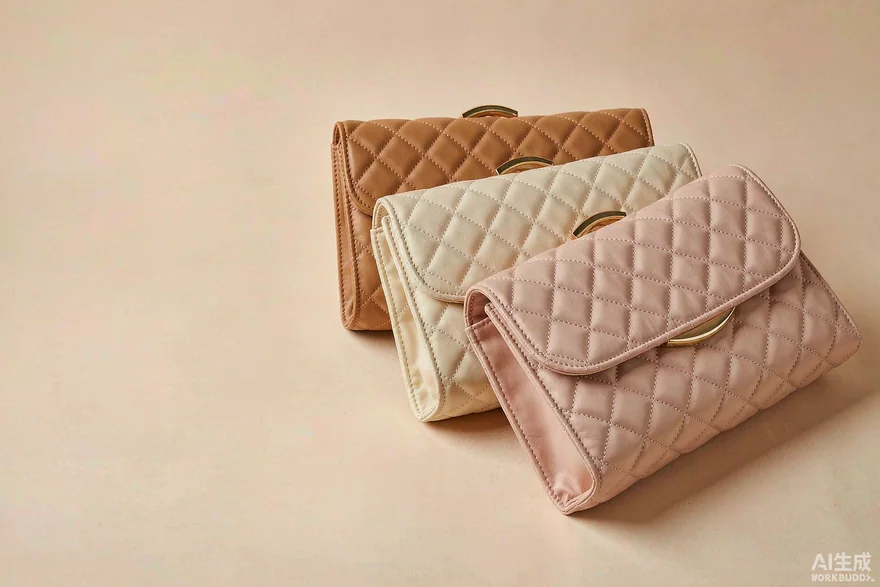
What a Closing-Gift Cosmetic Bag Is and What It Replaces
A closing-gift cosmetic bag sits in a category with unusual constraints. It is a promotional item handed to someone who has just completed the largest financial transaction of their life, usually in a room with a notary, a lender representative and possibly the other party's agent. Anything loud, flimsy or obviously cheap reads badly in that setting. Anything too expensive creates an awkwardness of its own and may fall foul of a brokerage's internal gift policy or a lender's rules on inducements, which is the first thing any agent should check before ordering anything.
The comparison set explains why the format works. A bottle of wine is consumed within days and remembered vaguely. A branded mug is kept out of obligation. A gift basket is shared, consumed and largely forgotten by the following week. A toiletry pouch, by contrast, moves between a bathroom counter and a suitcase for years, which means the useful life of the impression is measured in years rather than days. Marketplace data supports the underlying popularity of the silhouette: travel bag for toiletries draws roughly 110,000 monthly searches and toiletry bag about 74,810 weekly searches on Amazon (ASINSIGHT, July 2026).
Budget arithmetic frames most buying decisions in this channel. Agencies commonly allocate somewhere between $25 and $75 per closed transaction to gift spend, including packaging and the handwritten card. If the pouch is one element of that gift rather than the whole of it, the landed cost per unit typically needs to fall between roughly $2 and $8, packaging included, to leave room for anything else handed over. That range points away from the cheapest giveaway construction and away from luxury vanity cases, positioning the busiest part of the category firmly in the middle of the $0.45 to $12.00 wholesale band reported for the wider category in October 2026.
- Transactional delivery: handed over at closing, alongside documents and keys, and therefore seen by everyone present in the room.
- Post-move delivery: sent to the new address days after handover, when the recipient is unpacking and a pouch is immediately useful.
- Referral suite: reserved for clients who refer, delivered with a card weeks later rather than at closing.
- Annual programme: a single 500-piece run distributed across all closings in a twelve-month period, which is how most agencies purchase.
- Recruitment and retention use: issued to newly onboarded agents as part of a starter kit rather than to clients.
Design Restraint: Neutral Palettes, Quiet Branding and Finish Tiers
Restraint is the whole design brief. The bag goes into homes in every price band and into bathrooms with every colour scheme, so a neutral shell that reads as considered rather than promotional is the safer default. Charcoal, warm grey, oat, taupe and deep navy perform consistently across listing price bands, while a bright corporate colour tends to be stored in a drawer. Where a brokerage insists on brand colour, the usual compromise is a neutral shell carrying the brand colour only on the interior lining, which delivers recognition at opening without shouting across the room.
| Finish tier | Shell and trim | Perceived value | Landed unit band | Best suited to |
|---|---|---|---|---|
| Printed canvas pouch | 12 oz cotton canvas, one-colour print, cotton webbing pull | Modest but honest; reads as considered | $1.20-2.40 | High-volume branch programmes and new-agent starter kits |
| Woven-label linen-look pouch | Polyester linen-look blend, woven label at the side seam | Understated; reads well in the hand | $2.40-4.00 | Brokerage teams wanting branded but quiet presentation |
| Blind-debossed PU pouch | PU-faced shell with a debossed rather than printed logo | Premium without shininess | $3.60-6.50 | Top-producer closings and higher-priced listings |
| Tonal embroidered twill case | 600D twill, tonal thread embroidery, coated metal puller | Highest of these four | $5.50-9.00 | Luxury-brand agents and referral suites |
| Structured vanity case with boxing | 600D with EVA foam lamination plus a rigid presentation box | Strongest presentation of the group | $8.00-12.00 | Executive referrals and developer partnerships |
Dark neutrals carry one technical risk that is rarely discussed at quotation. Deep navy and charcoal dyes, particularly on PU-faced shells and on dyed polyester with a heavy finish, can transfer colour onto lighter fabric under rubbing while damp. That behaviour is assessed using colour-fastness methods within the ISO 105 series, whose scope is described by the International Organization for Standardization at its technical committee page for ISO 105. Specifying a rubbing fastness grade for dark shells, and asking for the result rather than assuming it, prevents the complaint nobody enjoys receiving weeks after closing.
Logo size is the other lever. Anything above roughly 35 square centimetres on a 22 x 14 cm face begins to read as advertising, and the effect compounds when the brokerage name is set in a script designed for a yard sign. Three approaches keep the mark discreet: reduce it to wordmark-only at around 40-60 mm wide, move it off the front face to the side seam or the reverse, or render it tonally so it reads only in certain light. Agents frequently combine the second and third, placing a small tonal wordmark on the reverse panel. Print registration tolerances apply to the printed route as well: a fine serif wordmark below roughly 1.2 mm stem width starts to fill in on textured canvas, so typography should be checked on the actual substrate rather than approved from a screen proof.
Compliance documentation still applies even though the item is a gift. European recipients generally expect restricted-substance evidence; two documents usually satisfy the request, namely a declaration covering substances of very high concern within the framework set out at the EU REACH regulation page and, increasingly, an article-level certificate against the restricted-substance list behind OEKO-TEX Standard 100. Requesting both at quotation is cheaper than retrofitting them once boxes are packed and a branch needs proof.
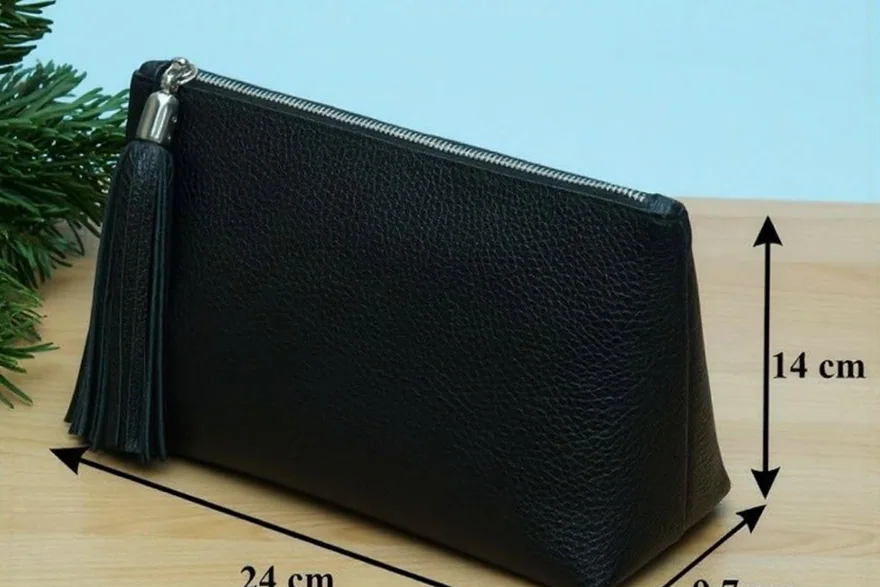
Presentation: Boxes, Sleeves, Insert Cards and the Unboxing Sequence
Presentation is doing about half the work in this channel. A mid-tier pouch inside a rigid box routinely reads more valuable to a client than a top-tier pouch handed over loose, and the box costs a fraction of the shell upgrade it replaces.
Packaging decisions are made one element at a time, and each has a distinct cost-to-perception ratio. The table below sets out the six elements most frequently specified in this channel, with typical specifications and their effect on both the budget line and the way the gift reads on the day.
| Presentation element | Typical specification | Cost impact per unit | Effect on perceived value |
|---|---|---|---|
| Folding carton box | 300-350 gsm board, matte lamination, tuck flap | $0.40-0.90 | Moderate; also protects the pouch during branch storage |
| Rigid two-piece box | 800-1,200 gsm greyboard, wrapped in art paper | $1.80-3.50 | High; still the strongest premium cue available |
| Printed belly sleeve | 250 gsm card sleeve, single colour either side | $0.15-0.35 | Low to moderate; useful where messages vary by branch |
| Folded insert card | 250-300 gsm uncoated card, blank inside | $0.08-0.20 | Moderate; carries the handwritten element clients keep |
| Tissue wrap and seal | 17-20 gsm tissue, sticker or wax-look seal | $0.10-0.25 | Moderate; slows the unboxing and adds ceremony |
| Kraft paper stuffing | Recycled kraft fill inside the pouch | $0.05-0.12 | High relative to cost, since it keeps shape and avoids creasing |
Sequence matters more than most buyers budget for. The version that reads best in practice runs: rigid or folding box opened first, tissue removed, pouch lifted out with interior stuffing still in place, then a folded card discovered underneath the pouch rather than sitting on top of it. Placing the card first risks the client reading it before engaging with the gift itself. Agents writing cards by hand should also confirm that the chosen card stock accepts their pen without feathering, which is a small detail with an outsized effect on how considered the gift appears.
Storage and distribution are the practical constraints on packaging choice. A rigid box occupies roughly three times the volume of the pouch it contains, which affects both branch storage and the cost of shipping an annual programme to several offices. Agencies with limited storage often split the difference: bulk pouches shipped flat-packed to a central office, rigid boxes shipped flat as blanks, and assembly done locally. Where the run is large, that approach frequently saves more than the unit cost difference between box types.
Seasonality deserves its own line in the plan. Several markets concentrate closings in spring and early summer, which means the delivery date is immovable in a way retail programmes are not, and it also means packaging choices intersect with public holidays in the source country. Factories and freight generally close for a period around the lunar new year and for shorter breaks around national holidays, so a programme intended to land in April should be specified and approved several months earlier. Carton maths is worth checking at the same time: a mid-size pouch typically packs 120 to 200 pieces per carton depending on whether it is shipped boxed, which determines both freight lines and how much shelf space a brokerage needs to receive the run.
Finally, decide whether variable data belongs on the packaging or on the bag. Putting each agent's name on the belly sleeve rather than on the pouch keeps one constant shell for the whole brokerage, allows sleeves to be reordered in small quantities as staff change, and avoids a situation where a departing agent's name is printed on 200 pouches already sitting in a cupboard. Sleeves do add a second print setup, typically $0.15 to $0.35 per unit, but that cost usually buys more flexibility than the alternative and it sidesteps the awkward inventory write-offs that named programmes generate.
Timing: Closing Day, the Post-Move Window and Referral Recall
Timing is the variable that most distinguishes a closing gift from generic promotional merchandise. Because the moment is tied to a transaction rather than to a season, the gift can be placed at exactly the point where recall of an agent is highest. There are three windows most agencies work with, and each suits a slightly different construction and message.
- Closing day itself: highest emotional intensity, but the recipient is dealing with documents and keys. Choose a pouch that reads well in a photograph, since these gifts get photographed frequently.
- Seven to fourteen days after possession: the recipient is unpacking and a toiletry pouch is immediately useful. This window typically produces the strongest association between the gift and genuine helpfulness.
- Three to six months after closing: a check-in rather than a gift-theatre moment. A smaller item or a second pouch sent alone reads as attention rather than obligation.
- Twelve-month anniversary: a common brokerage practice in some markets, usually paired with a market update rather than a second gift.
- At referral rather than at closing: reserving the premium tier for referred clients creates a visible difference in gift level, which agents report prompts useful conversations.
Order timing follows from the delivery window rather than the other way round. Sampling takes 6-10 working days for a pouch of this type, rising to 12-15 working days where debossing plates, embroidery files or rigid-box tooling are involved. Bulk production then runs 35-50 days after sample approval. An agency planning to distribute across twelve months typically orders once, because the minimum order quantity is 500 pieces per style and colourway, which comfortably covers a year of closings for most mid-sized teams and locks in consistent colour across the whole period.
Sizing the annual order is arithmetic rather than guesswork. Take last year's closing count, add expected growth, then add a buffer for gifts lost, damaged or given outside the transaction workflow. Teams commonly run 8-15% above their projected need, because a shortfall discovered in September cannot be topped up economically: a second small run carries the same 500-piece minimum as the original, along with whatever dyelot variation arises months later. The more prudent approach is to over-order deliberately and accept that a surplus carries into next year, since a neutral pouch with a quiet mark does not date and stored flat takes up very little room in a supply cupboard.
Reorder discipline protects colour consistency over several years. Neutral shells are repeatable only if the original dyelot formula is retained and re-issued, so the first order should include a retained physical reference on both sides plus a written note that repeats are dyed against that swatch rather than against a digital file. Marking this requirement in the original purchase order costs nothing, whereas discovering two visually different batches three years later means either living with inconsistency or redevelopment.
Two cautions belong in any plan for this channel. First, gift policy: brokerages and lenders frequently set their own limits on gift value and on what may be given at or around closing, and some jurisdictions regulate inducements in property transactions. The agent or brokerage is responsible for checking its own policies and local rules before ordering. Second, tax treatment: whether a promotional gift is deductible, and at what threshold, varies by jurisdiction and by circumstances, so any treatment should be confirmed with the recipient organisation's own adviser rather than assumed. Inspection on programmes of this kind follows AQL 2.5 under ISO 2859-1, with shipment FOB Xiamen and payment by T/T 30 deposit, 70 against bill of lading.
The B2B Customisation View
Programmes for cosmetic pouches, vanity cases and beauty organisers move fastest when the artwork is supplied as vector files and the Pantone references are confirmed before sampling starts.
Budgeting and scheduling inputs: MOQ 500 per style and colourway; sampling 6–10 working days, extended to 12–15 for lined, moulded or hardware-heavy builds; bulk 35–50 days; pre-shipment inspection at AQL 2.5 per ISO 2859-1; FOB Xiamen; T/T 30/70.
QUANZHOU JUNYUAN BAGS is structured as a sourcing and programme-management company, which lets a buyer compare materials across several SGS-verified production lines inside one quotation.
Which Brand Types Benefit Most
The buyer profiles here differ sharply from retail sourcing. Individual agents and small teams typically order at or just above the 500-piece floor, choosing one neutral colourway and one finish tier so their gift does not vary between clients throughout the year; for them, consistency is the entire value proposition, because a client who compares notes with a neighbour should see the same thing. Regional brokerages with several dozen agents face a coordination problem instead: they want one programme for everyone, which means committing to a single shell colour and a single mark, then possibly varying only the card or the sleeve by branch, since multiple colourways would each carry their own 500-piece minimum. Mortgage lenders and title companies sit at the larger end, sometimes running 2,000 to 5,000 pieces annually, and they care above all about even distribution to branch addresses and about avoiding anything that could be read as an inducement at closing, which pushes their specifications toward the most restrained finishes available. Luxury-brand affiliated agencies behave more like fashion buyers: they want a heavy hand-feel, tonal embroidery, debossed rather than printed marks, and rigid presentation boxing, accepting a unit cost several times higher because the gift has to match a listing price rather than a transaction count. E-commerce sellers occasionally enter the channel too, offering pre-boxed neutral pouches with space for a local business card, though those programmes live or die on whether the insert slot looks deliberate rather than improvised. QUANZHOU JUNYUAN BAGS coordinates programmes across these profiles with team experience in bag development and export since 2004.
- Individual agents: one colourway, one finish tier, ordered once a year for consistency between clients.
- Regional brokerages: single shell colour with variable cards or sleeves to avoid multiple minimum commitments.
- Lenders and title firms: largest volumes, strongest preference for inducement-safe restraint and even branch distribution.
- Luxury affiliates: heavy hand-feel, tonal embroidery, rigid boxing, accepting several times the unit cost.
- Reseller programmes: pre-boxed neutrals with a deliberately designed business-card slot rather than an improvised one.
Frequently Asked Questions
What size cosmetic bag suits a real estate closing gift?
A pouch around 22 x 14 x 8 cm works well: large enough to hold travel-size toiletries and a brush roll, small enough to pack flat for branch storage. Anything above roughly 26 cm wide begins to read as luggage rather than a gift, and anything under about 18 cm will not hold a full-size product lying flat. Match the size to a standard presentation box to avoid custom tooling.
How many pieces does a brokerage need to commit to for one colourway?
Minimum order quantity is 500 pieces per style and colourway. A single neutral colourway in one size therefore clears the threshold in one commitment, which is why many brokerages consolidate. Committing to several colourways multiplies the requirement, so varying cards or sleeves by branch is usually the more economical way to achieve local differentiation.
Which neutral colours perform best across different property price bands?
Warm grey, oat, taupe, deep navy and charcoal read well across almost every price band and interior style. Bright corporate colours tend to be stored rather than used. Where brand colour is mandatory, applying it to the interior lining delivers recognition at opening without turning the exterior into advertising, which is the objection most recipients quietly raise.
Why do dark navy and charcoal shells need rubbing fastness testing?
Heavy dark dyes can transfer onto lighter fabric under friction, particularly while damp and particularly on PU-faced constructions. Colour-fastness behaviour is assessed using methods in the ISO 105 series. Specifying a rubbing fastness grade for dark shells and requesting the actual result avoids the embarrassing situation where a client discovers transfer weeks after closing.
Is embroidery or debossing better than printing for this channel?
For buyers chasing the premium end, yes. A tonal embroidery at roughly 40-60 mm wide, or a blind deboss into a PU face, reads as branding rather than advertising, which is what the channel requires. Printing still suits canvas programmes at higher volumes, particularly where the mark depends on colour accuracy that thread cannot match.
Does presentation boxing make a measurable difference to perceived value?
It usually does, and disproportionately to cost. A mid-tier pouch inside a rigid two-piece box commonly reads better than a top-tier pouch handed over loose, even though the box adds $1.80 to $3.50 against a considerably larger shell upgrade. The caveat is storage: rigid boxes occupy roughly three times the pouch volume, affecting both branch storage and freight.
When should a closing gift bag actually be handed over?
Three windows are common: at closing alongside documents, seven to fourteen days after possession when the client is unpacking, or three to six months later as a check-in. The post-move window usually produces the strongest association with genuine helpfulness, because the pouch becomes immediately useful the day it arrives rather than sitting beside a stack of paperwork.
How far ahead of a gifting season should specification work start?
Allow roughly three months from agreed specification to delivery. Sampling takes 6-10 working days, extending to 12-15 where debossing plates, embroidery files or rigid-box tooling are involved, then bulk runs 35-50 days after sample approval. Freight to multiple branch addresses adds further time, so annual programmes are best specified well before the busy season begins.
What should be checked before ordering gifts tied to a property transaction?
Brokerage and lender gift policies, and local rules on inducements in property transactions, come first because they can cap value or prohibit gifts at closing altogether. The agent or brokerage is responsible for verifying these. Tax treatment of promotional gifts also varies by jurisdiction, so deductibility should be confirmed with the organisation's own adviser rather than assumed from another market.
Can each agent's name be added without lifting the quantity above the minimum?
Variable name data does not change the minimum order quantity, which stays at 500 pieces per style and colourway, but it does add per-application cost. Name application through heat-transfer film typically adds $0.35 to $0.90 per piece, while embroidery adds more per unit plus digitising. Splitting one 500-piece run across many agents is usually cheaper than separate small orders.
Is a lining necessary on a gift pouch at this price point?
Generally yes. A lining conceals internal seams, gives the interior a finished look when opened and prevents the contents catching on raw-edge stitching. Polyester taffeta at around 60-70 gsm adds roughly $0.30 to $0.60 per unit and is light enough not to affect the drape. Unlined shells read as giveaway items, which is exactly the impression this channel needs to avoid.
How should an annual programme be distributed to several branch offices?
Agencies usually ship the bulk run to one central address and redistribute internally, or instruct split delivery with nominal quantities per office declared in advance. Split delivery changes both freight quotes and administrative handling, so it is worth quoting both options. Where rigid boxes are involved, shipping blanks flat and assembling locally frequently costs less overall.
What documentation do European recipients expect on materials?
Two items usually satisfy the request: a declaration covering substances of very high concern under REACH for the specific shell, lining, print and trim specified, and increasingly an OEKO-TEX Standard 100 certificate issued for that article rather than for the brand in general. Asking at quotation is considerably cheaper than producing evidence retroactively once packed.
How obvious should branding be on a closing gift?
Quiet. Anything exceeding roughly 35 square centimetres on a 22 x 14 cm face starts reading as advertising, and script marks designed for yard signs perform badly when scaled down. Common solutions are reducing to wordmark-only at 40-60 mm, moving the mark to the reverse panel or side seam, or rendering it tonally so it reads only under certain light.
What does AQL 2.5 inspection cover on a gift programme?
AQL 2.5 under ISO 2859-1 sets how many minor and major defects are acceptable against a statistically drawn sample. On gift programmes the disputes are usually cosmetic rather than functional, so how print registration, thread ends and interior cleanliness are classified should be agreed before inspection day. Lot definition matters too, since splitting one shipment changes sample counts.
People Also Ask
What is a good closing gift for a real estate client?
Something used daily rather than consumed. A neutral toiletry or cosmetic pouch with restrained branding tends to outperform wine, food baskets and branded kitchenware because it stays visible in a bathroom or suitcase for years. The most successful versions pair a mid-tier shell with rigid presentation boxing and a handwritten insert card, since packaging carries much of the perceived value.
How much should a realtor spend on closing gifts?
Agencies commonly allocate roughly $25 to $75 per closed transaction across the whole gift, including packaging and card. If the pouch is one element rather than the entire gift, landed unit cost usually needs to sit between about $2 and $8. Higher allocations suit luxury listings, where clients compare the gift against their own expectations rather than against a transaction average.
Can a small real estate team order only 500 branded pouches?
Yes. Minimum order quantity is 500 pieces per style and colourway, which typically covers twelve months of closings for a small or mid-sized team. Ordering once annually also keeps colour consistent across every client, which matters more than unit price here because clients occasionally compare notes. Sampling takes 6-10 working days and bulk 35-50 days after approval.
When is the best time to give a client gift after closing?
The strongest window is usually seven to fourteen days after possession, when the recipient is unpacking and a toiletry pouch becomes immediately useful. Handing it over at closing works well for photographs but competes with documents and keys for attention. A smaller follow-up item three to six months later reads as attention rather than obligation.
Request a Sample or a Written Quotation
Send the silhouette, dimensions, material preference and logo artwork, and the programme team will return a written quotation with MOQ, sampling window, bulk lead time and inspection standard.
Email: [email protected] · WhatsApp: +86 177 5002 0688