YKK vs Generic Zippers for Cosmetic Bags: Quality Difference
Executive Summary
The difference between a branded zipper and an unbranded one is not the brand stamp; it is the tolerance stack behind it. On incoming inspection, branded fastener programmes typically deliver chain crosswise strength of 400-550 N against 250-350 N for unbranded equivalents, slider durability above 10,000 cycles against 3,000-6,000, and tape shrinkage under 1 percent against 2-3 percent. Those numbers decide whether a cosmetic bag survives its second season or comes back with a split chain behind the slider.
Cost is where the argument is usually won or lost. On a 45 centimetre length of #5 coil, an unbranded fastener typically costs $0.12-$0.22 against $0.35-$0.70 for a branded equivalent, a delta of roughly $0.20-$0.45 per bag. At 5,000 pieces that is $1,000-$2,250, which has to be weighed against the return and rework cost of a failed closure. Minimums are 500 pieces per style and colourway, with sampling in 6-10 working days.
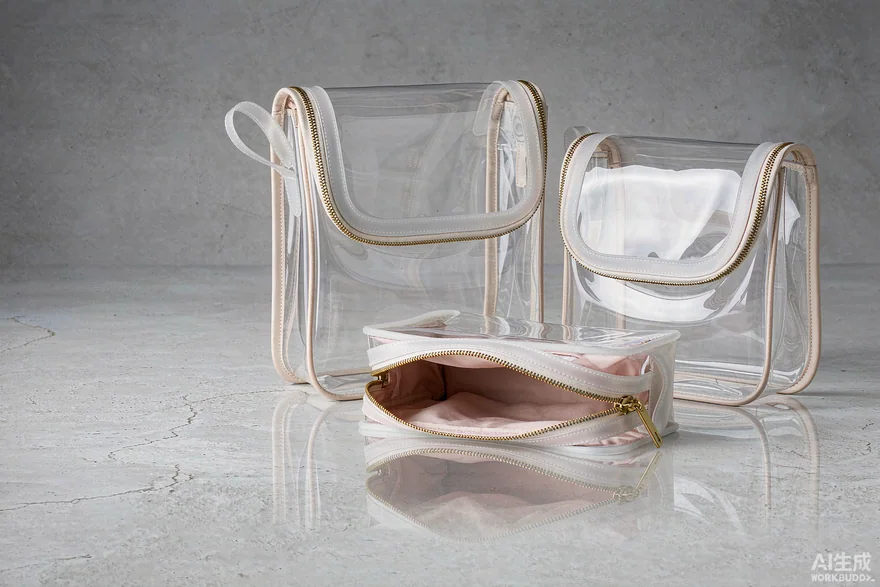
What the Name on the Slider Actually Buys
A zipper is a small assembly of five parts, and the brand name refers to the company that made all five to a published tolerance. The tape carries the load into the bag panel; the chain is the interlocking elements, either a coil or individual teeth; the slider forces the chain to close and open; the puller is the handle; and the stops at each end prevent the slider leaving the chain. Failure in any one of the five renders the other four useless, which is why a fastener has to be specified as an assembly rather than as a length and a size.
Size is expressed as a number that corresponds roughly to the width of the closed chain in millimetres. A #3 chain is about 3 mm wide closed and suits a small pouch; a #4 is a common mid-size for a flat cosmetic bag; a #5 at about 5 mm is the default for a standard makeup bag of 20-25 cm; and a #8 appears on large vanity cases and train cases. Choosing a #3 on a 25 cm bag because it looks lighter is one of the most common specification errors in the category.
Terminology matters because it is the only way to make a specification enforceable. The standard vocabulary for fasteners, including definitions of chain, slider, stop, tape and element, is set out in ASTM D2053, and using those terms in a tech pack removes the ambiguity that otherwise leads to a substituted component. A buyer who writes heavy duty zipper invites interpretation; a buyer who writes #5 nylon coil, brass-nickel slider, 450 N minimum chain crosswise strength receives a checkable part.
- Five parts per fastener: tape, chain, slider, puller, stops - a failure in any one makes the rest useless
- Chain size approximates closed width in millimetres: #3 about 3 mm, #4 about 4 mm, #5 about 5 mm, #8 about 8 mm
- Default for a 20-25 cm makeup bag is #5; #3 is for small pouches and #8 for large vanity cases
- Branded fastener programmes publish tolerances; unbranded supply is bought to price and varies lot to lot
- Specify the assembly with standard terminology, not adjectives
Measurable Differences on Incoming Inspection
Six measurements separate a branded fastener programme from an unbranded one, and all six can be checked on a bench. Chain crosswise strength measures the force needed to pull the two halves of a closed chain apart laterally. Slider durability counts open-close cycles before the slider loses grip. Puller attachment strength measures the force needed to tear the puller off the slider body. Tape shrinkage is measured after a controlled wash. Stop retention checks whether the bottom stop holds under load. Plating thickness governs how long a metal-looking puller survives in a humid bathroom.
Typical incoming inspection results put branded coil chain at 400-550 N crosswise and unbranded at 250-350 N. Slider durability commonly exceeds 10,000 cycles for branded programmes against 3,000-6,000 for unbranded. Puller attachment typically tests at 150-250 N against 60-120 N. Those are ranges observed across lots rather than guarantees, so the correct move is to write the minimum into the specification and test it, rather than to rely on the name stamped on the slider.
Three of the six failures are invisible at goods-in and appear only after weeks of use. Tape shrinkage of 2-3 percent on an unbranded polyester tape causes puckering along the stitch line after the first wash, whereas under 1 percent is invisible. Plating at 3-5 microns fails a 24-hour salt spray exposure and shows as black spotting on a puller within a season, whereas 6-10 microns passes 48 hours. Element pitch variation causes the slider to skip a tooth, which the user experiences as a zipper that splits behind the slider.
| Parameter | Branded programme, typical | Unbranded, typical | Test approach | Practical effect |
|---|---|---|---|---|
| Chain crosswise strength | 400-550 N | 250-350 N | Tensile tester, 100 mm/min | Bag bursts open when overpacked |
| Slider durability | Above 10,000 cycles | 3,000-6,000 cycles | Reciprocating cycle rig | Slider loosens and slips open |
| Puller attachment | 150-250 N | 60-120 N | Pull-off test on slider body | Puller tears off in the hand |
| Tape shrinkage after wash | Under 1 % | 2-3 % | One wash, measured length change | Puckering along the stitch line |
| Plating thickness on metal-look puller | 6-10 microns | 3-5 microns | X-ray fluorescence or cross-section | Black spotting in a humid bathroom |
| Element pitch consistency | Within 0.05 mm | Up to 0.15 mm variation | Optical measurement over 50 mm | Slider skips and chain splits |
| Tape colour match to shell | Delta E 1.0 or less | Delta E 2.0-3.5 | Spectrophotometer under D65 | Visible mismatch on a solid-colour bag |
Colour matching deserves special mention because a cosmetic bag is often a single-colour article. A tape that misses the shell by Delta E 2.0-3.5 reads as a cheap bag in a product photograph, and the mismatch is most visible on saturated colours. Branded fastener ranges are supplied against a colour card with a stated tolerance, which is one reason branded parts dominate on premium lines. Where an unbranded part is used, a dyed-to-match tape should be approved against a physical swatch under a D65 light source.
Tape behaviour also interacts with the coating choices discussed elsewhere. A water-resistant bag needs a polyurethane-coated tape, and coating changes both shrinkage and stitchability. If a bag is specified as water-resistant and the fastener is specified only by size, the assembly will leak along the tape regardless of how strong the chain is. Both properties belong in the same line of the specification.
What a Closure Failure Costs in a Bag Programme
The arithmetic of a zipper upgrade is simple once the numbers are laid out. On a 45 cm length of #5 coil, an unbranded fastener typically costs $0.12-$0.22 and a branded equivalent $0.35-$0.70, giving a delta of $0.20-$0.45 per unit. On metal chain the gap is wider: roughly $0.30-$0.55 unbranded against $0.70-$1.40 branded. Whether that delta is worth paying depends on what a failure costs the brand, which differs sharply between a promotional bag and a premium case.
Two costs are easy to quantify and two are not. The easy ones are the return handling cost and the replacement cost. A marketplace return costs the seller roughly $8-$15 in handling, shipping and restocking once a free-return policy is applied, so at a 2 percent failure rate on 5,000 units the exposure is about $800-$1,500 against an upgrade cost of $1,000-$2,250. Where the numbers favour the upgrade is at higher price points, because a $40 bag returned for a broken zipper loses the full margin rather than a small one.
The harder costs are rework and reputation. A failed fastener cannot be repaired economically: the stitch line has to be unpicked, the part replaced and the panel re-sewn, which costs more than the bag. In practice failed closures are scrapped or refunded. Reputation is worse and shows up in review text, where closure problems are mentioned far more often than fabric problems because the customer interacts with the zipper every single time the bag is used.
| Scenario | Units | Upgrade cost per unit | Total upgrade | Break-even failure rate avoided |
|---|---|---|---|---|
| Promotional pouch at a low unit price | 5,000 | $0.20 | $1,000 | About 1.5 % of units returned |
| Mid-market makeup bag, 5 colourways | 5,000 | $0.32 | $1,600 | About 1.1 % of units returned |
| Premium vanity case with metal chain | 2,000 | $0.75 | $1,500 | About 0.6 % of units returned |
| Gift-with-purchase programme | 10,000 | $0.18 | $1,800 | About 1.8 % of units returned |
| E-commerce seller with free returns | 3,000 | $0.30 | $900 | About 0.7 % of units returned |
The break-even column is the useful one. Because a marketplace return costs $8-$15 to process, avoiding roughly one return in every hundred units is enough to justify a $0.10-$0.15 upgrade, and avoiding one in fifty justifies a $0.30 upgrade. Most brands do not know their closure failure rate, which is the real gap: pulling six months of return reasons from marketplace data takes an afternoon and turns this from an opinion into a calculation.
Failure distribution is worth understanding before setting a budget. Across a typical season, closure complaints concentrate in three modes: the chain splitting behind the slider, the puller tearing off, and the slider losing grip. The first two are manufacturing quality problems that a stronger specification removes; the third is a wear-out problem that only a higher cycle rating addresses. Knowing which mode dominates in existing return data tells a buyer whether to spend on branded supply or simply on a higher cycle minimum.
There is one more commercial angle. A closure failure discovered after goods arrive cannot be reworked, so the entire lot is at risk rather than a single unit. That argues for testing fasteners at sampling rather than waiting for final inspection, and for treating slider function as a critical defect in the inspection plan rather than a major one.
Specifying, Verifying and Inspecting Fasteners
A fastener specification has seven lines: brand or approved equivalent, chain type, size, length in centimetres, tape material and colour reference, slider and puller finish, and the numeric minimum for strength and cycles. Adding the phrase or approved equivalent keeps supply flexible while preserving the measurable requirements, because the numbers are what protect the programme, not the name.
Verification is where branded fasteners are most often faked. Counterfeit parts carrying a well-known stamp are common in the accessory trade, and the stamp alone proves nothing. Four checks are practical: buy through an authorised distributor and keep the invoice with the lot number; inspect the stamp under 10x magnification for the crisp edges a genuine die produces; compare the slider body weight and gate mark against a verified reference; and run the strength and cycle tests on five pieces from every lot. A supplier that cannot produce a distributor invoice should be treated as a risk.
- Seven spec lines: approved brand, chain type, size, length, tape and colour, finish, numeric minimum
- Write or approved equivalent, but keep the numbers - they are what protect the programme
- Verify lots with an authorised distributor invoice carrying a lot number
- Inspect the stamp at 10x magnification and compare slider weight against a verified reference
- Test 5 pieces per lot for chain strength and slider cycles; treat slider function as a critical defect
- Keep two approved reference fasteners: one with the buyer, one with the programme coordinator
At inspection, fastener defects should be classified deliberately. A slider that will not close is critical, because the bag is unusable. A puller with minor plating blemish is minor. Chain strength and cycle results from laboratory testing belong in the sampling stage, while the inspection plan covers function, alignment, stitching of the tape into the panel, and the presence of the top and bottom stops on every unit. Final inspection runs at AQL 2.5 under ISO 2859-1.
Tape colour fastness is worth adding for dark or saturated shades, because a zipper tape rubs against clothing inside a suitcase. The AATCC methods catalogue is the usual reference for rub and laundering fastness on trim, and an acceptance of dry 4 and wet 3-4 or better is reasonable for a bag sold alongside clothing. Fastener tape is frequently omitted from colour fastness test lists, which is an oversight rather than a decision.
Reorder continuity is the last consideration and the one most often missed. A style that sells well gets reordered, and a fastener colour or finish discontinued between seasons forces either a visible change to the product or a costly custom run. Naming an approved second source in the specification, and confirming at reorder that both the chain and the tape colour remain in the supplier's current range, prevents a substitution that customers notice on a product page showing the earlier version.
Programme terms are unchanged by the fastener decision. Minimums are 500 pieces per style and colourway; sampling takes 6-10 working days, and 12-15 working days for complex constructions such as a moulded case with a welded frame; bulk runs 35-50 days after sample approval. Where a specific branded fastener is named, its own lead time should be added to the sampling window, since a non-stock colour or finish can add one to three weeks. Shipment is FOB Xiamen and payment is T/T 30 deposit, 70 against the bill of lading.
The B2B Customisation View
Most delays on cosmetic pouches, vanity cases and beauty organisers trace back to one unanswered question in the brief, so the first working session is spent removing ambiguity rather than choosing colours.
The numbers a buyer can plan around: 500 pieces minimum per style and colourway, 6–10 working days to a first sample (12–15 where tooling or moulding is involved), 35–50 days to bulk completion, AQL 2.5 under ISO 2859-1 at final inspection, FOB Xiamen terms, T/T 30/70 payment.
QUANZHOU JUNYUAN BAGS operates as the custom bag specialist on the file, managing the parts of the process that brands rarely resource in-house: shade matching, component sourcing and pre-shipment inspection.
Which Brand Types Benefit Most
Start-up brands often face the choice between spending on the visible fabric or on the hidden hardware, and the hardware is usually the better investment. A first-season buyer with a single style and 500 pieces per colourway can fund a branded #5 coil at roughly $0.35-$0.70 per unit by simplifying the print or reducing the stitch count. Review text on a first product mentions the zipper more often than the fabric, and a closure failure at launch is expensive in a way that a simpler print is not.
Established brands and retailers generally already specify an approved fastener list, so the question becomes enforcement rather than selection: distributor invoices with lot numbers, five-piece lot testing, and slider function classified as critical at inspection. E-commerce sellers should calculate their own break-even from return data, since a marketplace return at $8-$15 of handling makes even a small failure rate visible. Gift and hospitality buyers with a short service life and a low unit price can reasonably use unbranded parts, provided the numeric minimum for chain strength and cycles is written in and tested.
- Start-up brands: fund the fastener before the print; closure failures dominate first-season review text
- Established brands: enforce the approved list with lot invoices and five-piece incoming testing
- Retailers: classify slider function as critical, not major, in the inspection plan
- E-commerce sellers: calculate break-even from six months of marketplace return reasons
- Gift and hospitality buyers: unbranded is acceptable with a written numeric minimum and lot testing
A practical middle path suits most programmes: specify a branded fastener on the hero styles where reviews and repeat purchase matter, and an approved equivalent with the same numeric minimums on secondary and gift-with-purchase styles. The numbers travel with the specification, so the secondary styles keep most of the protection at a lower cost, and the brand name is spent where it earns the margin back.
Whichever route is taken, the specification should be written once and reused. A seven-line fastener clause kept in a component library saves the rework of re-specifying closures for every new style, and it prevents the drift that happens when a buyer writes a fresh description each season and a supplier interprets it differently each time.
Frequently Asked Questions
Does a retail buyer require a named zipper brand on a cosmetic bag?
Rarely as a hard rule, but often as a practical expectation on premium lines. Large retailers usually maintain an approved component list and ask for supplier invoices with lot numbers. Where a name is not required, a written numeric minimum for chain strength and cycle life achieves the same protection and keeps supply flexible.
How can a buyer tell a genuine branded zipper from a counterfeit one?
Four checks work together: an authorised distributor invoice showing the lot number, the stamp inspected at 10x magnification for crisp die edges, slider body weight and gate mark compared against a verified reference, and five-piece destructive testing per lot. The stamp alone proves nothing, because counterfeit parts carry convincing marks.
Which zipper size suits a 23 x 15 cm cosmetic bag?
A #5 coil, roughly 5 mm closed width, is the default for a bag in that size range and handles overpacking without bursting. A #3 looks lighter and is popular on small pouches, but on a 23 cm bag it is the most common cause of a chain that splits behind the slider. A #8 belongs on large vanity cases.
Which test shows whether a slider will pull off its tape?
Puller attachment strength, run by gripping the slider body and pulling the puller at a controlled rate until it separates. Branded programmes typically record 150-250 N and unbranded parts 60-120 N. The test is cheap, takes minutes, and catches a failure mode that generates a disproportionate share of complaints.
How many open-close cycles should a cosmetic bag zipper survive?
A daily-use bag opened twice a day accumulates about 1,460 cycles in two years. Branded programmes commonly exceed 10,000 cycles and unbranded parts often fall between 3,000 and 6,000, so the specification should set a minimum of 5,000 cycles for a daily-use bag and test five pieces per lot.
Why does a zipper split open behind the slider?
Usually element pitch variation. If the spacing between coil elements varies by more than about 0.05 mm, the slider can fail to capture both sides and the chain opens again behind it. Branded manufacturing holds pitch within roughly 0.05 mm; unbranded supply can vary up to 0.15 mm over a 50 mm length.
How much does upgrading to a branded zipper add to unit cost?
On a 45 cm length of #5 coil the delta is typically $0.20-$0.45 per unit, and on metal chain roughly $0.40-$0.85. At 5,000 units that is $1,000-$2,250. Against a marketplace return cost of $8-$15 per unit, avoiding one return in every hundred units covers a $0.10-$0.15 upgrade.
Can a buyer specify a branded fastener and still receive a generic one?
Yes, and it happens regularly. Substitution is easiest to prevent by requiring an authorised distributor invoice with a lot number at goods-in, and by testing five pieces per lot. Where the programme allows an equivalent, the numeric minimum becomes the only protection, so it has to be written into the tech pack.
What causes zipper tape to pucker after washing?
Differential shrinkage between the tape and the shell fabric. An unbranded polyester tape can shrink 2-3 percent in one wash while the bag panel shrinks less, producing a wavy stitch line. Branded tapes typically hold shrinkage under 1 percent. Pre-shrinking the tape or matching shrinkage rates between components prevents it.
How is zipper tape colour matched to the shell fabric?
With a spectrophotometer under a D65 light source and a stated tolerance. Branded ranges are supplied against a colour card, typically within Delta E 1.0; unbranded dyed-to-match tapes commonly land at Delta E 2.0-3.5, which is visible on a saturated solid-colour bag in a product photograph.
Does plating thickness matter on a metal-looking puller?
It decides how long the part survives in a bathroom. At 3-5 microns a puller fails a 24-hour salt spray exposure and develops black spotting within a season; at 6-10 microns it passes 48 hours. Thickness can be checked by X-ray fluorescence on a sample, which is fast and non-destructive.
What is a zipper garage and is it worth the cost?
A garage is a small fabric or binding pocket that covers the top stop and the slider when closed. It costs a few cents in cutting and sewing, keeps the puller from snagging on clothing inside a suitcase, and hides a rough top stop on a premium bag. It is a good value addition on any bag sold as a travel item.
How are zipper defects classified at final inspection?
A slider that will not close or a missing stop should be critical, because the bag is unusable. A misaligned tape or a skipped stitch is major. A minor plating blemish on a puller is minor. Under AQL 2.5, a single critical defect rejects the lot, which is the correct treatment for a closure failure.
What is the practical difference between a #3 and a #5 zipper on a pouch?
Closed width of roughly 3 mm against 5 mm, and a corresponding difference in chain strength. A #3 suits a small flat pouch holding a few items; a #5 handles the lateral load of an overpacked makeup bag. Using a #3 on a 25 cm bag is a frequent specification error driven by appearance rather than load.
Do water-resistant zippers cost more than standard ones?
Yes, typically $0.15-$0.40 more per unit, because the tape carries a polyurethane coating and the chain is finished to shed water. Whether it is worth paying depends on the bag: on a hanging toiletry bag used in a shower room it is justified, while on a dressing-table pouch it is not.
How long does sampling take when a specific branded fastener is required?
Standard sampling is 6-10 working days, and 12-15 for complex constructions. A non-stock colour or finish on a branded fastener can add one to three weeks on top, because the part is ordered separately from the fabric. Buyers should confirm availability before approving a colour, especially on a launch with a fixed date.
People Also Ask
Are branded zippers worth the extra cost on a cosmetic bag?
Usually yes for a bag sold above roughly $15, because the upgrade costs $0.20-$0.45 per unit while a marketplace return costs $8-$15 to process. For a low-value promotional bag with a short service life, an unbranded part with a written strength minimum and lot testing is normally the better arithmetic.
How do you test whether a zipper is good quality?
Run chain crosswise strength on a tensile tester, count open-close cycles on a reciprocating rig, and pull the puller off the slider body to measure attachment force. Five pieces per lot is enough to detect substitution. Typical acceptances are 400 N crosswise, 5,000 cycles and 150 N puller attachment.
Why does a zipper keep splitting open after being closed?
Either element pitch variation, which stops the slider capturing both sides, or a worn slider that has lost grip after 3,000-6,000 cycles. Pitch problems are a manufacturing issue and cannot be fixed by the user; slider wear can be delayed by specifying a higher cycle rating at the specification stage.
What size zipper should a makeup bag use?
A #5 coil, about 5 mm closed width, for a standard 20-25 cm makeup bag. Use a #3 only on small flat pouches and a #8 on large vanity or train cases. Matching size to load rather than to appearance prevents the most common closure failure in the category.
Request a Sample or a Written Quotation
Send the silhouette, dimensions, material preference and logo artwork, and the programme team will return a written quotation with MOQ, sampling window, bulk lead time and inspection standard.
Email: [email protected] · WhatsApp: +86 177 5002 0688