Bachelorette Party Cosmetic Bags: Custom Group Gifting
Executive Summary
Bachelorette party cosmetic bags are custom pouches, makeup bags or toiletry bags produced in one run for a bridal party, then personalised name by name and despatched to several guest addresses. They work when three mechanics line up: the guest roster is locked before sampling begins, the personalisation method suits the run length and the fabric, and the 500-piece minimum per style and colourway is absorbed across the whole programme rather than a single party. Get those three right and the set arrives matching and gets used again.
The practical route is one shell in one colourway for guests, with a distinct bride variant only if it clears its own minimum. Name application is then chosen by look and volume: film transfer or DTF for shorter lists, embroidery for a premium hand at higher per-name set-up. Sampling runs 6-10 working days, or 12-15 for complex constructions, and bulk takes 35-50 days after approval, so the roster should close roughly three months before the event. Inspection follows AQL 2.5 under ISO 2859-1, with shipment FOB Xiamen and T/T 30 deposit, 70 against bill of lading.
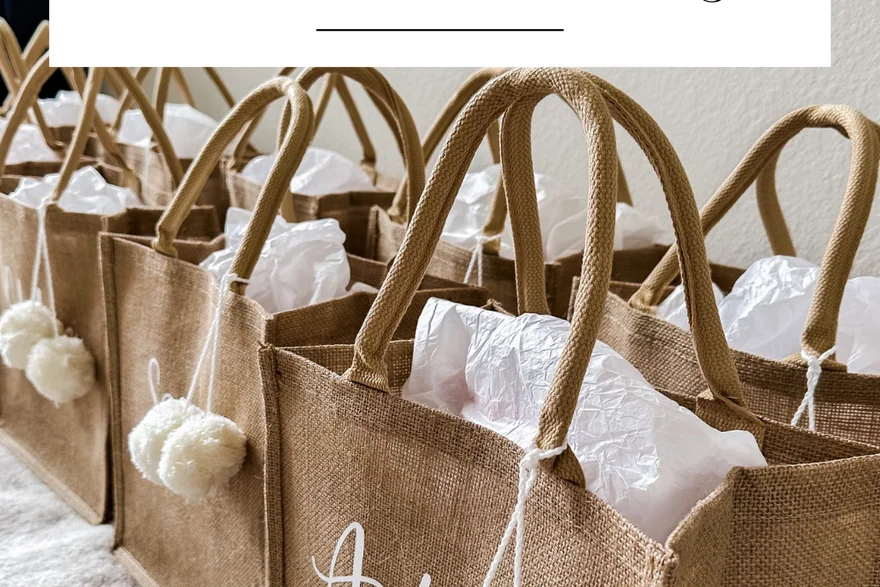
What a bachelorette-party cosmetic bag has to do
A bachelorette-party cosmetic bag is a pouch, makeup bag or small toiletry case bought as a group favour and judged as a keepsake. Those two roles pull the specification in different directions. A favour is priced to be given away, which pushes towards a light shell, a single decoration and a flat panel that packs easily. A keepsake is kept in a bathroom or a travel case for years, which pushes towards a coating that does not crack at the fold, a closure that survives daily opening and a print that does not rub off at the corners. The brief that wins is the one that decides, before sampling, which of the two roles is primary.
Three mechanics separate this bag from the same pouch sold at retail. First, every unit carries different variable data, so the decoration step is not one screen or one plate repeated 500 times but 500 distinct applications that each have to be right. Second, one production run ends up at many destinations, so the packing list, the carton split and the address data become part of the product specification rather than an afterthought. Third, delivery is date-certain: a bag that arrives the week after the weekend has no use, which compresses the schedule in a way that shelf replenishment never does.
The category underneath is substantial, and the specification decision sits inside a real demand curve. 'Custom makeup bag' draws an estimated 5,400-6,600 monthly searches, while broader toiletry-bag demand runs far higher, and typical unit price bands on open marketplaces sit between $0.45 and $12.00 depending on construction and fabric weight. Marketplace listings commonly quote minimums in the 100-1,000 piece range, but a name-personalised programme needs a firmer number: 500 pieces per style and colourway. Buyers sourcing fabric that sits against skin often ask for assessment against OEKO-TEX Standard 100, and gifts shipped into the EU should be checked against EU REACH restrictions on substances in articles.
A name list that changes after sampling has started is the single most common cause of a slipped bachelorette delivery. Treat the final guest list as a technical document with the same status as the artwork file: spelled, confirmed and signed off before the first sample is cut.
Name-by-name personalisation: how variable data runs on a pouch
Variable data changes the cost structure of decoration. A screen print carries one set-up and then repeats cheaply, which is ideal for a fixed logo and useless for a per-unit name. Four routes handle names on a cosmetic bag: cut film applied by heat press, a printed DTF transfer, direct embroidery, and a separate name label sewn or inserted into the shell. Each has a different relationship between name count and cost, and each degrades differently on different fabrics, so the choice is made from the shell outward rather than from the artwork inward.
| Personalisation route | Set-up per name | Realistic name count per run | Visual result | Best fit |
|---|---|---|---|---|
| Cut film, heat pressed | Low, no digitising | Up to about 300 names per run | Flat, crisp edge, slight hand | Polyester and coated cotton shells, short lists |
| DTF transfer | Low, artwork printed per sheet | Up to about 600 names | Full colour, photographic detail | Multi-colour names with a small motif |
| Direct embroidery | Higher, per-name digitising | 60-200 names before cost climbs | Raised stitch, premium hand | Twill, canvas and velvet shells, premium sets |
| Woven or printed name label | Moderate, one label run | Any count, label made separately | Small, tailored, inside the bag | Minimal designs, lining or side-seam placement |
| Screen print, fixed art only | One set-up, no variation | Not suitable for names | Flat ink, durable on coated fabric | Shared art such as a date or a place name |
Embroidery deserves a specific note because it is the route most often requested and least often costed correctly. A six-to-nine-letter name at a 6-8 mm cap height runs roughly 2,500-6,000 stitches depending on the font, and stitch count drives both machine time and price. On a lightweight shell below roughly 180 g/m², dense satin stitch pulls the fabric and puckers around the letterforms unless a cut-away or tear-away backing is specified and the stitch density is reduced. Buyers who want the embroidered look on a light fabric usually get a better result from a twill or canvas shell in the 260-320 g/m² range, or from an embroidered patch applied to the shell rather than stitched through it.
Roster hygiene is where name runs succeed or fail. Cap the character count before design starts, because a 14-character name at the same cap height as a five-character name forces the lettering smaller and the set stops looking like a set. Confirm diacritics and accented characters in writing: film and DTF handle them easily, embroidery fonts frequently do not, and a name rendered without its accent is a defect the recipient notices immediately. Ask for one physical proof per distinct name length rather than one proof for the whole set, and hold a spare 3-5% blank stock so a late guest or a misspelling can be finished without re-running the minimum.
Scheduling follows from all of this. Sampling runs 6-10 working days for a standard pouch and 12-15 working days for complex constructions such as a moulded case or a multi-compartment vanity format. Bulk production then takes 35-50 days after sample approval, and personalisation adds a further handling step at the end of the line. Working backwards from a fixed weekend date, the name list should be locked roughly 12-14 weeks out, artwork approved two to three weeks before that, and a two-week buffer left before the event for freight and for the split-shipment leg described below.
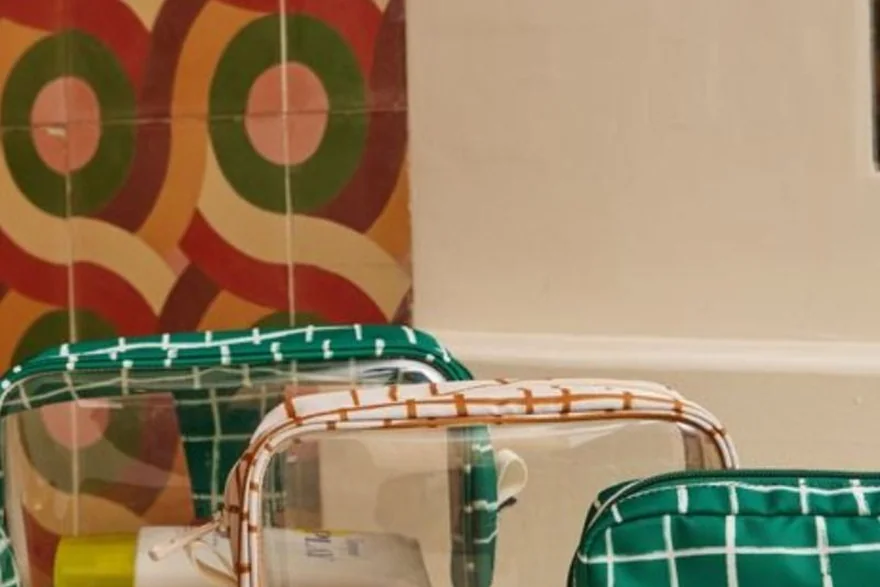
Split shipping: one production run, many guest addresses
A group-gifting programme almost never delivers to one place. Some guests receive the bag before the weekend as part of a invitation pack, some receive it at the venue, and some are sent one afterwards because they could not attend. That means the order leaves the production point as a single consolidated shipment and is then broken into individual parcels, and the cost and risk of that break sit with the buyer rather than with the bag programme. The decision to make early is where the split happens: in the country of import, in a third-party fulfilment warehouse, or at the destination address list level through a courier with multi-drop capability.
- Confirm the number of distinct delivery addresses before booking production, not after; every extra destination adds handling and data-entry risk.
- Capture addresses in a single structured file with name, address line, postcode, country and phone, and match each row to the exact spelling used on the bag.
- Ship on FOB Xiamen terms to one import point first, then split domestically; splitting at origin usually costs more per parcel and complicates customs.
- Pack each guest bag individually in a polybag with a name card inside, so the parcel can be addressed without opening the product packaging.
- Budget 2-4 working days for the split leg on top of the freight leg, and more in peak courier periods around public holidays.
- Keep 3-5% spare finished units at the import point for address corrections and for late additions to the party.
Terminology matters here. Shipment is FOB Xiamen with T/T 30 deposit and 70 against bill of lading, which covers the goods to the port of export. Everything after that point is the buyer's freight and the buyer's courier account. A consolidated carton of 500 pouches might pack 40-60 units per carton depending on size, so a single-style run is 9-13 cartons, and a split into twelve domestic parcels from those cartons is a re-pack operation that needs a bench, a label printer and a packing list keyed to names. Buyers who skip the packing list end up matching bags to addresses by eye at 11pm, which is exactly how a set gets mismatched.
Presentation at the point of receipt is part of the gift. A cosmetic bag that arrives loose in a brown mailer reads as freight, not as a favour. Individual polybag, acid-free tissue, a folded card with the guest's name and the event date, and a rigid outer mailer for the parcel leg keep the bag flat and clean. For bags handed over at the venue instead of shipped, a drawstring dust bag or a paper belly band costs little and protects the surface in transit. Whichever route is taken, the outer packaging should carry no pricing and no supplier markings, because the recipient is a guest rather than a trade customer.
International splits need one further check. If guests are spread across more than one country, each parcel is its own import event with its own de minimis threshold, duty treatment and carrier paperwork, and a gift shipment declared incorrectly can be held at the border longer than the event is away. In that situation the safer structure is to ship one consolidated consignment to one address in each country and split locally within it, which reduces the number of customs entries from one per guest to one per country.
Quality control should be run before the split rather than after it. Inspection follows AQL 2.5 under ISO 2859-1, and the sampling procedures are set out in ISO 2859-1. Applied to a personalised run, that standard decides how many units are pulled from the lot for checking, and the check has to include the name itself, not just the bag construction. A misspelled name is a functional defect under any reasonable definition, so it belongs in the defect classification rather than being treated as a cosmetic issue.
Small-run economics when the minimum is 500 pieces
The arithmetic is the part of group gifting that surprises buyers first. A bridal party is typically 6-14 people, and the production minimum is 500 pieces per style and colourway. Those two numbers do not meet. The minimum is not negotiable downwards, because below it the line changeover, the fabric cutting marker and the print set-up cost more per unit than the bag itself. The question is therefore not how to order 12 bags, but how to absorb 500 units of committed stock against a 12-name event, and there are four workable answers depending on who is buying.
| Buyer and party size | What the minimum forces | Practical route | Where the surplus goes |
|---|---|---|---|
| One party, 6-8 names | 492+ units of surplus against one event | Stock shell in a standard colourway with a name transfer applied locally | No surplus if the base shell is bought as ongoing inventory |
| One party, 10-14 names | Roughly 486 spare units | Same shell, one colourway, names applied in one run; bride variant only if it clears 500 on its own | Hold as blanks for the next event or for a shower and rehearsal set |
| Planner running 8-12 parties a year | One run covers several events | One shell, one colourway, per-event name runs applied to committed blank stock | Consumed across the event calendar with no dead stock |
| Retailer or e-commerce seller, 60+ names per month | Minimum cleared every month | Seasonal colourway rotation with a permanent name option | Sold through as a personalisation SKU at retail margin |
Per-name cost behaves differently from per-unit cost, and conflating them is the second common error. The shell cost falls as quantity rises, but the name application is roughly linear: each additional name adds material and handling regardless of whether the run is 60 or 600. Embroidery is the exception because digitising is a per-name set-up, so a 12-name embroidered run carries twelve digitising charges against it while a 12-name transfer run carries none. That is why short lists almost always land on film or DTF, and why embroidery becomes rational only when the same names repeat across a larger programme.
Colourway counting catches buyers out too. A guest bag in blush and a bride bag in white are two colourways and therefore two 500-piece commitments if both are custom-dyed. The cheaper structure is one shell colourway for the whole party, with the bride's unit distinguished by decoration rather than by fabric: a metallic thread, a different name treatment, a larger format or an added charm. If a genuinely different colour is required, treat it as a separate style with its own minimum, its own sampling window and its own place in the budget, rather than assuming it rides along on the first order.
Set-up amortisation explains the shape of the quote. Decoration set-up, sampling and any tooling are fixed; they are divided by however many units the programme commits to. Across 500 units a modest set-up is a few cents per bag; across 12 it dominates the unit cost entirely. Buyers comparing quotes should therefore ask for the fixed costs and the variable costs separately, because a quote that looks expensive at 500 may be the cheaper option at 1,500 once the fixed portion is spread, and a quote that looks cheap at 12 may simply have excluded it.
- Lock the roster before sampling; a name change after approval restarts a step, not a spreadsheet.
- Choose the personalisation method from the shell fabric outward, not from the artwork inward.
- Count each colourway as its own 500-piece commitment.
- Ask for fixed and variable costs quoted separately so the amortisation is visible.
- Finish inspection on AQL 2.5 before the shipment is split, with names included in the defect list.
The B2B Customisation View
A sourcing brief for makeup bags and toiletry bags should name the test standard before it names the fabric, because the standard decides which fabrics remain on the table.
Budgeting and scheduling inputs: MOQ 500 per style and colourway; sampling 6–10 working days, extended to 12–15 for lined, moulded or hardware-heavy builds; bulk 35–50 days; pre-shipment inspection at AQL 2.5 per ISO 2859-1; FOB Xiamen; T/T 30/70.
QUANZHOU JUNYUAN BAGS sits between the brand and the production floor precisely so that the brand never has to choose between cost control and inspection discipline.
Which Brand Types Benefit Most
Group-gifting cosmetic bags suit five buyer types, and the right specification differs sharply between them. Start-up brands and independent personalisation sellers get the most from a single evergreen shell held as committed stock with names applied per order, because that structure clears the 500-piece minimum once a year rather than once a week and turns personalisation into a service rather than a production run. Established beauty brands use the format differently: a limited colourway tied to a bridal season, sold as a gifting set alongside cosmetics, where the bag is a retail SKU and the 500-piece minimum is absorbed by normal sell-through. Retailers and e-commerce sellers treating personalisation as a permanent offer need the opposite approach, with two or three colourways rotating seasonally and the name run batched weekly, which keeps the decoration queue short and the delivery promise honest.
Gift and hospitality buyers, including event planners, hotels and venue operators running wedding weekends, are the group most exposed to the mismatch between party size and minimum. For them the useful move is to buy the shell in a neutral colourway across a full event calendar and treat names as a variable applied nearer the date, which converts a per-event purchase into annual inventory. Wholesalers sit between these models and mostly care about the blank: a shell that takes both film and embroidery cleanly, in a colourway that stays saleable for two seasons, is worth more to them than any particular decoration. Across all five, the specification that travels best is a mid-weight coated shell, one main colourway, a name treatment chosen to match the run length, and a packing spec written as carefully as the artwork.
- Start-up brands: one committed shell, per-order names, minimum cleared annually.
- Established brands: seasonal bridal colourway sold as a retail gifting set.
- Retailers and e-commerce sellers: rotating colourways with weekly batched name runs.
- Gift and hospitality buyers: neutral shell bought across a full event calendar.
- Wholesalers: a blank that accepts both film and embroidery without puckering.
Frequently Asked Questions
How far ahead of a bachelorette weekend should a personalised cosmetic bag order start?
Work back from the event date rather than forward from the enquiry. Sampling takes 6-10 working days for a standard pouch, 12-15 for complex constructions, and bulk takes 35-50 days after approval. Personalisation adds a handling step at the end, and the split-shipment leg adds 2-4 working days on top of freight. A comfortable plan locks the name list 12-14 weeks out and leaves a two-week buffer before the weekend.
Which personalisation method gives the cleanest single-name result on a satin pouch?
Film applied by heat press generally gives the crispest edge on satin, because it sits on the surface rather than pulling the weave. Embroidery on satin below roughly 180 g/m² tends to pucker around dense letterforms unless a backing is specified and stitch density is reduced. If the embroidered hand is essential, move to a twill or canvas shell, or apply the name as an embroidered patch rather than stitching through the face fabric.
Can each bridesmaid receive a different name and role, such as Maid of Honour?
Yes, and it is one of the advantages of variable-data decoration. Each unit can carry a name and a role line, provided the character count is capped before design starts so the set stays visually consistent. Roles add length, so a two-line layout often works better than one: the name at 8-10 mm cap height and the role beneath it at roughly half that size.
Does a bride's bag in a different colour count towards the same 500-piece minimum?
No. The minimum is 500 pieces per style and colourway, so a blush guest bag and a white bride bag are two separate commitments unless the difference is decoration only. The economical structure is one shell colourway for the whole party with the bride's unit distinguished by metallic thread, a different name treatment or a larger format. A genuinely different fabric colour needs its own run and its own sampling window.
What happens if a guest drops out after the name list is locked?
This is why a blank allowance matters. Holding 3-5% of the run unpersonalised, or keeping spare blanks at the import point, means a withdrawal simply releases a unit back to stock. Without that allowance the choice is between shipping a bag with the wrong name and restarting a decoration step that has already been set up, which costs more in time than the spare stock costs in money.
How many characters fit on a name before the lettering has to be reduced?
There is no universal number because it depends on cap height and shell width, but a practical rule is to design for the longest name in the roster rather than the shortest. On a 20 cm pouch, a 6-8 mm cap height carries roughly 12-16 characters comfortably in a single line. Beyond that, reduce cap height, move to two lines, or switch to a narrower font, and confirm the result on a physical proof.
Can accented characters and non-Latin scripts be applied to a cosmetic bag?
Film and printed transfers handle accented Latin characters and most non-Latin scripts without difficulty, because the artwork is simply printed. Embroidery is more limited: many standard embroidery fonts do not include the full accented set, and complex scripts may need hand digitising per name. Confirm character coverage with the decoration team before the roster is finalised, not after the digitising has been paid for.
Is it cheaper to ship one consolidated carton or twelve individual parcels?
Consolidated freight to one import point is almost always cheaper per unit than twelve international parcels, because each parcel carries its own minimum charge, its own customs entry and its own handling. The saving comes from splitting after import: one international leg, then domestic parcels. The exception is a group spread across several countries, where one consignment per country and a local split usually beats per-guest customs entries.
What does split shipping add on top of the FOB price?
Shipment is FOB Xiamen, which covers the goods to the port of export. Everything after that is the buyer's cost: international freight, import clearance, the re-pack into individual parcels, domestic courier charges and any duty. As a planning figure, the split leg typically adds 2-4 working days and a per-parcel courier charge, so twelve guests cost noticeably more per unit delivered than one bulk address.
Which fabric weights hold embroidery without puckering on a pouch?
Twill and canvas in the 260-320 g/m² range hold satin stitch well at a 6-8 mm cap height. Below roughly 180 g/m² the fabric needs a cut-away or tear-away backing and reduced stitch density, and even then lightweight polyester satin can show pulling around the letters. Where the look matters more than the method, an embroidered patch applied to the shell avoids the issue entirely.
Are personalised cosmetic bags appropriate as favours where children may be present?
A cosmetic bag given to an adult at an adult event is not a children's product, but if bags will end up within reach of young children, the small-parts question is worth raising. Detachable charms, loose beads and long cords are the usual concerns. Buyers wanting a documented position often reference the Consumer Product Safety Improvement Act when setting limits on lead content and small detachable parts.
How is the 500-piece minimum counted when names vary but the shell does not?
The minimum attaches to the style and the colourway, not to the decoration. One shell in one colourway carrying 500 different names is a single 500-piece order and clears the minimum once. Changing the shell fabric, the size, or the body colour starts a new count. That is why variable names are the cheapest way to personalise and why colour variation is the most expensive.
What packaging keeps a personalised bag presentable when it arrives by courier?
Pack each bag in its own polybag with acid-free tissue inside to hold shape, add a folded card with the guest name and event date, and use a rigid outer mailer for the parcel leg. The outer packaging should carry no pricing and no supplier markings, because the recipient is a guest. Bags handed over at the venue instead do better in a dust bag or a paper belly band.
Can the same programme be reordered later for a wedding shower?
Yes, and this is the strongest argument for holding blank stock. If the shell and colourway are kept identical, a later shower or rehearsal order needs only a name run against committed blanks, which is far faster than a fresh production cycle. Buyers planning two or three related events in a season should specify one shell up front and treat each event as a decoration batch.
How is colour consistency checked across a run where every name differs?
Colour consistency is a fabric and print question, independent of the names. Ask for a reference swatch approved against the bulk dye lot, and require the decoration colour to be matched to the same swatch rather than to a screen image. Inspection at AQL 2.5 under ISO 2859-1 then confirms the shipped lot against that approved reference before the shipment is split into guest parcels.
People Also Ask
Are personalised cosmetic bags a good bachelorette party favour?
They work better than most favours because they are used after the event rather than discarded. The caveat is scale: a party of 6-14 names sits far below the 500-piece minimum per style and colourway, so the economics only work if the buyer holds the shell as ongoing stock, applies names per order, or runs several events against one committed colourway.
How much does a custom bachelorette cosmetic bag cost per guest?
Per-guest cost depends on whether fixed costs are being amortised. The shell itself lands inside the broad $0.45-$12.00 unit band depending on fabric and construction, but decoration set-up and sampling are fixed sums divided across the committed quantity. Across 500 units that is cents; across 12 names it dominates the number entirely, which is why short lists suit film or transfer over embroidery.
How long does it take to get personalised bridesmaid bags made?
Sampling takes 6-10 working days for a standard pouch and 12-15 working days for complex constructions, then bulk production takes 35-50 days after sample approval. Personalisation adds a handling step and split shipping adds another 2-4 working days. Planning from a fixed event date, the name list should be locked roughly 12-14 weeks in advance. Freight after FOB Xiamen and the split-shipment leg should be added on top of that figure.
Can different names be printed on the same bag order?
Yes. Variable-data decoration applies a different name to each unit within a single run, and the 500-piece minimum still counts once because it attaches to the style and colourway rather than to the decoration. What changes the count is a different shell size, fabric or body colour, each of which starts a new 500-piece commitment. Personalising by name is therefore the cheapest way to add value without adding a production commitment.
Request a Sample or a Written Quotation
Send the silhouette, dimensions, material preference and logo artwork, and the programme team will return a written quotation with MOQ, sampling window, bulk lead time and inspection standard.
Email: [email protected] · WhatsApp: +86 177 5002 0688