Dental & Medical Cosmetic Bags: Patient Giveaway & Branding
Executive Summary
Dental and medical cosmetic bags are branded makeup, toiletry or grooming pouches handed to patients as practice-branded courtesy items and then used afterwards at home and while travelling. The format works because the recipient already has a relationship with the practice and the pouch is useful daily, keeping the name visible considerably longer than a leaflet or a business card. Three attributes decide whether it reads as thoughtful rather than as marketing: a surface that lifts everyday marks with a damp cloth, a small enough format to sit in a handbag or on a bathroom shelf, and branding discreet enough that a patient will actually carry it.
A usual specification is an 18 x 11 x 6 cm pouch in PU-faced polyester at roughly 220 to 300 grams per square metre, with one small logo position. Programmes start at 500 pieces per style and colourway, sampling takes 6-10 working days and 12-15 for complex builds, bulk runs 35-50 days after sample approval, and inspection follows AQL 2.5 under ISO 2859-1. Shipment is FOB Xiamen with payment T/T 30 deposit, 70 against bill of lading. One boundary matters throughout: this is a branded promotional item, never a clinical one.
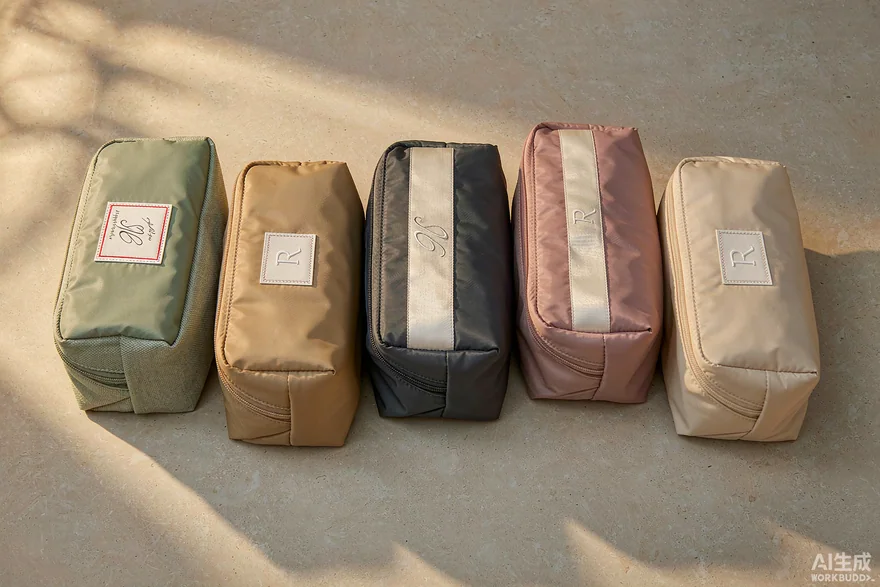
What a Practice-Branded Giveaway Bag Is, and What It Is Not
A patient giveaway bag in this channel is a promotional item with a name, a logo and occasionally a short message printed on it. It belongs to the same family as any other branded pouch given away by a business: a courtesy object that travels home, sits on a shelf, gets packed into a suitcase and occasionally gets noticed by somebody else. The specification questions it raises are therefore ordinary questions about fabric weight, closure quality, print durability and unit cost, and those are the questions this guide addresses.
What the item is not matters just as much and needs stating plainly at the front of any programme brief. A printed cosmetic pouch is not a medical device, not personal protective equipment, and not part of any clinical process. No claim about health outcomes, cleanliness standards, infection prevention or suitability for procedural use should be attached to it, in copy, in packaging or in conversation with patients. The correct description is always the same one: a branded promotional gift for use away from treatment areas.
- Welcome packs for new patients, alongside registration paperwork and practice information sheets.
- Post-treatment courtesy gifts handed over at reception rather than in any treatment area.
- Orthodontic and longer-course programmes, where a patient returns many times over months.
- Open-day and community outreach events run by a practice or a group of practices.
- Staff-facing uses such as onboarding kits, travel pouches and employee recognition items.
Group structures shape almost every purchasing decision. An individual practice closing twenty new-patient registrations a month does not consume 500 pieces in a year, so most programmes are ordered either by a dental service organisation covering several sites, or by a buying group that aggregates demand across locations. That aggregation changes the brief: the artwork has to work across multiple practice names, which usually pushes variable name data onto a second print position and keeps the shell itself constant. It also means storage lands at one central address with redistribution handled internally.
Everything below describes a branded promotional giveaway item. It makes no clinical, therapeutic or infection-prevention claim and implies no suitability for clinical use. Should any item be brought into a clinical setting, the practice must select, handle and maintain it according to its own documented protocols and the regulations that apply in its own jurisdiction. Those decisions belong to the practice, not to the sourcing file.
Wipe-Clean Surfaces: Comparing Coatings, Films and Seam Structures
The one performance property that genuinely differentiates giveaway constructions in this channel is how the outer surface behaves when somebody wipes it. A pouch that takes marks permanently gets discarded; one that lifts marks with a damp cloth stays in a bathroom for years. That is a surface-engineering question about coating chemistry, film smoothness and how seams are built, and it is best compared option by option rather than asserted as a general quality claim.
| Surface option | Construction | Behaviour when wiped | Hand-feel | Typical unit band |
|---|---|---|---|---|
| PU-faced polyester | 420D polyester with roughly 0.12 mm PU face | Most everyday marks lift with a damp cloth | Slightly firm with a matte finish | $1.10-2.60 |
| TPU-laminated woven | Film bonded to a 600D woven base | Resists oil absorption better than the acrylic options | Softer and more flexible than PU-faced | $2.40-4.20 |
| Calendered PVC shell | PVC film on a lightweight knit backing | Very smooth, so surface marks lift easily | Stiffens noticeably below about 10 degrees Celsius | $0.90-2.00 |
| Acrylic-coated canvas | 12 oz cotton canvas with a clear acrylic finish | Absorbs oil before it can be lifted off | Most natural hand of the group, least practical here | $1.80-3.40 |
| rPET with PU face | Recycled polyester face with PU coating | Comparable to virgin PU-faced polyester | Close to standard PU face | $1.60-3.10 |
Specifying a coated shell properly is easier once the vocabulary is shared. The coating standards used across the trade, including terminology for adhesion, coating mass and film behaviour, sit within the ASTM framework; the entry point most buyers use is ASTM D751 on coated fabrics, which defines how coated constructions are described and tested. Referencing it in a specification lets a buyer ask for coating thickness and adhesion in measured terms instead of asking for a wipe-clean fabric and hoping the interpretation matches.
Seam structure decides whether the surface advantage survives contact with the contents. A coated shell with raw-cut internal seams exposes the textile core at every edge, which is where liquid enters and where marks set in permanently. Binding those internal seams, or specifying high-frequency welded construction on film-based shells, removes most of the exposed textile. Bound seams typically add $0.15 to $0.40 per unit on a pouch of this size, and in a hybrid wipe-clean brief that cost buys more perceived quality than upgrading the shell weight would.
Closures and hardware follow the same logic. A coil zip with dyed tape blends into the shell and avoids visual noise, and a coated slider resists dulling better than raw cast metal. Print durability interacts here too: a logo printed across a flex point such as a gusset curve will craze over repeated opening, so the sensible placement is on the flat front face away from any fold. Where artwork must sit near an edge, keeping 8 mm of clearance protects it.
European buyers typically ask for two documents alongside any coated specification. The first addresses restricted substances within the framework described at the EU REACH regulation page, specifically for the coating, film and print specified rather than for the company generally. The second is an article-level certificate against the restricted-substance list behind OEKO-TEX Standard 100. Requesting both at quotation avoids delay later.
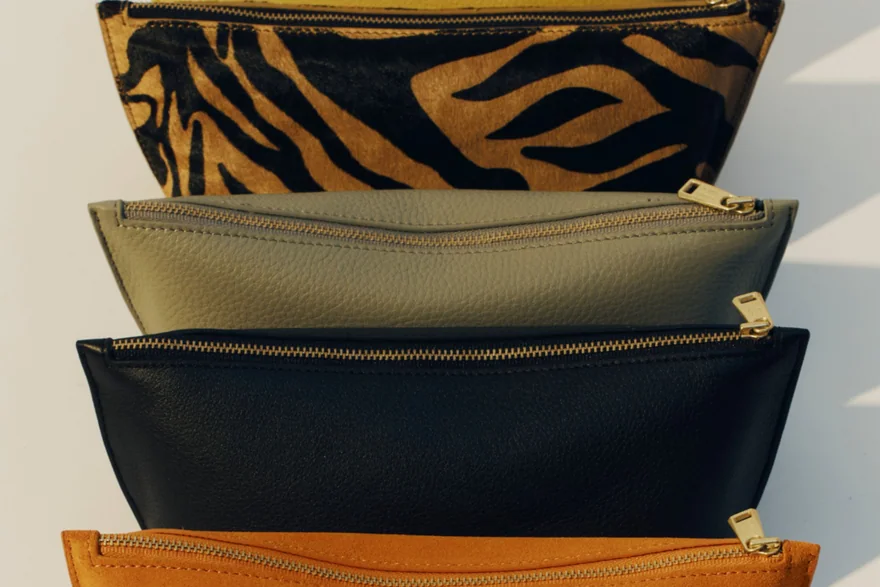
Small-Format Design: Sizing, Interior Layout and Logo Discretion
Size discipline separates a bag that gets used from one that gets stored. Formats above roughly 20 cm wide do not fit comfortably in most handbags and end up relegated to a drawer, whereas anything much below 16 cm wide will not hold a standard toothbrush case lying flat. The productive range sits between those two numbers, and the most frequently specified dimensions are narrower than buyers expect when they first see them flat packed.
- Dimensions: 18 x 11 x 6 cm suits handbag carry and still takes a toothbrush case, travel tube and small comb without forcing.
- Gusset: a 6 cm base gusset lets the pouch stand upright on a shelf, which matters because a bag lying collapsed looks cheap.
- Interior: one lining pocket plus an elastic loop holds contents apart; an entirely open interior lets items tangle and looks untidy on opening.
- Zipper tape: choose a dyed-to-match tape rather than contrasting black or white, because a visible tape line reads as unfinished even on a low-cost shell.
- Logo size: roughly 35-55 mm wide sits below the threshold where a patient starts avoiding carrying the bag in public.
- Colour: mid-tone neutrals hide incidental marks far better than white or black, which show either stains or dust respectively.
Colour selection interacts with both discretion and surface behaviour. Very pale shells show incidental marks immediately and steadily look worn, while very dark ones show dust and scuffing at the edges. Mid-tones — soft grey, warm stone, muted teal, dusty navy — occupy the workable middle, hiding day-to-day contact marks while still being light enough to read as clean. Practices strongly attached to a corporate colour usually resolve this by keeping the corporate tone on the lining and choosing a mid-tone neutral for the shell.
Sizing follows contents rather than fashion. The three items most commonly carried are a toothbrush case around 21 x 4.5 cm, a travel-size tube standing upright, and a small comb or flosser pack. A base gusset of 6 cm accommodates all three without the pouch bulging, whereas a 4 cm gusset forces the tube to lie diagonally and quickly distorts the silhouette. Where recipients are likely to fly with the pouch, the relevant reference for travel-size liquids is the 100 ml carry-on liquids rule published by the TSA, which fixes the size threshold patients are already working to. Interior organisation should stay simple: one open pocket roughly 8 cm deep plus one or two elastic loops of 15-20 mm tape is enough, because anything more elaborate on an 18 cm pouch crowds the contents and makes the item annoying to use.
Variable practice names deserve attention in multi-site programmes. Adding each site name adds a second print setup and typically $0.35 to $0.90 per piece through film transfer, considerably more through embroidery. The cleaner route for groups is often one constant shell carrying the group identity, with site names applied to a removable card or small tag rather than permanently printed, which preserves flexibility if a location closes or rebrands. It also avoids stranding stock printed with a name that is no longer current.
The measure of success for a patient giveaway bag is unglamorous: whether the recipient still carries it eleven months later. Every specification decision, from logo width down to zip tape colour, either supports that outcome or quietly undermines it.
Ordering, Documentation and Inventory Planning for Practice Programmes
The commercial mechanics of a practice programme are straightforward, but they interact with practice cash flow and with annual marketing budgets in ways that catch buyers out. Minimum applies per style and colourway, so a group wanting two shell colours is placing two separate commitments. Sampling sits before any artwork spend, and bulk production follows approval. The table below sets the variables out as they apply to a typical programme of this kind.
| Ordering variable | Typical value | Why it matters for practices |
|---|---|---|
| Minimum quantity | 500 pieces per style and colourway | A single site rarely consumes that volume in a year, so group or buying-circle aggregation is the norm |
| Sampling lead time | 6-10 working days, 12-15 for complex constructions | Allows samples to circulate to several site managers before artwork is committed |
| Bulk production | 35-50 days after sample approval | Plan around new-patient campaigns and open-day calendars rather than around purchasing convenience |
| Inspection standard | AQL 2.5 under ISO 2859-1 | Agree beforehand how marks on a wipe-clean surface and print defects are classified |
| Carton count | 150-250 pieces per carton depending on format | Determines whether a group office can physically receive and store the run |
| Shipment and payment | FOB Xiamen; T/T 30 deposit, 70 against bill of lading | Landed cost, not unit cost, is what appears against a marketing budget line |
Documentation should be gathered at quotation rather than requested once goods are scheduled. Besides the restricted-substance evidence already mentioned, practices and their group offices frequently require a written material declaration naming the shell, lining, coating and closure, together with any evidence requested by the group's procurement policy. Where a group operates across several jurisdictions it is prudent to have those requirements written into the original brief, since policies differ and a single missing declaration can hold a shipment at a central warehouse.
- Aggregate demand across sites so one colourway clears the 500-piece minimum instead of several part-colour commitments.
- Keep variable site names on cards or tags rather than printed permanently, so rebranded locations do not strand stock.
- Order one shell colourway only in the first cycle; add a second colourway once consumption data exists.
- Size the first order around a twelve-month registration forecast rather than around a discount threshold.
- Record marketing copy boundaries in the brief: promotional giveaway item, no clinical language, no health-related claims.
Inventory planning deserves a final note because giving away a promotional item is seasonal in most practices. New-patient registrations tend to cluster after the start of a calendar year and again in early autumn, and open-day events concentrate into a handful of weekends. Ordering once, with a deliberate 10-15% buffer, avoids the awkward mid-year shortfall that cannot be topped up economically because any additional run carries the full minimum again. Stored flat in their original cartons, neutral pouches hold their condition for years, so a modest surplus costs very little and prevents a far more expensive emergency reorder.
One final boundary belongs in the purchase file itself. Where a practice intends any item to enter a clinical area, selection and use must follow the practice's own protocols and the regulations that apply where it operates; that determination rests with the practice and its advisers, not with the sourcing specification. The guidance throughout this article covers the promotional giveaway item only, specified for everyday personal use away from treatment areas.
The B2B Customisation View
A realistic cosmetic bags schedule assumes one round of sample revision; planning for a perfect first sample is the most common cause of a slipped launch.
Fixed commercial parameters: 500 pieces per style and colourway minimum, first sample in 6–10 working days (12–15 for complex or hardware-intensive constructions), bulk 35–50 days after approval, AQL 2.5 inspection under ISO 2859-1, FOB Xiamen, T/T 30/70.
A sourcing-partner structure also protects the buyer when volumes grow, because capacity for cosmetic bags can be spread across SGS-verified production lines without changing the specification.
Which Brand Types Benefit Most
Buyer profiles in this channel are unusually concentrated. Dental service organisations and multi-site groups place the majority of orders, because they can aggregate new-patient volume across locations and clear a 500-piece minimum on one colourway without difficulty; for them the controlling factors are even redistribution to sites and a material file that satisfies group procurement. Independent single-site practices generally order through a buying circle or alongside neighbouring practices, which means the brief has to accommodate several practice names and therefore favours variable tags over permanent printing. Orthodontic and longer-course practices form a distinct segment: their patients return repeatedly over months or years, so a pouch handed over early in a course of treatment stays in use with a frequency that general practices rarely see, which justifies a slightly higher unit cost. Retail pharmacy-adjacent brands and health-adjacent e-commerce sellers approach the same silhouette from a different direction, wanting a clean, minimally branded pouch that sells alongside own-label oral care rather than one carrying a practice logo. Start-up oral-care brands occasionally use the format as a subscription welcome item, where consistency of supply across years matters more than the lowest possible unit price. QUANZHOU JUNYUAN BAGS coordinates programmes across these profiles against SGS-verified production floor space of 4,950 square metres over 7 production lines and 149 machines, with monthly output capacity of 200,000 pieces and team experience in bag development and export since 2004.
- Multi-site dental groups: aggregate new-patient volume across locations to clear one colourway minimum.
- Independent practices: join buying circles and put variable names on tags rather than on the shell.
- Orthodontic and long-course practices: justify a higher unit cost because the pouch sees daily repeat use.
- Pharmacy-adjacent retailers: request minimal branding so the pouch sits alongside own-label ranges.
- Subscription oral-care brands: prioritise multi-year supply consistency over the lowest unit price.
Frequently Asked Questions
What size cosmetic bag suits a dental patient giveaway?
Formats between roughly 16 and 20 cm wide work best. Below 16 cm the pouch will not hold a toothbrush case lying flat, and above 20 cm it stops fitting comfortably inside most handbags and gets relegated to a drawer. An 18 x 11 x 6 cm pattern with a 6 cm base gusset suits most programmes, since the gusset lets the pouch stand upright on a shelf instead of collapsing.
Which surface is most practical for everyday use by patients?
A PU-faced polyester at roughly 220 to 300 grams per square metre is the usual answer, because most everyday marks lift with a damp cloth and the unit cost stays low. TPU-laminated woven constructions resist oil absorption better and feel softer, at a higher price. Acrylic-coated canvas has the most natural hand but absorbs oil before it can be wiped away.
Does a branded pouch given to patients need regulatory clearance?
No clearance applies to it as a promotional item, because no clinical, therapeutic or infection-prevention claim attaches to it. The boundary should be written into the brief: promotional giveaway item for everyday personal use away from treatment areas, with no health-related language anywhere in copy or packaging. If a practice intends any item to enter a clinical area, that determination belongs to the practice and its own protocols and regulations.
Why do seam treatments matter on a wipe-clean shell?
Because a coated outer face is only as good as its weakest edge. Raw-cut internal seams expose the textile core at every edge, which is where liquid enters and where marks set permanently. Binding those seams, or using high-frequency welded construction on film-based shells, removes most exposed textile and typically adds $0.15 to $0.40 per unit on a pouch this size.
How should coated fabric be specified so both sides interpret it the same way?
Reference a recognised vocabulary rather than adjectives. The coating standards used across the trade, including terminology for adhesion and film behaviour, sit within the ASTM framework, with ASTM D751 on coated fabrics being the common entry point. Citing it allows a buyer to request measured coating thickness and adhesion figures instead of asking for a wipe-clean fabric and hoping the interpretation matches.
How large should the practice logo be?
Roughly 35 to 55 mm wide on an 18 cm face. Above that size many patients stop carrying the bag because it reads as advertising, which defeats the entire purpose of giving it away. Below about 30 mm the mark becomes hard to read on textured shells. Keeping the logo off gusset curves and at least 8 mm clear of any fold also protects it from crazing.
Can several practice names share one production run?
Yes, with planning. The minimum stays at 500 pieces per style and colourway, but each additional name adds a second print setup and per-piece application cost, typically $0.35 to $0.90 through film transfer. Putting site names on a removable card or small tag instead of permanently printing them is often cheaper over time and avoids stranding stock when a location rebrands.
What colour hides everyday marks best?
Mid-tone neutrals. Very pale shells show incidental marks immediately and quickly look worn, while very dark shells show dust and edge scuffing. Soft grey, warm stone, muted teal and dusty navy all sit in the workable middle. Practices committed to a corporate colour usually keep that tone on the lining and choose a mid-tone neutral for the shell.
How long does a first programme take from agreed specification to delivery?
Roughly three months. Sampling takes 6-10 working days, rising to 12-15 where welded seams or tooled elements are involved, then bulk production runs 35-50 days after sample approval. Freight and any customs formalities add further weeks, so a programme intended for a specific campaign should be specified well before that campaign's artwork is finalised.
What documentation do European group procurement teams request?
Usually two items: a declaration addressing restricted substances under REACH for the specific coating, film and print specified, and an article-level certificate against the restricted-substance list behind OEKO-TEX Standard 100. Some group offices also require a written material declaration naming shell, lining, coating and closure. Requesting these at quotation avoids discovering a gap once goods are scheduled.
Is a lining worth the extra cost on a giveaway pouch?
Usually yes, on this channel. A lining conceals internal seams, gives a finished appearance on opening and stops contents catching on raw stitching. Polyester taffeta at roughly 60-70 grams per square metre adds about $0.30 to $0.60 per unit. Because the pouch is given to someone with an existing relationship, the difference between finished and unfinished interiors matters more here than on a street giveaway.
How should a practice group size its first order?
Work from a twelve-month new-patient registration forecast rather than a discount threshold, then add a 10-15% buffer. New-patient registrations cluster in specific seasons, and a shortfall discovered mid-year cannot be topped up economically because any additional run carries the full 500-piece minimum again. Stored flat in original cartons, neutral pouches hold condition for years, so a surplus costs little.
What inspection standard applies and what should be agreed in advance?
Inspection follows AQL 2.5 under ISO 2859-1. On this type of programme disputes concentrate on cosmetic criteria, so how surface marks on a wipe-clean shell, print registration and thread ends are classified should be settled before inspection day. Lot definition matters too, since splitting a single shipment into multiple declared lots changes both sample size and outcome.
Are there any claims practices should avoid putting on the item?
Yes. Nothing clinical, therapeutic or related to infection prevention belongs on the pouch, its packaging or any accompanying card. Safe language describes it as a branded promotional gift for everyday personal use. Any claim suggesting suitability for a clinical setting shifts responsibility away from the practice's own protocols and creates unnecessary exposure that the item simply does not need to carry.
What payment and shipment terms apply to these programmes?
Shipment is FOB Xiamen with payment structured as T/T 30 deposit and 70 against bill of lading. Buyers comparing quotations should work from landed cost rather than unit cost, because freight and duty can move the comparison considerably, particularly on cartons holding 150 to 250 pieces each. Requesting both unit and landed figures makes different quotations genuinely comparable.
People Also Ask
Why do dental practices give branded bags to patients?
Because the recipient already knows the practice and uses a pouch daily, which keeps the name visible far longer than printed material does. The most effective versions look like ordinary toiletry bags rather than marketing, with a discreet logo and a surface that still looks presentable after months in a bathroom. Anything that resembles advertising tends not to be carried at all.
Can a patient giveaway bag be used in a treatment room?
Not by default. The item described here is a promotional gift specified for everyday personal use away from treatment areas, with no clinical or infection-related claims attached. Should a practice want an item present in a clinical area, selecting, cleaning and maintaining it must follow that practice's own protocols and the regulations applying in its jurisdiction.
How many branded pouches does a dental group need to order?
Minimum order quantity is 500 pieces per style and colourway. A single independent practice rarely consumes that in a year, so most ordering happens through a group or a buying circle pooling demand across several sites. Ordering one colourway with several variable tags is usually more economical than several part-colourway commitments.
How much does a branded patient giveaway pouch cost?
Landed unit cost depends on shell construction, seam treatment, print coverage and carton efficiency. Across the wider category, wholesale unit pricing runs roughly $0.45 to $12.00 per piece as of October 2026. A practical mid-range giveaway pouch with a wipe-clean face and bound internal seams commonly lands somewhere between $1.10 and $4.20 before freight and duty.
Request a Sample or a Written Quotation
Send the silhouette, dimensions, material preference and logo artwork, and the programme team will return a written quotation with MOQ, sampling window, bulk lead time and inspection standard.
Email: [email protected] · WhatsApp: +86 177 5002 0688