Vegan Leather Cosmetic Bags: PU, Cactus & Mushroom Leather
Executive Summary
Vegan leather cosmetic bags are bags whose outer shell uses no material of animal origin, and in practice that almost always means a coated fabric rather than a single material. The standard construction is a textile base, a polymer film or coating, and a top finish; polyurethane on a polyester knit is by far the most common, while cactus-based and mycelium-based sheets are partially bio-based composites that still rely on a synthetic binder or coating for strength.
Buyers should therefore specify the sheet rather than the adjective. The useful questions are polymer chemistry, coating thickness, backing fabric, peel strength, abrasion cycles, plasticiser type and whether the bio-based share is measured against total mass or against polymer mass alone. Vegan describes what is absent, not what the environmental profile is. Programmes start at 500 pieces per style and colourway, sampling takes 6 to 10 working days and 12 to 15 for complex builds, and bulk ships 35 to 50 days after approval to AQL 2.5 under ISO 2859-1, FOB Xiamen, T/T 30 deposit and 70 against bill of lading.
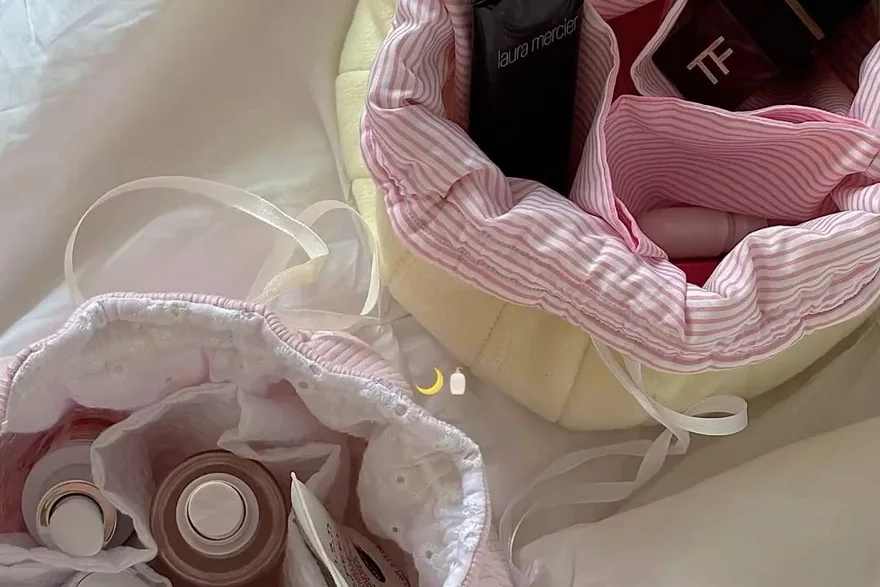
Reading a vegan leather specification rather than the word vegan
Vegan leather is a marketing category, not a material. It describes what is absent: no hide, no suede split, no leather offcut. Everything else has to come from the specification, because the materials that satisfy that definition range from a cheap PVC-coated knit to a bio-based polyurethane on a cotton backing, and their behaviour in service differs enormously. Buyers comparing options on that word alone routinely end up with two visually identical samples that fail differently in use.
Almost every shell in this category is a layered construction. At the bottom sits a base fabric, usually a polyester knit or woven cloth that provides tensile strength and tear resistance. Above it sits a tie coat that bonds the layers. Above that sits the polymer layer that gives the visual grain and most of the abrasion resistance, and above that a thin top coat controlling gloss, touch and staining. Total thickness for a cosmetic bag shell usually falls between about 0.6 mm and 1.2 mm, with softer gathering grades at the lower end and structured cases at the upper end.
Reading the construction this way makes costs and failure modes legible. Abrasion resistance comes mostly from the top coat and polymer layer. Tear strength comes mostly from the base fabric. Delamination happens at the tie coat. Gloss retention and scuff hiding come from the finish. A supplier quoting a low price has usually thinned exactly one of those layers, and knowing which one lets the buyer judge whether the saving is acceptable for the intended use and price point.
Three variants are worth distinguishing because they are often priced identically. Standard grain PU has an embossed grain rolled into the face during production and suits structured flat-front bags. Microfibre suede is a polyethylene or polyamide microfibre cloth impregnated with polyurethane, giving a nap that looks close to suede, gathers well and costs more per metre. Foam-laminated PU adds a thin foam between layers for padding, which improves the look of a quilted vanity case but doubles the material thickness at every seam and therefore changes the needle, thread and machine settings needed. Each has different implications for cutting yield, too: embossed grain usually has a direction, and ignoring it produces panels whose grain runs the wrong way across the front.
Polyurethane-coated fabric in detail, and what the test plan should cover
Polyurethane-coated fabric is, honestly described, a polyurethane coating applied to a textile base. That is not a criticism; it is what the material is, and the description matters because buyers are sometimes sold the word leather and then discover they bought a plastic-coated cloth. Its advantages are real: consistent grain and colour, no natural markings to sort around, good stitch-holding, high-frequency weldability, easier cleaning than suede, and a price well below full-grain hide. Its weaknesses are equally consistent: it does not develop patina, it can crease permanently, and it can hydrolyse.
Two polymers dominate, and they behave differently. Polyurethane chemistry comes in polyester-based and polyether-based families, and polyester-based PU is more prone to hydrolysis, where humidity slowly breaks the polymer chains and the coating turns tacky or crumbles away from the backing. Storage in hot, humid conditions accelerates it, which matters for bags shipping long distances by sea or sitting in a warehouse before sale. Polyether-based PU resists hydrolysis better and is generally the safer choice for any programme with monsoonal or tropical distribution, though it can be costlier.
Testing should be written into the tech pack rather than assumed. Coated fabrics have their own dedicated methods, notably the family published by ASTM as D751 coated fabrics, alongside a library of textile test methods covering colour fastness and abrasion. Minimum results are the buyer's decision and should be agreed with the laboratory before sampling starts, since a supplier left to choose will pick whichever limit is easiest to pass.
| Test | Why it matters in a bag | Typical failure seen |
|---|---|---|
| Coating adhesion or peel strength | Determines whether the face separates from the backing at folds | Delamination at creases after compression in cartons |
| Abrasion resistance to agreed cycles | Corner and edge wear where the bag rubs inside a suitcase | Grain worn through to the backing cloth at corners |
| Cold crack temperature | Winter deliveries to cold-climate markets | Fine cracks appearing when a folded bag is opened cold |
| Hydrolysis ageing | Shelf life in humid storage | Tacky surface and powder-like coating breakdown |
| Colour fastness to rubbing | Dark pigment transferring onto linings or clothing | Crocking from a deep black or red face |
| Restricted-substance screening | Access to EU and major-retail channels | Plasticiser or solvent residue above the limit |
Chemical compliance carries its own documentation. Synthetic coatings and their plasticisers are firmly inside the scope of European chemical regulation, set out in the framework explained at REACH, and finished textile articles are commonly screened against OEKO-TEX Standard 100. Ask for the substance declaration from the coating supplier, not just from the bag assembler, because the restriction applies to whoever puts the substance on the market. Practical tidy-up matters too: ask how long the supplier retains the declaration for the specific batch, since a retailer's questionnaire often arrives well after delivery has been invoiced and paid.
When comparing two quotations for an apparently identical eco leather, request the layer breakdown: base fabric weight, coating weight, total thickness. A saving achieved by thinning the polymer layer reduces the service life of the product in a way no certificate will reveal.
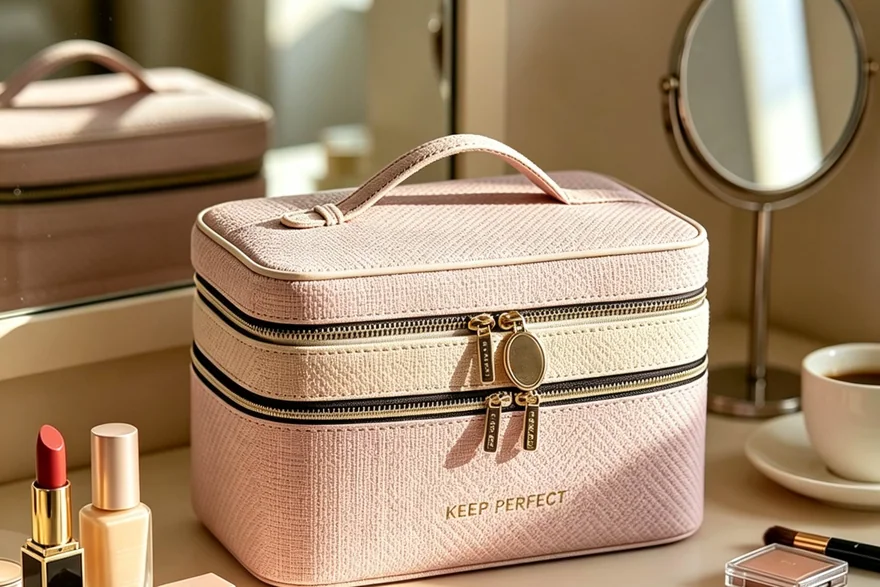
Cactus and mycelium sheets: what is actually in the material
Bio-based leather alternatives arrived with a great deal of publicity and comparatively little specification discipline. Cactus-based sheets start with milled cactus biomass, typically from an agricultural operation that already grows the crop, which is blended with a polymer binder and applied over a backing fabric. Mycelium-based sheets grow fungal mycelium on a substrate, harvest the resulting mat, then process and finish it much like a tanned hide, often with a polymer impregnation to reach workable strength. Both reduce reliance on fossil-derived polymer. Neither is a plastic-free material.
The single most useful number a buyer can request is the bio-based content, measured against a stated denominator. A figure quoted as a percentage of the coating says nothing about the share of the whole laminate, and a figure quoted against total mass including backing fabric is always lower. Radiocarbon-based methods such as the ASTM D6866 family are the usual way to establish it, and a supplier quoting a percentage should be able to say which method produced it and on which layer it was measured.
Coating chemistry is the second question, and it is the one that decides whether any downstream claim survives. Many bio-based sheets carry a polyurethane or bio-polyurethane face, some carry PVC, and almost all carry some form of cross-linker, plasticiser and top finish. Each of those sits inside chemical restriction frameworks. A sheet that is 40% cactus-derived with an unspecified polyurethane finish is still, in every regulatory sense, a plastic-coated fabric, and it should be presented honestly as a partially bio-based material rather than as a plant-derived one.
| Question to ask | Why it matters | What a vague answer usually means |
|---|---|---|
| Bio-based content and denominator | Decides whether any content claim is substantiable | The figure covers only the coating layer |
| Polymer binder and face chemistry | Determines hydrolysis behaviour and compliance scope | PVC or unspecified polyurethane is present |
| Backing fabric composition | Sets tensile strength and recycled content possibilities | Plain polyester knit with no recycled content |
| Thickness and weight per square metre | Determines whether it can be sewn or must be welded | Sheet is too soft for a self-standing case |
| Plasticiser and solvent declaration | Needed for EU and retail chemical compliance | Restricted-substance testing has not been done |
| End-of-life route and evidence | Decides what can be said on a care label | No route beyond landfill or incineration |
Supply realities also belong in the decision. Minimum quantities for these sheets are set by the material producer rather than by the bag assembler, and are usually higher than for commodity polyurethane in film lots, so a pilot order can be difficult to place at 500 pieces. Availability varies by colour, because producers stock a limited palette and custom shades may require a full production run. Lead times should be quoted against material confirmation rather than against sample approval alone.
- Ask for the bio-based percentage on total laminate mass, with the test method named on the declaration.
- Ask which polymer does the structural work: the binder, the face coat, or both.
- Ask for the backing fabric composition and whether a recycled option exists.
- Ask whether the material has been tested against the chemical standard applicable to the destination market.
- Ask what happens to offcuts: some producers take trim back, most do not.
- Ask for a written end-of-life statement, so the care label never promises more than is true.
Durability, cost tiers and the honest end-of-life position
Durability in this category tracks the thickness and quality of the polymer layer far more than the marketing name on the swatch card. A well-made polyurethane shell with a solid tie coat outlasts a thin bio-based sheet on the same product, even though the second may carry a more interesting story. This is not an argument against bio-based materials; it is a reminder that they should be specified where their performance profile suits the product, such as a soft flat pouch rather than a structured case dragged through airports.
Cost tiers separate the options more cleanly than any other variable. Commodity PVC-coated knit sits at the bottom, commodity polyurethane a little above it, mid-tier polyurethane with a hydrolysis-resistant formulation above that, and partially bio-based cactus and mycelium sheets at the top, often several multiples of commodity pricing. MoQ behaves in the same direction: the higher tiers usually carry material-side minimums that exceed requirements for the bag programme itself.
| Shell material | Construction summary | Durability note | End-of-life reality |
|---|---|---|---|
| PVC-coated knit | PVC film on polyester knit, plasticised | Stiff hand; plasticiser migration over years | Not recyclable; restricted in some channels |
| Standard PU-coated knit | Polyurethane face on polyester knit | Good abrasion; prone to hydrolysis if stored humid | Layers inseparable; general waste |
| Hydrolysis-resistant PU | Polyether-based PU on knit or woven base | Better shelf life in tropical climates | Layers inseparable; general waste |
| Partially bio-based cactus sheet | Cactus biomass with polymer binder on backing | Moderate abrasion resistance; softens with use | Landfill or incineration despite plant content |
| Mycelium sheet | Grown mycelial mat, finished and often polymer-impregnated | Limited field data; handle varies by batch | Depends on finishing chemistry; verify each offer |
End of life is the point at which honest marketing earns its keep. These are laminates: two or more polymer layers bonded to cloth, plus thread, zipper tape and often interfacing. No kerbside stream separates them, no mechanical recycler wants a mixed polymer laminate, and the presence of plant-derived content does not change that, because it is chemically bound inside a synthetic matrix. A partially bio-based sheet buried in landfill does not meaningfully return to the soil. The defensible care label says what the material is, how to clean it and how to keep it in service, without suggesting it will disappear harmlessly.
Comparing these options against animal leather is a materials comparison, not a moral one. Tanning has its own chemistry, water use and effluent management; coated synthetics have petrochemical or partly bio-based inputs, laminate construction and a limited end-of-life route. Neither category wins on every axis, and durability interacts with all of them, since a bag that lasts three times as long carries a lower burden per use whatever it is made of. Buyers should publish the reasoning they actually used to choose, which is easier to defend than a slogan.
Assembly method follows from the sheet. Standard sewn construction with a bonded nylon thread suits most pouches and allows lining replacement later. High-frequency or radio-frequency welding joins thermoplastic faces without needle holes, giving cleaner water resistance and crisp edges, but it needs consistent polymer chemistry across the panels and is intolerant of blended cloth backings. Repairability is limited either way: once a coated face has worn through, there is no refinishing route comparable to re-oiling leather, so the realistic end of service is replacement.
The B2B Customisation View
Every programme for cosmetic bags begins with a written brief: target retail price, filling volume, closure type, print method and the compliance market the goods will be sold in.
Commercial parameters stay fixed across the range: MOQ 500 pieces per style and colourway, prototype turnaround 6–10 working days (extended to 12–15 for multi-panel or moulded builds), bulk lead time 35–50 days from approved sample, AQL 2.5 inspection to ISO 2859-1, FOB Xiamen, T/T 30 deposit and 70 against bill of lading.
Working as a sourcing partner rather than a single-line vendor means QUANZHOU JUNYUAN BAGS can move cosmetic bags between construction types — woven, coated, leather-look — without restarting the compliance conversation.
Which Brand Types Benefit Most
Each material tier suits a different commercial pattern. Clean-beauty and skincare brands with a premium price architecture can carry a cactus or mycelium shell, because their customers already expect to pay for unusual material stories and the lower abrasion tolerance is acceptable in a pouch that lives in a handbag. Mid-market gift and promotional programmes almost always land on commodity or hydrolysis-resistant polyurethane, where visual consistency, wipe-clean performance and unit cost decide the outcome. Travel retail favours anything that resists water and cleans quickly, which points at polyurethane rather than at plant-based sheets. E-commerce private-label sellers need to optimise for photographing well and shipping without creasing, so coating thickness and foam lamination matter more than provenance. Corporate gifting buyers usually want an embossed logo and a firm box-shaped case, which favours a structured construction over a soft gathered one, regardless of which polymer face is chosen. Two practical filters help narrow the field early. First, decide whether the bag must survive a machine wash: none of these laminates does well there, so a wipe-clean requirement effectively rules the format rather than the material. Second, decide whether the programme can carry a material-side minimum above 500 pieces per style and colourway, because the partially bio-based tiers usually cannot, which pushes the more unusual sheets towards a capsule or limited release rather than a core line.
- Clean-beauty and prestige brands: unusual material story carries a premium and tolerates careful positioning.
- Promotional and gift programmes: consistency and wipe-clean performance outweigh material provenance.
- Travel retail: water resistance and fast cleaning are the deciding properties.
- E-commerce sellers: prioritise crease recovery in packing and a surface that photographs evenly.
- Corporate gifting: structured construction and clean embossing, with polymer choice downstream of shape.
- Subscription and refill programmes: soft pouches in commodity polyurethane keep unit cost predictable across repeating issues.
- Kids and travel accessory ranges: wipe-clean surfaces and rounded hardware are usually more important than plant-derived content.
Frequently Asked Questions
What does vegan leather actually mean on a cosmetic bag specification?
It means no component of animal origin is used in the shell, and by extension usually in the whole product. Beyond that the term is undefined: it covers PVC, several polyurethane families, silicone-coated cloth and partially bio-based sheets. A precise specification should therefore state the polymer, the coating weight, the backing fabric and the finishing method rather than relying on the category word.
Is PU leather simply polyurethane-coated fabric, or something else?
It is polyurethane-coated fabric. A polymer layer is applied to a textile base, usually a knit or woven polyester, and the finished sheet takes its strength from the cloth and its surface from the polymer. Calling it leather describes the appearance rather than the composition, and buyers benefit from knowing that description shapes expectations about repair, ageing and disposal. Buyers expecting hide will be surprised by the performance; those expecting coated cloth will specify it correctly.
What is the practical difference between PU and PVC in a cosmetic bag?
PVC is plasticised with additives that can migrate over time, making the sheet stiffen or become tacky, and restricted substances are more often a compliance issue. Polyurethane offers a softer hand and better low-temperature behaviour but can hydrolyse in humid storage. Both are wipe-clean and both are laminates, so the choice is mainly about hand, compliance and expected storage climate.
How thick should a vegan leather shell be for a makeup bag?
Soft gathered pouches sit comfortably near 0.6 to 0.8 mm, because anything heavier refuses to gather cleanly. Structured cases that hold a box shape want 1.0 to 1.2 mm, sometimes with foam lamination behind it. Thickness should be specified alongside total mass per square metre, since a heavy cloth backing with a thin face can reach the same thickness and perform far worse.
Do cactus leather cosmetic bags contain plastic?
In most commercial versions, yes. The cactus fraction is typically a biomass filler or partial binder replacement within a polymer matrix, and the sheet usually carries a polyurethane face and a textile backing. That does not invalidate the material, but it does mean the honest claim is partially bio-based rather than plastic-free, and it should be worded that way on the product.
What is mushroom or mycelium leather, and how durable is it?
It is the vegetative part of a fungus grown on a substrate, harvested as a mat and then finished, frequently with polymer impregnation to achieve usable strength. Durability varies by producer and finish, and published long-term wear data remain limited. Buyers should insist on their own abrasion, peel and flex results before committing to production rather than relying on promotional claims.
How much of a cactus or mycelium sheet is genuinely bio-based?
It depends entirely on the denominator. A percentage quoted on total laminate mass including backing cloth is always lower than one quoted on the coating alone. Ask for the measured figure, the method used and the layer it refers to; radiocarbon-based methods are the usual reference. Without those three details a percentage is not a claim anyone can defend. Radiocarbon-based methods such as the ASTM D6866 family are the usual reference for that measurement.
Which backing fabric should be specified under a bio-based sheet?
Match it to the product's duty. A soft pouch can use a light polyester or recycled polyester knit; a structured case wants a firmer woven base or a thin interlining to control shape. The backing also determines stitch-holding and tear resistance, so specify it explicitly rather than accepting whatever the material producer uses as standard. A heavier backing also changes how the panel folds and how cleanly the seam presses flat.
Does vegan leather crack or peel over time?
It can. Peeling usually begins at the tie coat when humidity or plasticiser migration weakens the bond, and it shows first at folds, corners and compressed edges. Specifying hydrolysis-resistant chemistry, storing stock dry, avoiding tight folding in transit and setting minimum adhesion results in the test plan all reduce the risk considerably. Specifying dry storage conditions and inspecting for it before packing removes most of that risk.
How should a vegan leather cosmetic bag be cleaned and cared for?
Wipe with a damp soft cloth and mild soap, avoid solvents including alcohol-based cleaners, keep away from radiators and direct sun, and store loosely rather than folded tightly. Care wording should also set expectations: coated surfaces scratch rather than patina, and neither machine washing nor dry cleaning suits a laminate of this kind. Putting those limits on the care label prevents most avoidable returns and customer complaints.
What tests should be commissioned for PU-coated cosmetic bag fabric?
At minimum coating adhesion, abrasion to an agreed cycle count, colour fastness to rubbing, flex resistance and cold crack behaviour, plus hydrolysis ageing if the distribution includes humid climates. Coated fabric methods such as the ASTM D751 family cover several of these. Agree numeric minimums with the laboratory before sampling so results are comparable between quotations. Agree numeric minimums with the laboratory before sampling so that quotations can be compared fairly.
Does REACH apply to synthetic leather used in cosmetic bags?
Yes where goods are placed on the European market, since it governs substances rather than finished leather alternatives. Restrictions commonly bite on plasticisers, solvents and certain metal-based additives used in coatings. Practically, buyers should obtain a substance declaration from the coating producer and screen the finished article rather than relying on a general supplier statement of compliance. Obtaining the declaration early avoids discovering a compliance gap during the final inspection window.
Can a vegan leather cosmetic bag be recycled at end of life?
Generally no. The polymer layers and backing cloth are bonded together and cannot be separated economically, and mixed-polymer laminates are not accepted by ordinary textile or plastics streams. Removing hardware and reusing the bag beats recycling it. Where take-back is planned, ask the material producer whether trim offcuts are accepted back, which is a more realistic circular route. Asking the material producer about offcut take-back is a more realistic option for most programmes.
Why do some vegan leather bags smell strongly when unpacked?
Odour usually comes from residual solvent, plasticiser or finishing agent released from the polymer layer, and it dissipates at very different rates. Strong odour at unpack is not proof of non-compliance, but it is a fair indicator to test for volatile content. Specifying low-odour finishing and airing stock before packing into cartons both help at the customer-facing end. Specifying low-odour finishing and airing stock before packing addresses the problem at source.
How should a buyer compare these materials against animal leather?
As a materials comparison on defined axes: input chemistry, water and effluent at processing, durability in the intended use, repairability and end-of-life route. Both categories carry real burdens and neither dominates every axis. Publishing the specific reasons for a choice, including where another material would have scored better, is more credible than citing a single headline property. Stating where the other material would have scored better makes the published reasoning easier to defend.
People Also Ask
Is vegan leather waterproof?
The coated surface resists spills and wipes dry, which is enough for everyday cosmetic bag use. It is not the same as waterproof at the seams, because stitching creates needle holes that admit water unless seam-sealed or high-frequency welded. Where genuine water resistance matters, specify welded construction or a sealed lining rather than relying on the face coating. Seam sealing or welded construction is needed wherever genuine water resistance is required.
Does vegan leather last as long as animal leather?
It depends on the grade and the application. High-quality polyurethane with a hydrolysis-resistant formulation performs well in light-to-medium duty, while full-grain leather tends to outlast it in heavy use and can be refinished as it wears. Coated sheets cannot be refinished once the top layer fails, so lifecycle expectations should be set by construction rather than by material name. Setting lifecycle expectations by construction rather than by material name avoids disappointment later.
Are cactus leather cosmetic bags biodegradable?
Normally not as sold. The plant fraction is locked inside a polymer matrix and the sheet carries a textile backing, so it does not meet compostability requirements and will not break down in a garden heap. The accurate claim is partially bio-based content, evidenced by a measured figure and method, rather than biodegradability or compostability. A measured figure and a named method support the partially bio-based claim instead. Evidence for that statement comes from a measured bio-based figure rather than a material name.
What is the closest plastic-free alternative to PU for a cosmetic bag?
Waxed canvas or densely woven organic canvas is the usual answer where buyers want to avoid a polymer face entirely, accepting that these cloths resist rather than repel water. Cork fabric is another option, since it is a natural bark product bonded to a backing cloth. Both still contain a backing and still need honest end-of-life wording. Both still carry a backing cloth, and both still need accurate end-of-life wording.
Request a Sample or a Written Quotation
Send the silhouette, dimensions, material preference and logo artwork, and the programme team will return a written quotation with MOQ, sampling window, bulk lead time and inspection standard.
Email: [email protected] · WhatsApp: +86 177 5002 0688