How to Customize Cosmetic Bags: Complete OEM/ODM Process Guide
Executive Summary
Customizing cosmetic bags through OEM (Original Equipment Manufacturer) or ODM (Original Design Manufacturer) channels is a structured 7-step process that transforms a concept into a market-ready product. The complete timeline from initial inquiry to bulk shipment is 45–65 days, with key milestones including: design specification (1–3 days), sample development (6–10 days), sample approval (3–5 days), material procurement (7–10 days), mass production (25–35 days), quality inspection (2–3 days), and shipping (25–40 days by sea or 5–7 days by air).
The standard MOQ is 500 pcs per design, with FOB unit costs ranging from $0.45 for basic polyester pouches to $12.00 for premium PU leather vanity cases. All production runs are inspected under AQL 2.5 standards. This guide walks through every step of the customization process, from initial concept to final delivery, with specific data points, decision frameworks, and common pitfalls to avoid.
Understanding OEM vs ODM: Which Model Is Right for You?
Before beginning the customization process, it is essential to understand the distinction between OEM and ODM manufacturing models, as each serves different buyer needs and involves different workflows, costs, and lead times.
1.1 OEM (Original Equipment Manufacturer)
In an OEM arrangement, the buyer provides a complete product design — including technical drawings, material specifications, dimensions, and branding files — and the factory produces the product exactly to those specifications. The buyer retains all intellectual property rights to the design. OEM is ideal for brands that have already developed a unique product design, require exact control over every specification, or are modifying an existing product for a specific market.
OEM projects typically require: a complete technical drawing (AI, PDF, or DXF format), material specifications with denier/weight/thickness details, color references (Pantone TPX or TCX), artwork files for logos and patterns, and a target unit cost. The factory will create a pre-production sample based on these specifications for buyer approval before mass production begins.
1.2 ODM (Original Design Manufacturer)
In an ODM arrangement, the factory provides existing product designs (often called "stock models" or "reference designs"), and the buyer selects a base model and requests modifications — typically branding (logo, color, packaging) and minor structural changes (pocket configuration, zipper type, lining color). The factory retains IP rights to the base design, while the buyer owns the branded version.
ODM is the most common model for first-time buyers and small-to-medium orders, as it eliminates the need for in-house product design and significantly reduces development time and cost. ODM projects typically start with a catalog of 50–200+ stock models, from which the buyer selects a base and specifies customizations. Sample turnaround for ODM projects is faster (3–7 days vs. 6–10 days for OEM) because the base pattern already exists.
| Factor | OEM | ODM |
|---|---|---|
| Design source | Buyer provides complete design | Factory provides base design, buyer customizes |
| IP ownership | Buyer owns design | Factory owns base, buyer owns branded version |
| Sample time | 6–10 days | 3–7 days |
| Setup cost | Higher (molds, patterns, screens) | Lower (existing patterns) |
| MOQ | 500–1000 pcs | 500 pcs |
| Design flexibility | Complete customization | Modifications within base design constraints |
| Best for | Established brands, unique products | Startups, promotional buyers, retailers |
The 7-Step Customization Process
Step 1: Initial Inquiry and Requirements Gathering (Day 1–3)
The process begins with a detailed inquiry that captures all essential product requirements. A professional sourcing partner will provide a structured inquiry form covering: product type (pouch, hanging bag, rolling case, etc.), target dimensions, material preferences, quantity, target price, branding requirements, packaging needs, destination market (for compliance), and required timeline.
The more specific the initial requirements, the more accurate the initial quote. For buyers who are unsure about specifications, a good partner will offer recommendations based on intended use case, budget, and target retail price. For example, a buyer seeking a promotional bag for a trade show might be guided toward a 190T polyester pouch with 1-color silk-screen logo at $0.65 FOB, rather than a more expensive nylon hanging bag that exceeds the promotional budget.
- Product type and dimensions: Reference photos or sketches are extremely helpful
- Quantity: Total order size and any color/design breakdown
- Target price: Your budget per unit (FOB or landed cost)
- Material preference: If known, specify material type and weight/denier
- Branding: Logo file (AI/EPS/PDF), placement, and preferred printing method
- Packaging: Polybag, retail box, gift box, or bulk
- Destination: Country/port for shipping quote and compliance requirements
- Timeline: Required delivery date (if event-driven, specify event date)
Step 2: Quotation and Design Consultation (Day 3–7)
Based on the requirements, the sourcing partner provides a detailed quotation including: unit price (FOB), MOQ, sample fee and timeline, bulk production timeline, payment terms, and shipping options. The quote should also include material recommendations, printing method suggestions, and any design optimization advice (e.g., "Your current design has 6 compartments which adds 40% to cost; reducing to 4 compartments saves $1.20/unit without significant functionality loss").
A transparent quote will break down the cost structure: material cost (45–55% of total), labor cost (20–30%), overhead and factory margin (10–15%), packaging (3–8%), and inspection/shipping coordination (2–5%). Understanding this breakdown helps buyers make informed trade-offs between quality and cost.
Step 3: Sample Development (Day 7–17)
Once the quote is accepted and sampling is released, the sample development process begins. This is the most critical step in the customization process, as the approved sample becomes the "golden sample" that all mass production units must match.
- Pattern making (Day 1–2): A master pattern is created based on design specifications. For ODM projects, an existing pattern is modified.
- Material sourcing (Day 1–3): Required materials are sourced from approved material suppliers, with color matching to Pantone references.
- Sample cutting and sewing (Day 2–4): The sample is cut and sewn by experienced sample makers, who typically produce 2–3 units per day.
- Branding application (Day 1–2): Logo is applied using the specified printing method. For first-time silk-screen orders, a custom screen is created.
- Quality check (Day 1): The sample is inspected against the specification sheet: dimensions (±2mm tolerance), material, color, logo placement, stitching quality, and functionality.
- Photography and shipping (Day 1–2): Detailed photos are sent for review, and the physical sample is shipped via express courier (DHL/FedEx, 3–5 days).
It is common for the first sample to require 1–2 rounds of revisions. Typical revisions include: color adjustment (Pantone matching), logo placement or size, compartment configuration, zipper type, or lining material. Each revision round takes 3–5 days. The standard recommendation is limiting revisions to 2 rounds to avoid timeline delays and additional sample fees. All revisions must be documented in writing with clear before/after specifications.
Step 4: Sample Approval and Production Confirmation (Day 17–22)
Once the sample is approved, the buyer signs a sample approval form (or confirms via email) and pays the 30% deposit to initiate mass production. The approved "golden sample" is retained by both the buyer and the factory as the quality benchmark for all production units. At this stage, final production specifications are locked: no further design changes are accepted without a formal change order (which may incur additional costs and timeline delays).
The production confirmation includes a detailed production schedule with milestone dates: material procurement completion, cutting start, sewing start, first production unit completion (for in-line inspection), bulk completion, final inspection, and shipment date.
Step 5: Mass Production (Day 22–52)
Mass production is a structured process involving multiple departments and quality checkpoints.
- Material procurement and inspection (Day 1–7): All materials are ordered and inspected upon arrival: fabric weight verification (±5% tolerance), color matching (ΔE ≤ 2.0), zipper functionality testing, and hardware plating check.
- Cutting (Day 5–8): Fabric is cut using automated cutting machines for precision. Pattern pieces are bundled by size and color for distribution to sewing lines.
- Printing/embroidery (Day 7–12): Logos and patterns are applied before assembly (for most methods). Printed pieces are inspected for registration, color consistency, and durability (rub test for silk-screen).
- Sewing (Day 10–28): Assembly on production lines, with each worker specializing in a specific operation (zipper installation, pocket attachment, lining insertion, etc.). Typical line output: 200–500 units/day per line depending on complexity.
- In-line inspection (throughout): QC inspectors check 10% of units at each production stage, catching defects early before they propagate.
- Finishing (Day 25–30): Thread trimming, cleaning, quality check, and packaging (polybag insertion, labeling, carton packing).
A medium-sized cosmetic bag factory typically operates 5–10 sewing lines with 15–25 workers per line, producing 1,500–5,000 units per day. For orders exceeding 50,000 pcs, multiple factories may be engaged to meet delivery deadlines. Production planning should account for peak season capacity constraints: September–November (holiday gifting season) and March–May (spring/summer product launches) are the busiest periods, with lead times potentially extending by 10–15 days.
Step 6: Quality Inspection (Day 52–55)
Before shipment, a final random inspection is conducted under AQL 2.5 standards (Acceptable Quality Level, general inspection level II). This is the buyer's last opportunity to identify and address quality issues before the products leave the factory.
| Order Quantity | Sample Size | Major Defects (Accept) | Minor Defects (Accept) |
|---|---|---|---|
| 500 pcs | 50 pcs | 5 | 7 |
| 1,000 pcs | 80 pcs | 7 | 10 |
| 3,000 pcs | 125 pcs | 10 | 14 |
| 5,000 pcs | 200 pcs | 14 | 21 |
| 10,000 pcs | 315 pcs | 21 | 21 |
Major defects include: broken zippers, incorrect material, wrong logo, significant stitching errors, dimension deviation >5mm. Minor defects include: loose threads, minor print imperfections, slight color variation (ΔE 2.0–3.0), small packaging defects. If the inspection fails (defects exceed acceptance limits), the entire batch is subject to 100% sorting and rework at the factory's expense, with a re-inspection before shipment. Independent verification against ISO 2859-1 sampling procedures is worth building into the purchase specification before bulk is released.
Step 7: Shipping and Delivery (Day 55–95)
After passing inspection, the goods are packed for export. Standard export packing: each unit in a polybag (with optional suffocation warning for USA), 20–50 units per export carton (5-ply corrugated), with carton markings including PO number, description, quantity, gross/net weight, and carton dimensions. Cartons are typically 60×40×40cm or 60×45×45cm, weighing 15–25kg each for easy handling. Independent verification against OEKO-TEX Standard 100 is worth building into the purchase specification before bulk is released.
| Method | Transit Time | Cost (per kg) | Best For |
|---|---|---|---|
| Sea Freight (FCL) | 25–40 days | $0.50–$1.50 | Orders >5 CBM (approximately 3000+ pouches) |
| Sea Freight (LCL) | 30–45 days | $1.00–$2.50 | Orders 1–5 CBM |
| Air Freight | 5–7 days | $4.00–$8.00 | Urgent orders, <500kg |
| Express (DHL/FedEx) | 3–5 days | $6.00–$12.00 | Samples, small orders <100kg |
| Rail (China–Europe) | 18–25 days | $1.50–$3.00 | European destinations, cost/time balance |
Customization Options Deep Dive
3.1 Material Customization
Material selection is the foundation of cosmetic bag customization. Beyond the 8 primary materials, buyers can specify: fabric denier/weight (e.g., 210D vs 420D nylon), coating type (PU, PVC, TPE, milky), weave pattern (plain, diamond, ripstop), color (Pantone-matched, with MOQ 500 yards for custom colors), and certifications (OEKO-TEX Standard 100, GRS for recycled content, CPSIA for children's products).
For custom colors, the minimum fabric order is typically 500–1000 yards (enough for 2000–5000 bags depending on size), which may increase effective MOQ for first-time orders. Stock colors (usually 20–40 options per material) are available with no minimum and faster sourcing.
3.2 Branding and Printing Customization
The choice of branding method affects cost, durability, minimum order quantity, and visual impact. Below is a detailed comparison of all available methods:
Silk-screen printing is the most common method for cosmetic bag branding, ideal for simple logos with 1–4 solid colors. The process involves creating a custom mesh screen for each color, with ink pushed through the screen onto the fabric. Setup cost: $30–$80 per color/screen. MOQ: 500 pcs. Durability: excellent for nylon and polyester (50+ wash cycles), moderate for PVC. Cost impact: $0.05–$0.30 per unit depending on number of colors and print size.
Digital printing (including dye-sublimation for polyester and direct-to-film for other materials) enables full-color, photographic-quality prints with no setup fees and minimum order 500 pcs per style. Sublimation printing bonds ink with polyester fibers at the molecular level, resulting in extremely durable prints that will not crack, fade, or peel. Cost impact: $0.30–$1.50 per unit depending on print coverage (spot print vs. all-over print). Best for: complex artwork, gradients, photographs, all-over patterns.
Heat transfer uses a pre-printed film that is applied to the fabric using heat and pressure. It offers excellent detail and color accuracy for multi-color logos, with faster setup than silk-screen (no screen creation). MOQ: 500 pcs. Durability: good (30–50 washes). Cost impact: $0.15–$0.50 per unit. Best for: medium-complexity logos, gradient designs, small-to-medium orders.
Embroidery creates a textured, premium logo using stitched thread. It is ideal for canvas, nylon, and PU leather bags where a tactile, high-end brand presentation is desired. Setup cost: $30–$60 for digitizing (converting logo to embroidery file). MOQ: 500 pcs. Durability: exceptional (lifetime of the product). Cost impact: $0.40–$1.50 per unit depending on stitch count (typically 3,000–15,000 stitches for a logo). Best for: premium brands, corporate gifting, canvas/nylon materials.
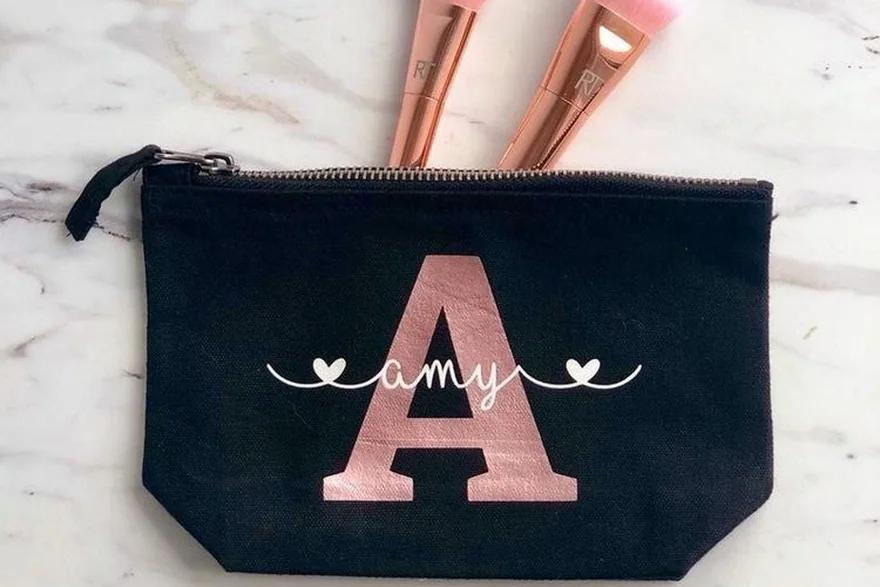
Debossing (pressed into material) and embossing (raised from material) create a subtle, luxurious branding effect on PU leather, genuine leather, and heavy canvas. No ink is used — the logo is created by pressure alone, often with a foil accent (gold, silver, rose gold) for added visibility. MOQ: 500 pcs. Setup cost: $50–$100 for custom metal mold. Durability: permanent. Cost impact: $0.30–$0.80 per unit. Best for: luxury brands, PU leather products, gift items.
3.3 Structural Customization
Structural modifications allow buyers to create products that stand out from generic stock items. Common structural customizations include:
- Custom dimensions: Any size within the constraints of fabric width (typically 58–60 inches / 147–152cm)
- Compartment configuration: Number, size, and type of internal pockets (zippered, mesh, elastic loops, open)
- Zipper selection: Nylon coil, plastic, metal, waterproof (YKK AquaGuard), custom zipper pulls with logo
- Hardware finish: Nickel, gunmetal, antique brass, matte black, gold, rose gold
- Handle/strap options: Wrist strap, carry handle, detachable shoulder strap, hanging hook
- Lining customization: Custom color, custom printed pattern, waterproof coating (PEVA, TPU)
- Special features: Mirror integration, LED lighting, USB port, RFID pocket, wet/dry separation
- Bottom reinforcement: EVA foam insert, plastic base, protective feet
Common Pitfalls and How to Avoid Them
4.1 Pitfall 1: Inadequate Sample Approval
Many buyers approve samples based on photos alone, without physically inspecting the product. This can lead to surprises in mass production: color differences (monitors are not color-calibrated), material feel (texture and hand-feel cannot be judged from photos), zipper quality, and stitching details. Always inspect the physical sample before approval. If timeline is tight, request a video call with the sample in hand, and request swatch cards for material and color verification.
4.2 Pitfall 2: Unrealistic Timeline Expectations
A common mistake is assuming that "35-day production" means 35 days from order to delivery. In reality, the 35 days refers only to the mass production phase, not including sample development, material procurement, inspection, or shipping. The complete timeline from order to delivery is 45–65 days (sea freight) or 25–35 days (air freight). Always build a 10-day buffer into your timeline for unexpected delays (material shortages, customs inspection, shipping schedule changes).
4.3 Pitfall 3: Ignoring Compliance Requirements
Cosmetic bags may be subject to various regulatory requirements depending on the destination market: CPSIA (USA, especially for products that may be used by children), REACH (EU, restricting certain chemicals), Prop 65 (California, warning label requirements), and UKCA (United Kingdom). Confirm compliance requirements before production begins, as retrofitting compliance (e.g., adding warning labels) after production is significantly more expensive. A professional sourcing partner will flag applicable requirements during the quotation stage.
4.4 Pitfall 4: Choosing the Lowest Price Without Quality Verification
While cost is always a consideration, selecting the lowest quote without verifying factory capabilities can result in: inconsistent quality, missed deadlines, communication failures, and even non-delivery. Always request factory audit reports (BSCI, Sedex, ISO 9001), sample verification, and client references before committing to a new supplier. A $0.10 per unit savings on a 5000-piece order ($500) is not worth the risk of a $10,000 order arriving with 20% defects.
4.5 Pitfall 5: Inadequate Packaging for Shipping
Cosmetic bags are relatively durable, but inadequate packaging can result in transit damage: crushed cartons, water damage, wrinkled products, and missing units. Specify export-quality 5-ply cartons, appropriate carton weight limits (<25kg), and moisture protection (silica gel or desiccant packs for sea freight). For premium products, consider individual tissue paper wrapping and dividers between layers to prevent friction damage.
Cost Optimization Strategies
5.1 Quantity-Based Pricing Tiers
Cosmetic bag pricing follows standard economies of scale, with significant unit cost reductions at higher quantities. Understanding these tiers helps buyers optimize order size:
| Quantity | Price Multiplier (vs. 500 pcs) | Typical Unit Price (Basic Pouch) |
|---|---|---|
| 500 pcs | 1.00x (baseline) | $1.20 |
| 1,000 pcs | 0.85x | $1.02 |
| 3,000 pcs | 0.72x | $0.86 |
| 5,000 pcs | 0.63x | $0.76 |
| 10,000 pcs | 0.55x | $0.66 |
| 50,000 pcs | 0.42x | $0.50 |
5.2 Design Optimization for Cost
- Reduce compartments: Each additional pocket adds $0.20–$0.50 per unit. Evaluate whether every compartment is essential.
- Standardize materials: Using stock colors and standard deniers avoids custom fabric MOQ surcharges ($200–$500).
- Limit printing colors: Each additional silk-screen color adds $0.05–$0.15 per unit. Consider digital printing for multi-color designs at low quantities.
- Simplify hardware: Standard zippers and pulls are 30–50% cheaper than custom or premium hardware.
- Consolidate SKUs: Fewer SKUs per order reduces setup costs and improves production efficiency.
- Standard packaging: Polybag packaging is free; custom retail boxes add $0.50–$2.50 per unit.
The B2B Customisation View
Brand owners approaching cosmetic pouches, vanity cases and beauty organisers usually arrive with a mood board, a target landed cost and a launch date; the technical pack is what turns those three inputs into a repeatable specification.
Programme data for this category: minimum order quantity 500 pieces per style and colourway, sampling in 6–10 working days (12–15 working days for complex constructions), bulk production 35–50 days after sample approval, final random inspection at AQL 2.5 under ISO 2859-1, FOB Xiamen, T/T 30/70.
Engaging a sourcing partner gives the brand owner one channel for the awkward questions — shade drift, component substitution, carton marking — that otherwise bounce between three vendors.
Frequently Asked Questions
What is the difference between OEM and ODM?
OEM (Original Equipment Manufacturer) means the buyer provides the complete product design and the factory produces it to specification — the buyer owns the design IP. ODM (Original Design Manufacturer) means the factory provides a base design from its catalog, and the buyer customizes branding, colors, and minor features — the factory owns the base design IP. ODM is faster and cheaper for first-time buyers; OEM offers complete design control for established brands.
How long does the entire customization process take?
The complete timeline from initial inquiry to delivery is: inquiry and quote (3–7 days), sample development (6–10 days), sample approval and shipping (5–7 days), mass production (35–50 days), quality inspection (2–3 days), and shipping (25–40 days by sea or 5–7 days by air). Total: 45–65 days to port (sea) or 25–35 days to door (air). The standard recommendation is starting the process 8–10 weeks before your required delivery date.
Can I get a sample before placing a bulk order?
Yes, and a pre-production sample should be treated as a gating step rather than a formality. Sampling runs 6-10 working days for new constructions and 12-15 working days where tooling or custom hardware is required; the approved sample then becomes the physical quality benchmark for the bulk lot. The approved sample becomes the quality benchmark for all production units, so thorough sample verification is essential.
What is the minimum order quantity?
The standard MOQ is 500 pcs per design/color. However, this varies by customization type: digital/sublimation printing can start at 100 pcs, custom woven labels require 1000 pcs, and fully custom OEM designs may require 1000 pcs for the first run. For first-time buyers, the standard recommendation is starting with 500 pcs to balance cost efficiency with inventory risk.
What payment methods do you accept?
Standard payment terms are 30% deposit via T/T (telegraphic transfer / bank wire) to begin production, with the 70% balance due before shipment. Standard terms are T/T 30% deposit with the 70% balance against bill of lading. Buyers who prefer platform escrow can usually arrange that instead. Programmes do not accept PayPal for bulk orders due to high transaction fees and dispute resolution limitations.
How is product quality ensured?
Quality is managed through a multi-layered system: (1) incoming material inspection (fabric weight, color, zipper testing), (2) in-line inspection during production (10% check at each stage), (3) final random inspection under AQL 2.5 standards before shipment, and (4) optional third-party inspection (SGS, Intertek, TÜV) at buyer's request. The golden sample approved by the buyer serves as the definitive quality reference.
Can I customize both the exterior and interior?
Yes, both exterior and interior are fully customizable. Exterior customizations include: material, color, logo placement and method, hardware finish, zipper type, and dimensions. Interior customizations include: lining material and color, number and type of pockets, elastic brush loops, mirror integration, removable dividers, and wet/dry separation. Custom interiors may increase MOQ to 1000 pcs for first production runs.
What if I receive defective products?
All products are inspected under AQL 2.5 before shipment. If defects exceed acceptable limits upon receipt, the programme offers three resolution options: (1) replacement of defective units at no cost on your next order, (2) partial refund proportional to the defect rate, or (3) full re-production for critical quality failures. All claims must be submitted within 30 days of receipt with photographic evidence and defect documentation.
Do you offer drop-shipping or fulfillment services?
Programmes ship in bulk under FOB Xiamen terms, so individual consumer fulfilment sits outside the scope of a production order. We can also ship direct-to-consumer for small test orders, though this is not cost-effective for volumes above 100 units per month.
Can I visit the factory before placing an order?
Yes. An audit visit is one of the most reliable ways to verify capacity claims, and serious buyers are normally welcome to inspect the floor before a first bulk order. Travel is arranged through the programme coordinator, who books the visit with the production partner, prepares the capability file and the sample set, and arranges collection from Xiamen. Buyers who cannot travel can request a live video walk-through instead. Because travel carries lead time, book at least two weeks before sampling starts so the visit overlaps with sample review rather than landing after approval.
What certifications do your factories have?
Ask whichever production partner is proposed for a current social-compliance audit (BSCI or Sedex) and a quality-management certificate, then verify certificate and expiry against the issuing body. Products can be tested for CPSIA (USA), REACH (EU), Prop 65 (California), UKCA (UK), and OEKO-TEX Standard 100 (textile safety) upon request. Test reports from SGS, Intertek, or TÜV are available for a testing fee of $150–$500 per product/material combination.
Can I provide my own materials or components?
Yes, accepted terms include customer-supplied materials and components (CMT — Cut, Make, Trim). This is common for buyers who have exclusive fabric partnerships, custom zippers, or branded hardware. When providing your own materials, the requirement is: material specifications, quantity with 5% waste allowance, delivery to factory address, and quality inspection documentation. CMT pricing is quoted separately based on labor and overhead only.
How do I handle customs and import duties?
For FOB shipments, the buyer is responsible for customs clearance, import duties, and taxes in the destination country. Cosmetic bags typically fall under HS code 4202.92 (travel bags, toiletry bags) with duty rates of: USA 0–17.6% (depending on material), EU 2.7–6.7%, UK 2.7–6.7%, Canada 0–18%. We can provide DDP (Delivered Duty Paid) shipping for an all-inclusive price, handling all customs and delivery to your door.
What is your reorder process?
Reorders are streamlined because the design, pattern, and specifications are already established. The reorder timeline is typically 25–35 days (vs. 45–65 days for first orders), as no sample development is required (unless design changes are requested). Reorder MOQ is the same 500 pcs, and the record retains all production files for 24 months from the last order to ensure consistency.
Can you help with product photography and marketing?
Alongside development and bulk coordination, a programme can include value-added services such as: professional product photography (white background and lifestyle), 3D product rendering for pre-launch marketing, packaging design, and basic copywriting. These services are quoted separately and can be bundled with production orders for convenience.
People Also Ask
How much does it cost to start a custom cosmetic bag line?
The minimum investment to start a custom cosmetic bag line is approximately $1,500–$3,000, covering: 500 pcs at $1.50–$3.00 FOB ($750–$1,500), sample fee ($50–$150, refundable), sea freight ($300–$800), and customs/duties ($150–$500). For a premium line with PU leather materials and custom packaging, the minimum investment is $5,000–$10,000. Many successful brands start with a single SKU and reinvest profits into expanding the product range.
What is the typical profit margin for custom cosmetic bags?
Profit margins vary by sales channel: DTC e-commerce typically achieves 65–75% gross margin (retail price = 4–6x FOB cost); wholesale to retailers offers 40–50% gross margin (wholesale price = 2–2.5x FOB); and promotional/corporate gifting offers 35–50% gross margin. The highest-margin segment is DTC with strong brand positioning, where a $3.00 FOB bag can retail for $25–$40.
How do I find a reliable cosmetic bag manufacturer?
To find a reliable manufacturer: (1) search B2B platforms (Alibaba, Made-in-China, Global Sources) and filter for verified suppliers with 5+ years experience and 4.5+ star ratings; (2) request factory audit reports (BSCI, ISO 9001); (3) order samples from 3–5 suppliers and compare quality; (4) ask for client references and verify them; (5) start with a small trial order (500 pcs) before committing to large volumes; (6) consider working with a professional sourcing partner who has already vetted factories and manages quality control on your behalf.
Can I customize cosmetic bags with my own fabric pattern?
Yes, custom fabric patterns are possible through sublimation printing (for polyester) or custom woven/printed fabric. For sublimation, you provide a high-resolution artwork file (300 DPI, seamless repeat pattern), and the fabric is printed before cutting and sewing. MOQ for custom all-over print is typically 500 pcs, with setup cost of $100–$300 for pattern digitization. Custom woven patterns require higher MOQ (2000+ pcs) and longer lead times (60–75 days).
What is the best cosmetic bag material for promotional use?
For promotional use, 190T or 210D polyester is the best material due to its low cost ($0.45–$0.80 FOB), excellent printability (silk-screen or digital), good durability, and wide color availability. Nylon (210D) is a step up in quality at $0.80–$1.50 FOB, offering better abrasion resistance and a more premium feel. Canvas (8oz or 12oz) is ideal for eco-focused promotions at $0.90–$2.00 FOB. For maximum brand visibility at minimum cost, a polyester pouch with 1–2 color silk-screen logo is the industry standard.
Request a Sample or a Written Quotation
Send the silhouette, dimensions, material preference and logo artwork, and the programme team will return a written quotation with MOQ, sampling window, bulk lead time and inspection standard.
Email: [email protected] · WhatsApp: +86 177 5002 0688