Music Festival Cosmetic Bags: Event Merch & Brand Activation
Executive Summary
Music festival cosmetic bags are branded makeup and toiletry pouches sold at a merchandise stand or handed out as part of a sponsor activation at multi-day outdoor music events. They work because they solve a live problem on site, carrying sunscreen, lip balm and toiletries across dusty or muddy ground for ten or twelve hours, and because anything that survives the weekend keeps working as advertising afterwards. Three decisions decide the outcome: where the sponsor logo sits, whether the construction copes with continuous day-long carry, and whether the format clears the gate policy.
A clear film body satisfies most see-through requirements, while an opaque build needs a stated dimension sitting inside the published cap with margin. The default shell is 420D polyester with a wipe-clean face and a #3 or #5 coil zip; the usual failure points are the wrist-loop attachment and the top-corner seams rather than the fabric. Programmes begin at 500 pieces per style and colourway, sampling runs 6-10 working days and 12-15 for complex builds, bulk takes 35-50 days after sample approval, and inspection follows AQL 2.5 under ISO 2859-1 with FOB Xiamen shipment and T/T 30 deposit, 70 against bill of lading.
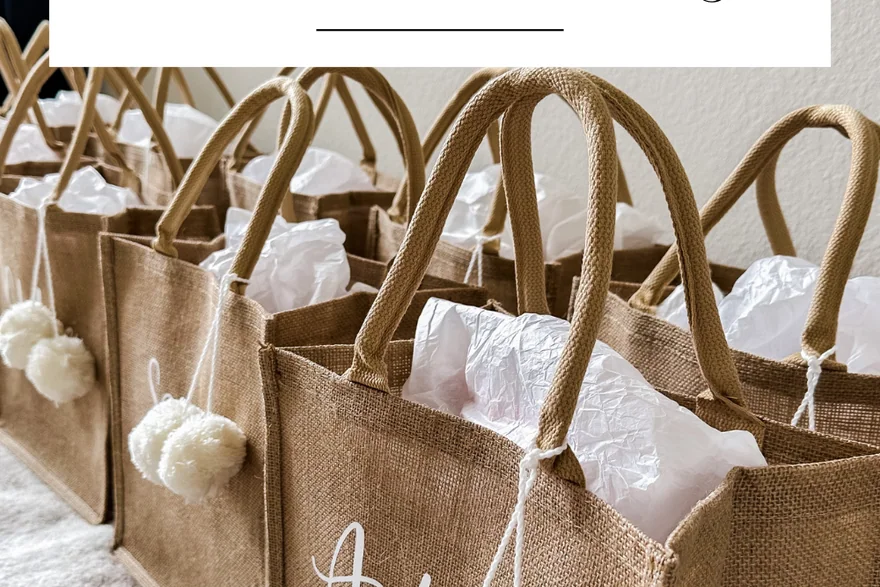
How Festival Cosmetic Bags Move Through Merch, VIP and Sponsor Routes
A music festival cosmetic bag occupies an odd position between retail product and promotional item. Sold at a merchandise stand it competes with apparel and has to justify itself against a printed tee at a similar price. Given away at an activation it competes with everything else in the goodie-bag economy and has to survive being dropped in grass within an hour. Most programmes pick one role and accept that the other suffers slightly, because a construction optimised for a $12 retail price is rarely the one a sponsor can hand out by the thousand.
- Merchandise stand route: unit cost can reach $6-12 because the bag is bought rather than received; expect lining, structure, a retail hangtag and occasionally a themed interior print.
- Sponsor activation route: unit cost usually targets $1.50-4.00 landed, which pushes towards unlined shells, one or two print positions and maximum carton efficiency.
- VIP and artist-adjacent route: small quantities, frequently 500-2,000 pieces, presented inside a welcome package rather than sold; presentation matters more than volume pricing.
- Artist crew route: practical rather than promotional, typically a larger organiser with hanging capability for dressing-room and backstage use.
Festivals are date-fixed and largely weather-independent in their schedule, which changes how the programme is planned. Unlike retail, there is no slipping the season: once the load-in date passes, the inventory has missed its only market. That reality argues for two habits. First, plan backwards from the delivery date at the venue or warehouse rather than forwards from quotation. Second, decide early which party carries the weather risk, since a field can move from dry dust to standing water within a single afternoon and both conditions have different failure signatures on a fabric shell.
Demand context supports the category as a whole. Toiletry bag draws roughly 74,810 searches a week on Amazon according to ASINSIGHT data for July 2026, and travel bag for toiletries reaches about 110,000 monthly searches, indicating that the silhouette itself has durable year-round interest beyond the event. Wholesale unit pricing across the wider category spans roughly $0.45 to $12.00 per piece (Alibaba, October 2026), which means a festival programme can sit almost anywhere in that range depending on whether the bag is sold or given away.
Sponsor Logo Placement, Print Area and Co-Branding Hierarchy
Logo placement on an activation bag is governed by a hierarchy that most sponsors write into the contract. A title sponsor expects primary position and usually a minimum dimension; supporting partners get secondary zones. Translating that hierarchy into print positions, then pricing those positions individually, avoids the argument that tends to erupt when four brands appear on one pouch and nobody allocated the bill. The table below sets out the six placement zones in common use, what each costs and when each is actually seen.
| Placement zone | Usable area | When it is seen | Cost effect | Notes |
|---|---|---|---|---|
| Front face centre | Up to 14 x 9 cm on a 22 x 15 cm pouch | Every time the bag is set down on a groundsheet or table | Baseline, included in most single-position quotations | Keep 8 mm clear of the closure line so artwork does not distort |
| Top gusset strip | 18 x 3 cm running along the gusset edge | While carried and each time the bag opens | Adds 4-7% for a second print position | Strong candidate for a supporting partner tier |
| Wrist loop webbing | 15-20 cm webbing with a repeating mark | Continuously during carry | Adds 2-4% for a woven-in repeat | Highest impression count relative to cost of any zone |
| Interior lining print | Full panel repeat on taffeta lining | Each time the bag is opened | Adds 6-10% for all-over print | Lets a loud brand sit inside while the shell stays retail-clean |
| Zip puller moulding | 2-3 cm moulded badge | Every opening cycle | Tooling cost plus roughly 3-5% per unit | Only suits marks legible at very small physical size |
| Side panel wordmark | 8 x 12 cm vertical setting | On shelf and in hand | Adds 3-6% for the additional position | Vertical type reads better than horizontal on narrow formats |
Registration tolerance is the technical detail that most often degrades a co-branded result. A two-colour artwork printed across a sewn panel will drift where the panel is fed unevenly, and that drift is most visible along gusset curves. Practical controls include stating registration tolerance in writing at the quotation stage, keeping multi-colour artwork away from curved seams entirely, and asking for a pre-production sample photographed on a flat surface under daylight rather than under the supplier's booth lighting, which flatters everything.
There is also a legal dimension specific to this channel. Marks belonging to a performer, a promoter, a sponsor or an event operator are controlled by their owners, and reproducing any of them requires written permission from the rights holder before artwork enters sampling. This guide names no festival, performer or venue for that exact reason. Buyers without written rights should work with original artwork and with the colour or typographic systems that a brand has published for generic use, which keeps the merchandise legitimate and keeps personalisation flexible at the same time.
For events taking place in the European Union, materials compliance generally sits behind two requests. Restricted substances in print pastes, coatings and plasticised films are governed by the framework described at the EU REACH regulation page, where the useful evidence is a declaration covering substances of very high concern for the specific ink and film specified rather than a generic company certificate. Where a garment-adjacent item contacts skin for extended periods, buyers additionally ask for evidence against the restricted substance list behind OEKO-TEX Standard 100, issued for that article rather than for the brand generally.
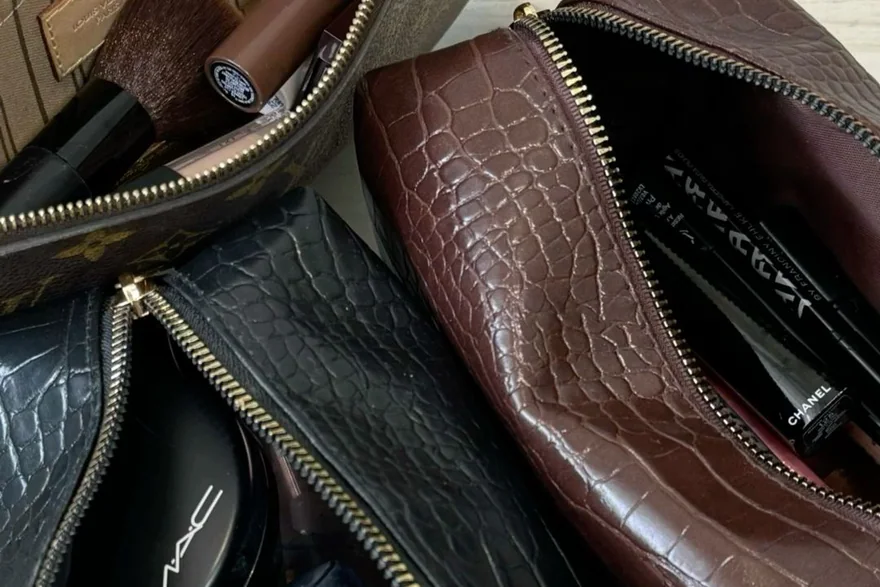
Twelve Hours of Continuous Carry: Where Festival Pouches Actually Fail
A day on a festival field is harder on a bag than a week of normal travel use. The pouch is carried continuously rather than packed, it is set down on abrasive surfaces, it is refilled repeatedly, and it is exposed to conditions that change several times before sunset. Fielding those stresses requires decisions at three points: the carry loop, the seam structure and the surface, because those are where returns concentrate.
- Carry loop pull-out is the single most common field failure. A filled pouch weighs roughly 350-700 g, but swinging it against a crowd applies far more than that to the stitch line; specify 20 mm webbing with a full-width box tack rather than a single-pass fold.
- Top-corner seams open next. A filled bag carried by its loop loads the two upper corners of the shell; raising stitch density to 8-10 stitches per centimetre and binding internal seams distributes that load.
- Dust ingress follows the needle holes. A wipe-clean face sheds dry dust but fine particles still migrate through stitch holes into the lining; a taffeta lining with bound seams keeps contents usable.
- Heat is underrated. Interiors of vehicles parked in direct sun exceed 60 degrees Celsius, which softens PVC film and can make certain print films tacky; PU-faced polyester holds shape better than unsupported PVC in that range.
- Rain arrives after the dust. A shell holding roughly 600 mm hydrostatic head resists light rain, but once saturated the drying behaviour of the lining determines whether the bag is reusable the next morning.
- Hardware corrodes in wet fields. Metal press-studs and cast metal pullers discolour quickly; coated pullers and moulded acetal hardware last considerably longer for roughly comparable unit cost.
Closure choice interacts with dust more than buyers expect. A coil zip gathers fine grit in the chain, and grit accelerates slider wear until the slider no longer closes fully. A reverse-mount installation, where the chain is inverted and the slider runs face-down, sheds particles better than a conventional mount and has the additional benefit of presenting a clean line on printed faces. Adding a fabric tab at the slider end also reduces overtensioning when the bag is opened one-handed. Where the budget permits, a covered zip garage at the pull end keeps grit out of the closed position entirely.
Ask any field of organisers what failed last season and answers cluster on attachments and seams rather than on fabric. Spending an extra few cents per unit on loop reinforcement and bound interiors has historically cut complaint rates far more effectively than upgrading the shell weight.
Weight distribution deserves specific attention for hanging organisers sold at events rather than given away. A two-layer format with a hanging hook puts its load through a single suspension point; if that hook is riveted rather than stitched through a reinforcement panel, the rivet becomes the failure. A stitched webbing loop carrying a bar-tack into a doubled panel typically outperforms any riveted alternative, and it also removes metal from a construction that will repeatedly get wet. For pieces passed between crew members across several events, a wipe-clean interior panel reduces how often the whole item needs laundering in between.
Gate-Friendly Formats: Reading Venue Policy and Choosing a Build
Bag policy at the gate is decided by the event operator and its security contractor, not by the bag, and it frequently differs between even similar events at the same site. Some operators require full transparency on all sides, others allow a small opaque pouch alongside a clear one, and some publish nothing at all until close to the date. Because a rejected bag never reaches the audience, dimensions and construction should be settled against written policy rather than against a reasonable guess.
| Format | Typical dimension | Policy fit | Field durability | Relative unit cost |
|---|---|---|---|---|
| Fully welded clear TPU pouch | 20 x 15 x 7 cm | Clears full-transparency requirements at most gates | Excellent; resists cold, abrasion and repeated flexing | Highest of the transparent options |
| Clear PVC body with webbing trim | 22 x 15 x 8 cm | Acceptable where trim is exempted from transparency | Good; stiffens noticeably below about 10 degrees Celsius | Low |
| Small opaque pouch under a stated cap | 18 x 12 x 6 cm | Works where a small non-transparent bag is permitted | Very good; no film degradation failure mode | Lowest overall |
| Clear front panel on an opaque back | 21 x 14 x 7 cm | Depends whether the operator requires all sides transparent | Mixed; the weld between film and fabric is the weak point | Medium |
| Clear crossbody with adjustable webbing | 19 x 13 x 6 cm | Suits hands-free carry through ticket and search lanes | Good; more hardware to inspect and more to fail | Medium-high |
Two practical habits reduce policy risk. The first is obtaining the operator's policy text in writing, including any exemption for items purchased inside the venue, because some permit an opaque bag bought at the merchandise stand while refusing the same bag brought from outside. The second is sizing with margin: if the published cap is 20 x 15 cm, specify 19 x 14 cm, since a filled bag bulges beyond its flat pattern and a borderline dimension is a coin toss at the search lane.
- Confirm minimum quantity early: 500 pieces applies per style and colourway, so a two-colourway activation with three piece types may be several separate commitments.
- Agree the material set as one article for any compliance evidence requested, covering shell, lining, print paste, film and webbing together.
- Include the closure specification in writing, since a substituted chain is the most common silent change between sample and bulk.
- Set inspection at AQL 2.5 under ISO 2859-1 and agree how print-registration defects are classified before inspection day.
- Plan freight to the venue address rather than a warehouse, since event sites often lack standard goods-in hours and unloading equipment.
Finally, the schedule. Sampling takes 6-10 working days for a pouch of this type and 12-15 working days where welded film, moulded parts or tooled plates are involved. Bulk production runs 35-50 days after sample approval. Shipment terms are FOB Xiamen with payment by T/T 30 deposit and 70 against bill of lading. Working backwards from a load-in date therefore implies starting specification roughly three to four months out, longer if sea freight with a booked cut-off is involved. Where the window is short, air freighting a partial quantity followed by sea freight for the remainder sometimes costs less than expediting the entire run.
The B2B Customisation View
The brief for makeup bags and toiletry bags should state the tolerances that matter: acceptable shade drift, stitch density, and the defect threshold at final inspection.
Programme data for this category: minimum order quantity 500 pieces per style and colourway, sampling in 6–10 working days (12–15 working days for complex constructions), bulk production 35–50 days after sample approval, final random inspection at AQL 2.5 under ISO 2859-1, FOB Xiamen, T/T 30/70.
This is the model that lets a small brand launch makeup bags and toiletry bags with the same inspection discipline a large retailer would demand.
Which Brand Types Benefit Most
Buyer profiles cluster in this category. Beverage, cosmetics and lifestyle sponsors running activations care about impressions per unit cost, which favours the wrist-loop print position and the interior lining repeat over a large outer panel, because those zones are seen repeatedly by the carrier and by anyone within a metre at close range. Merchandise buyers working for event operators themselves care about margin per transaction; they typically want the bag to photograph cleanly, to fold flat into a carton and to sit at a price point that a bemused attendee will pay for without much deliberation, which in practice means an unlined or lightly lined shell with strong artwork rather than expensive hardware. Start-up beauty brands use festival distribution as a market test, ordering small, often at the 500-piece floor, then reading repeat purchase behaviour online before committing to larger volumes, particularly where the artwork avoids anything date-specific that would age instantly on a listing page. Established cosmetics houses tend to work through VIP packages instead, where presentation and restrained branding matter more than unit economics and where quantities usually fall between 500 and 2,000 pieces. E-commerce sellers approach the category from the other end, sourcing an event-adjacent design that also sells year-round on marketplace search, which shifts the specification towards the middle price band and away from anything too date-specific. QUANZHOU JUNYUAN BAGS coordinates programmes of this kind against SGS-verified production floor space of 4,950 square metres across 7 production lines and 149 machines, with monthly output capacity of 200,000 pieces.
- Activation agencies: prioritise wrist-loop and lining print zones for impressions per unit cost.
- Event merchandise buyers: prioritise flat packing and price architecture over heavy hardware.
- Start-up beauty brands: test at the 500-piece floor before scaling to a larger event order.
- Established cosmetics houses: specify restrained decoration suited to presentation packages.
- Marketplace sellers: choose designs that remain saleable outside the event season.
Frequently Asked Questions
What size works best for a music festival cosmetic bag given at a gate?
Formats handed out at a gate usually run 18 x 12 x 6 cm to 22 x 15 x 8 cm. Anything below roughly 18 cm wide will not hold a full-size sunscreen tube lying flat, and anything above about 24 cm wide starts competing with the bag the attendee already carries. Where a venue publishes a cap, size the pattern at least 1 cm under it, because a filled pouch bulges beyond its flat dimensions.
How many pieces does a festival activation bag order need to start at?
Minimum order quantity is 500 pieces per style and colourway. A single build in one colour therefore clears the threshold in one line, while a two-colourway version of the same pouch counts as two commitments. Sponsors wanting variety across several zones usually achieve it by varying print rather than colour, which keeps the whole programme inside one minimum and holds colour consistency across the run.
Which print position gives a sponsor the most impressions per unit?
The wrist-loop webbing beats the front panel on impressions per unit of cost, because a repeat mark printed along 15-20 cm of webbing is visible throughout carry rather than only when the bag is set down. Interior lining print ranks second, seen at every opening. The front face is essential for identity but is the most expensive per impression of the three.
Why do carry loops fail more often than fabric on event bags?
Because the load path concentrates at one small stitch line. A filled pouch of 350-700 g swung through a crowd applies several times its static weight at the loop attachment. Specifying 20 mm webbing with a full-width box tack, rather than a folded single pass of narrow tape, typically resolves the issue for a very small addition to unit cost.
Is clear TPU worth the premium over clear PVC for field use?
For multi-week or multi-year programmes, generally yes. TPU resists abrasion, stays flexible in cool conditions and does not depend on plasticisers that migrate and dull the film. PVC welds cheaply and costs less per metre, which suits single-weekend use. Buyers should note that unstabilised PVC yellows measurably over one season of outdoor exposure.
Can a sponsor logo be printed on a bag that is also sold at the merchandise stand?
Yes, though the two roles pull in different directions. A retail buyer wants a restrained outer face; a sponsor wants the opposite. The usual resolution places the event or operator identity on the outside and the sponsor mark inside the lining or along the gusset, which satisfies both without forcing one party to compromise visibly.
What approvals are needed before a performer's or event's mark goes into production?
Written permission from the rights holder, obtained by the brand owner or agency placing the order, before artwork enters sampling. This guide names no festival, performer or venue for that reason. Without written rights, the safe course is original artwork using colour and typographic systems a brand has published for general use, which keeps the merchandise legitimate.
How should dust and light rain be handled in the shell specification?
They demand slightly different things. A PU face rated near 600 mm hydrostatic head sheds light rain, while bound rather than raw-cut internal seams stop fine dust migrating through needle holes into the lining. A polyester taffeta lining then dries overnight, whereas some nonwoven linings blister after saturation, which is what makes a bag unusable the following morning.
What closure survives a dusty field best?
A reverse-mount coil zip, where the chain is inverted and the slider runs face-down, sheds grit better than a conventional mount and presents a cleaner line on a printed face. Adding a small fabric tab at the slider end also reduces the tendency to overtension the chain when the bag is opened one-handed. Where chain gauge and slider pull strength in writing, since substitution between sample and bulk is a common issue.
How long before the event should specification work begin?
Roughly three to four months before load-in for a straightforward pouch, longer if tooling is involved. Sampling runs 6-10 working days and 12-15 for complex constructions, then bulk takes 35-50 days after sample approval. Sea freight and booked vessel cut-offs, plus venue delivery windows, typically consume several further weeks on top of production itself.
What evidence do European organisers ask for on materials?
Two documents usually satisfy the request: a declaration addressing substances of very high concern under REACH for the specific ink, coating and film specified, and often an OEKO-TEX Standard 100 certificate issued for the article rather than for the brand in general. Asking for these at quotation avoids discovering during sales that evidence is missing.
How is colour controlled when artwork includes gradients or photographic art?
Gradient and photographic work generally points towards sublimation onto white polyester, which is Pantone-guided to roughly delta-E 2.5 on print panels. Solid brand colours go better onto piece-dyed fabric or solid-colour film, where repeat lots hold around delta-E 1.0 to 1.5. Record both the reference numbers and the numeric tolerance in the tech pack.
What makes a hanging organiser suitable for crew rather than gift use?
A doubled reinforcement panel behind the suspension point, with a stitched webbing loop carrying a bar-tack rather than a rivet. Riveted hooks are the most frequent failure on larger crew organisers, and they introduce metal into a construction that will repeatedly get wet. Crew pieces also benefit from larger formats, around 25 x 18 x 10 cm, with multiple compartments.
Should registration tolerance be stated in the order?
Yes. Multi-colour artwork printed across a sewn panel drifts where panels feed unevenly, and the drift is most visible along gusset curves. Stating tolerance in writing, keeping multi-colour artwork off curved seams, and approving a pre-production sample photographed flat under daylight rather than booth lighting, prevents a disagreement that is otherwise unresolvable once bulk ships.
How is inspection planned for large giveaway quantities?
Inspection follows AQL 2.5 under ISO 2859-1, with sample size drawn by lot size and defect class. Buyers should agree beforehand how print-registration defects, colour judgements and cleanliness criteria are classified, because those categories generate most disputes. They should also confirm lot definition before inspection starts, since splitting one shipment into several declared lots changes both sample count and outcome.
People Also Ask
Are clear cosmetic bags required at festival entrances?
Requirements are set by each event operator and its security contractor, and they differ between venues and even between events at the same site. Some demand full transparency on all sides, others allow a small opaque pouch, and some publish no policy until close to the date. The reliable approach is obtaining the policy text in writing, then specifying dimensions with clearance inside it.
How much does a festival cosmetic bag cost per unit in bulk?
Landed unit cost depends on shell weight, decoration coverage, film choice and carton efficiency, all within the broad $0.45 to $12.00 category band seen on wholesale marketplaces in October 2026. Giveaway builds usually target $1.50 to $4.00 landed, while merchandise sold at a stand can justify $6 to $12 with lining, structure and retail packaging.
Can a small brand order only 500 pieces for a single event?
Yes. Minimum order quantity is 500 pieces per style and colourway, which suits a first test before committing to larger volumes. Sampling takes 6-10 working days for a standard pouch and bulk takes 35-50 days after approval, so the specification should be settled roughly three months ahead of the delivery date, allowing time for freight and venue logistics.
What makes a festival gift bag get used again afterwards?
Reuse follows construction rather than artwork. A pouch that closes cleanly after hundreds of cycles, wipes clean instead of staining permanently, and did not lose its carry loop during the weekend becomes bathroom or gym storage afterwards. Bags whose print cracks at the fold or whose lining blistered in rain get discarded within days of returning home.
Request a Sample or a Written Quotation
Send the silhouette, dimensions, material preference and logo artwork, and the programme team will return a written quotation with MOQ, sampling window, bulk lead time and inspection standard.
Email: [email protected] · WhatsApp: +86 177 5002 0688