What Is a Makeup Bag? Ultimate Guide for Buyers & Brands
Executive Summary
A makeup bag is a lined, closable container built to hold colour cosmetics, applicators and the tools used to apply them, typically 18 to 28 cm long and 6 to 12 cm deep. The term is shopper-facing; the same object appears in B2B briefs as a cosmetic bag, and both are specified and quoted identically. What separates a makeup bag from a plain pouch is interior organisation: elastic brush loops, a palette slip pocket, a zip pocket for pencils and a wipeable floor. A toiletry bag is different again, engineered around leak containment for liquids rather than around organising dry products.
Commercial planning starts from the retail price rather than the material. Wholesale unit prices run from about $0.45 to $12.00, and position inside that band is set by construction time and branding method. A custom programme carries a 500-piece minimum per style and colourway, 6 to 10 working days for sampling, 35 to 50 days for bulk after approval, inspection at AQL 2.5 under ISO 2859-1, and shipment FOB Xiamen on T/T 30 percent deposit and 70 percent against the bill of lading.
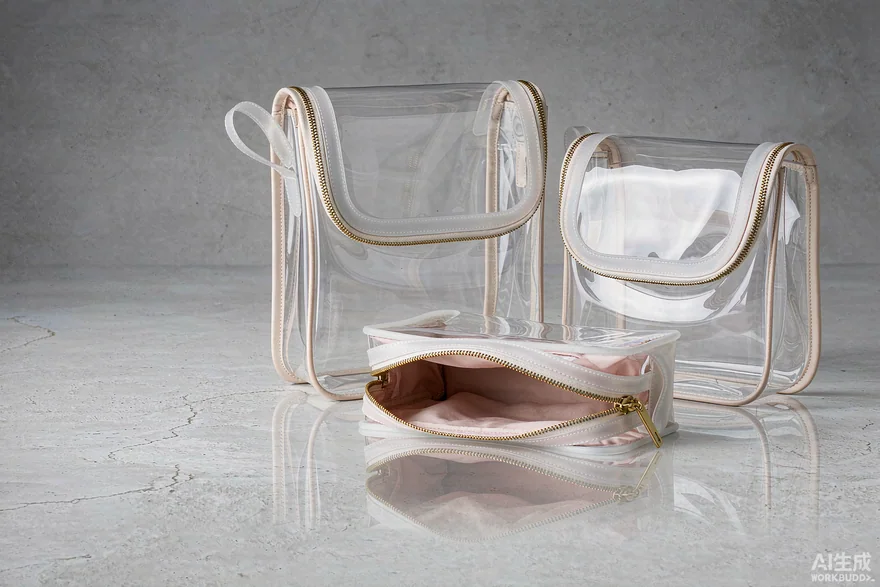
The Working Definition of a Makeup Bag
A makeup bag is a soft-sided, lined container with a closable opening, dimensioned between 18 and 28 cm on the longest edge and 6 to 12 cm on the depth axis, whose interior is partitioned to keep colour cosmetics, applicators and tools in a fixed arrangement. Four attributes are jointly necessary: a closable opening, a lining that is a separate layer from the shell, an interior that separates contents rather than pooling them, and an internal surface that can be wiped clean. A container missing any one of the four is a pouch, a case or a generic organiser, and should not be quoted as a makeup bag.
The definition is not pedantry; it converts a mood board into testable specification lines. Once a brief states the four attributes, a quotation can be checked line by line: the closure is a named zipper gauge, the lining is a named denier, the interior is a named set of pockets, and the floor is a named wipeable material. Vague briefs produce vague quotations, and the difference between a $1.60 bag and a $3.40 bag is usually found in those four lines rather than in the shell fabric that most buyers spend their negotiation time on.
In retail practice the same object carries two names, and the split is by channel rather than by construction. Makeup bag is the shopper-facing term and dominates consumer search, with roughly 80,000 monthly searches for make up bags for women against 5,400 to 6,600 monthly searches for custom makeup bag. Cosmetic bag is the term used in most B2B briefs and wholesale catalogues. Retailers routinely print one name on the hangtag and the other on the purchase order, because the hangtag is written for a shopper and the order is written for a sourcing team.
| Name | Where it appears | What the shopper expects | What the buyer specifies |
|---|---|---|---|
| Makeup bag | Hangtags, consumer listings, social copy | Organised space for cosmetics and brushes | Interior layout, zipper gauge, print method |
| Cosmetic bag | Purchase orders, wholesale catalogues, B2B search | The same object, in sourcing language | Shell denier, lining denier, MOQ per colourway |
| Toiletry bag | Travel aisles, bathroom storage, amenity programmes | Liquid containment and wipe-clean surfaces | Lining coating, seam sealing, hanging hardware |
A toiletry bag sits outside that pair, and the distinction is functional rather than linguistic. It is merchandised beside travel goods and bathroom storage, it is sold against the liquids a traveller carries, and its interior is built around bottles that can leak. A makeup bag is sold beside colour cosmetics and is built around dry products and tools that cannot. The two can share a shell, a zipper and a price band, and can even be cut from the same pattern, but the lining, the floor and the pocket layout differ, and those are the lines that decide whether the product earns repeat purchases.
- Four attributes define the category: closure, separate lining, separated interior, wipeable floor
- Makeup bag and cosmetic bag are one object under two channel names
- Toiletry bags are specified around liquid containment, not around dry-product organisation
- Negotiate the four specification lines rather than the shell fabric alone
A Taxonomy by Closure, Interior and Structure
Three independent axes describe almost every makeup bag on the market: how it closes, how the interior is arranged, and how much structure the shell carries. A brief naming one option on each axis is specific enough to quote without a follow-up round of questions. Buyers who specify only size and fabric typically receive three quotations for three different products, then read the price spread as margin when it is actually construction time.
| Closure type | Typical specification | Effect on unit cost | Fits which format |
|---|---|---|---|
| Nylon coil zipper #3 | 3 mm coil, 190T tape, 20 to 24 cm run | Baseline | Flat pouch, small gusseted bag |
| Nylon coil zipper #5 | 5 mm coil, dyed tape, auto-lock slider | +$0.10 to $0.25 | Medium and large gusseted bags |
| Metal zipper #5 | Brass or aluminium teeth, metal puller | +$0.45 to $0.90 | Premium framed and structured builds |
| Drawstring with cord lock | 4 mm cord, plastic or metal toggle | -$0.15 to $0.30 | Brush bags and soft pouches |
| Turn-lock frame | Steel frame, two clasp points | +$1.20 to $2.40 | Train cases and vanity cases |
| Magnetic snap on flap | 18 mm hidden snap | +$0.20 to $0.40 | Fashion-led flap bags |
Two closure details deserve explicit lines in the brief because that is where cheap quotations hide cost. The first is slider type: a non-lock slider costs about $0.04 less than an auto-lock slider and allows the bag to work open in transit, which generates the single most common complaint in the category. The second is tape and teeth colour: stock black or white tape is free, whereas dyed-to-match tape adds $0.06 to $0.12 and two to three days to the sampling window. Where a quotation lists only "zipper" with no gauge, the reference to cite for terminology is ASTM D2053.
The interior axis separates a product that earns reviews from one that does not. Six arrangements cover the category: an open cavity, an elastic loop panel for brushes, a flat slip pocket for palettes, a zip mesh pocket for pencils and liners, removable dividers on hook-and-loop tape, and a fold-over brush flap with sleeves. Reviews in the category consistently reward the second, third and fourth, each costing $0.10 to $0.25 of added labour on a 500-piece run against a retail difference of several dollars. Loop and pocket dimensions matter: brush loops are cut at 1.5 cm and 2.5 cm to take liner and powder handles, a palette pocket is sized to 16 cm, and a zip pocket needs about 6 cm of depth before a pencil case will close over it.
Structure is the third axis and the one that most directly drives freight. A flat bag has two panels and minimal depth, a gusseted bag adds a base and side panels and stands unaided, a framed bag carries an internal frame or moulded shell and holds shape under load, and a roll or hanging format is designed around a carrying state rather than a storage state. Freight follows structure closely: flat bags pack 60 to 100 per export carton, gusseted bags 24 to 36, and framed cases 6 to 10.
The taxonomy also works as a ladder. One shell fabric, one lining and one puller across three structures produce a three-SKU capsule sharing tooling and trims, so the second and third styles skip much of the sampling work. That is how a 500-piece minimum per style and colourway becomes workable: three styles share one fabric buy, one print setup and one inspection protocol, and the per-unit cost of the capsule falls below that of three unrelated bags.
- Name one closure, one interior layout and one structure level in every brief
- #3 coil suits retail under $9.99; #5 coil or metal above $19.99
- Elastic loops plus a zip mesh pocket cost under $0.45 combined and drive the strongest review lift
- Structure level changes carton count by a factor of ten
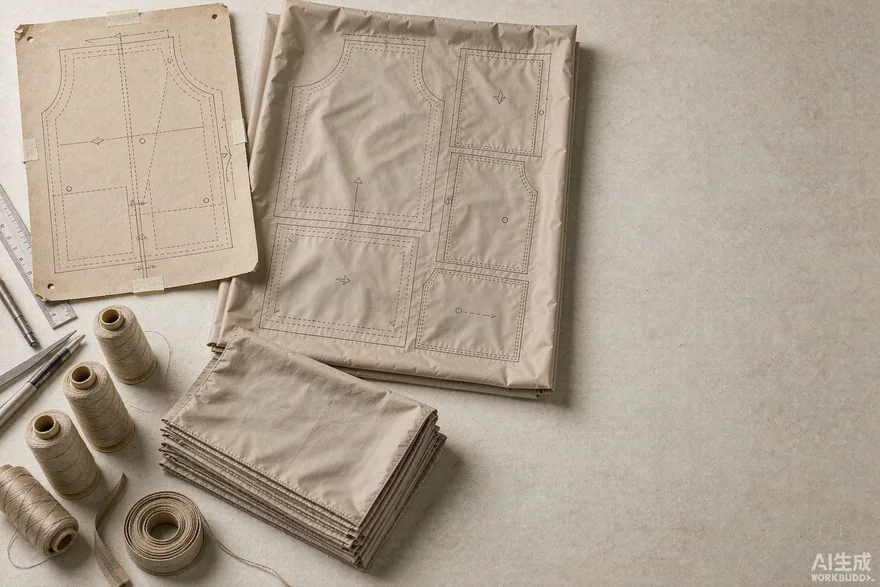
Size and Capacity Bands, With a Dimension Table
Makeup bags are sold in five working size bands, best defined by what they hold rather than by their measurements. Nominal volume is calculated from the external box; usable volume is lower, typically 70 to 80 percent of nominal once linings, base boards and pocket panels are accounted for. Buyers should specify against usable volume and treat nominal figures as marketing copy.
| Band | Typical dimensions (cm) | Nominal volume | Usable volume | What it holds | Carton count |
|---|---|---|---|---|---|
| Mini | 15 x 10 x 5 | 0.8 L | 0.5 to 0.6 L | Lipsticks, a compact, 3 brushes | 100 to 140 |
| Small | 20 x 14 x 7 | 2.0 L | 1.4 to 1.6 L | Foundation, 1 palette, short brush set | 60 to 80 |
| Medium | 24 x 16 x 10 | 3.8 L | 2.7 to 3.0 L | Foundation, 2 palettes, 10 brushes | 24 to 36 |
| Large | 28 x 20 x 12 | 6.7 L | 4.7 to 5.4 L | Full daily kit plus tools | 16 to 24 |
| Kit or case | 32 x 24 x 14 | 10.8 L | 7.5 to 8.6 L | Professional kit, dividers, brush belt | 6 to 10 |
Two numbers explain why the medium band dominates e-commerce listings. First, 24 x 16 x 10 cm is large enough for the contents a shopper photographs in a review — a foundation bottle, two palettes and ten brushes — and small enough to sit inside a handbag or a carry-on. Second, at 24 to 36 pieces per export carton, freight cost per unit is a small fraction of the framed-case rate, which keeps landed cost inside the range that supports a $19.99 to $34.99 retail price.
Sizing should be done against a physical contents list rather than against a competitor's listing. Lay the intended contents on a table, measure the largest item — a palette at about 16 x 11 cm or a foundation bottle at 5 cm diameter and 13 cm tall — then add 2 cm of clearance on each axis. A bag sized that way holds the contents with room for fingers to reach past them.
Depth deserves separate treatment. A 6 cm gusset is the point below which a bag reads as visually flat and loses the ability to stand; a 12 cm gusset is the point above which a bag starts to read as travel luggage and loses its position in the cosmetics aisle. Between the two, standing behaviour depends on the base board rather than on the gusset: a 1.0 mm board holds a 7 cm gusset upright on a shelf, while a 1.4 mm board is needed at 12 cm. Specifying both numbers avoids the two most common photographic failures, a bag that slumps and a bag that bulges.
Band choice fixes the branding budget as well as the freight. A mini bag offers a printable face of roughly 12 x 8 cm, which rules out a multi-colour logo and argues for a single-colour print or a small woven label. A medium bag offers about 20 x 12 cm, enough for embroidery at 8 cm wide or a debossed patch. Below about 6 cm of printable height, spend on a label rather than a print: artwork cost is identical and legibility is not.
- Specify usable volume, not nominal: expect 70 to 80 percent of the external box
- 24 x 16 x 10 cm supports the widest retail price range in the category
- Size against the largest contents item plus 2 cm clearance on each axis
- Below 6 cm depth a bag reads flat; above 12 cm it reads as travel luggage
Materials, Construction and the Professional-Kit Variant
Seven shell materials cover most of the category, and each constrains the branding method that can be applied to it. That constraint matters more than the price difference: a 12,000-stitch embroidered logo will pucker a 210D shell, sublimation will not hold on cotton canvas, and debossing needs a coated or leather-look face. Choosing the shell first and the branding method second avoids a decoration that looks correct on a swatch and fails on the assembled bag.
| Shell | Gauge or denier | Approx. g/m² | Behaviour in use | Compatible branding |
|---|---|---|---|---|
| 210D polyester | 210 denier | 90 to 110 | Fair; scuffs at corners | Screen print, heat transfer |
| 420D nylon | 420 denier | 180 to 200 | Good; wipes clean | Screen print, embroidery |
| 600D polyester | 600 denier | 280 to 320 | Very good abrasion resistance | Embroidery, woven label |
| 12 oz cotton canvas | 12 oz | 380 to 420 | Softens with use; marks easily | Screen print, embroidery |
| PU-coated fabric | 0.6 to 0.8 mm film | 340 to 420 | Good; can crack on repeated flex | Deboss, foil, screen print |
| TPU film | 0.3 mm film | 270 to 320 | Excellent; weldable seams | Screen print, welded label |
| RPET polyester | Matches host denier | 190 to 300 | Matches the host fabric | Same as host, with GRS documentation |
Construction is where a quotation becomes a product. Load-bearing seams should be specified at 7 to 9 stitches per 2.5 cm; a bag quoted at 5 stitches fails at the strap and handle attachments long before the shell wears out. Linings run 190T polyester on light builds and 210D on heavier ones, and the lining belongs on the brief as its own line rather than left to a default. Interior seams on cheap builds are left raw and fray into the cavity; a bound or overlocked seam costs about $0.08 per bag and removes that complaint.
Hardware and finishes are the last construction variables: a base board of 1.0 to 1.4 mm, a metal rather than plastic puller above a $19.99 retail price, feet or a reinforced base on any bag over 28 cm, and a wipeable floor in 0.15 mm PEVA or TPU film. Where the bag carries a water-repellent claim, the finish is checked against the AATCC test methods; a recycled-content claim needs a transaction certificate under the Global Recycled Standard.
The professional-kit variant is a different product wearing the same name. A makeup artist's kit bag runs 32 to 38 cm on the longest edge, weighs 800 to 1,500 g empty, and is built on an aluminium frame with a rigid lid or as a moulded EVA shell with a padded interior. Interior specification shifts from fixed pockets to configurable dividers on hook-and-loop tape, plus a brush belt holding 12 to 24 brushes. Carton count falls to 6 to 10 pieces, sampling takes 12 to 15 working days, and unit price sits at the top of the band.
Colour control closes the specification. Shade is approved against a physical swatch under a D65 light source, with a grey-scale tolerance of 4 or better recorded on the approval sheet, and fastness of the printed or dyed shell assessed under the ISO 105 colour-fastness series. Buyers who approve colour from a photograph routinely discover a two-shade difference on bulk goods, and re-dyeing 500 pieces costs more than the sampling step that prevents it.
- State the four definition attributes: closure, separate lining, separated interior, wipeable floor
- Name the zipper gauge and slider type, using an auto-lock slider above a 20 cm run
- Give dimensions as length x depth x height in centimetres, plus a usable-volume figure
- Specify shell denier and g/m², lining denier, and base board thickness
- Fix stitch density at 7 to 9 stitches per 2.5 cm on load-bearing seams
- List every interior pocket with the item it is intended to hold
- State the branding method, artwork format and Pantone references
- Confirm carton count, inspection at AQL 2.5 under ISO 2859-1, and the shipment term
The B2B Customisation View
Brand owners approaching cosmetic pouches, vanity cases and beauty organisers usually arrive with a mood board, a target landed cost and a launch date; the technical pack is what turns those three inputs into a repeatable specification.
Programme data for this category: minimum order quantity 500 pieces per style and colourway, sampling in 6–10 working days (12–15 working days for complex constructions), bulk production 35–50 days after sample approval, final random inspection at AQL 2.5 under ISO 2859-1, FOB Xiamen, T/T 30/70.
Engaging a sourcing partner gives the brand owner one channel for the awkward questions — shade drift, component substitution, carton marking — that otherwise bounce between three vendors.
Which Brand Types Benefit Most
Start-up brands usually enter the category with one gusseted standing bag at 500 pieces and a single-colour screen print. That configuration keeps tooling at zero, keeps landed cost near $2.40, and photographs well for a launch page. The mistake to avoid is a wide first drop: two structures and three colourways at once multiplies the sampling workload.
Established beauty houses run makeup bags as an extension of a colour line rather than as a standalone category. The typical structure is a palette-matched bag in the same shade family as a seasonal launch, with the season artwork printed on the shell and a co-ordinating lining. Volume is concentrated in one drop, which argues for placing the brief 90 to 110 days ahead of launch so that sampling and bulk fit without an air-freight decision.
Retailers and private-label buyers use the category as a basket builder. A three-size ladder at 20, 24 and 28 cm, sharing one lining, one zipper gauge and one puller, can be merchandised as a single block and replenished by size. E-commerce sellers launch the size with the strongest review history, usually 24 x 16 x 10 cm, then extend into a brush roll once the listing has traffic.
Gift and hospitality buyers treat the makeup bag as packaging with residual value. The specification that fits is a lightweight 210D or cotton shell with a one-colour print, packed either individually polybagged or in tens. In that segment what matters is print crispness at small sizes and carton count per gift box, not abrasion resistance, so spend goes to artwork and packing rather than to the shell.
Professional and education buyers are the smallest segment by volume and the highest by unit value. Artistry schools, bridal studios and freelance artists buy the kit variant at 32 to 38 cm, with configurable dividers and a brush belt. Because that construction needs 12 to 15 working days of sampling, the segment rewards buyers who brief early.
Frequently Asked Questions
What is the formal definition of a makeup bag in a sourcing brief?
A lined, closable container between 18 and 28 cm on the longest edge and 6 to 12 cm deep, with an interior partitioned for colour cosmetics and applicators. Four attributes are jointly required: a closable opening, a lining separate from the shell, an interior that separates contents rather than pooling them, and a wipeable floor. Missing any one, it should be quoted as a pouch.
Is a makeup bag the same product as a cosmetic bag on a purchase order?
Yes. Both names describe a lined container for cosmetics and applicators, built from the same materials and quoted on the same terms. Makeup bag is the consumer retail term, cosmetic bag the B2B search term used in most catalogues. Buyers should write whichever name matches their market; the specification fields, the minimum quantity and the inspection level do not change.
How does a makeup bag differ from a toiletry bag in shop practice?
The difference is functional. A makeup bag is merchandised beside colour cosmetics and organised for dry products: brush loops, palette pockets and pencil pockets. A toiletry bag is merchandised beside travel and bathroom goods and organised for liquids, so it prioritises a coated or welded lining, sealed seams and a hanging hook. Shell and closure can match while the interior does not.
Which closure type suits a 24 x 16 x 10 cm makeup bag?
A #5 nylon coil zipper with an auto-lock slider. A #3 coil works on a flat pouch but feels light on a gusseted bag of this volume, and a non-lock slider lets the bag work open in transit. Dyed-to-match tape adds $0.06 to $0.12 per unit and two to three days to sampling; a metal #5 adds $0.45 to $0.90.
How many brush loops should a makeup bag interior carry?
Between 6 and 12 for a consumer bag, in two rows of elastic at 1.5 cm and 2.5 cm widths to take liner and powder brushes. Loops under 1.2 cm wide will not accept a kabuki handle. Each panel adds $0.12 to $0.20 of labour per unit on a 500-piece run and is one of the strongest positive signals in reviews.
What size makeup bag holds a palette plus a full brush set?
The large band at 28 x 20 x 12 cm, giving 4.7 to 5.4 litres of usable volume. A standard palette measures around 16 x 11 cm, so a 24 cm bag holds it with a second palette and ten brushes but not a full set. Measure the largest item and add 2 cm of clearance per axis rather than copying a competitor.
What usable volume does a 24 x 16 x 10 cm makeup bag actually give?
Roughly 2.7 to 3.0 litres. The external box calculates to 3.8 litres, but linings, a 1.0 to 1.4 mm base board and interior pocket panels consume 20 to 30 percent of that. Specifying against usable rather than nominal volume prevents the common disappointment of a bag that measures correctly and holds less than the product page implied.
Which shell fabric survives daily makeup use best?
420D nylon at about 190 g/m²: it resists abrasion, wipes clean of foundation and powder, and accepts screen print and embroidery. 600D polyester at 300 g/m² is tougher but bulkier at the corners. Cotton canvas at 400 g/m² looks premium and prints well but marks, and PU looks best on the shelf yet can crack after repeated flexing.
Does a makeup bag need a lining separate from the shell?
Yes, if it is sold as a makeup bag rather than as a pouch. The lining does two jobs: it hides interior seam allowances that would otherwise fray into the cavity, and it provides the wipeable floor that contains a spilled foundation or a broken powder compact. 190T polyester suits light builds and 210D heavier ones, at $0.15 to $0.35 per unit.
What base board thickness keeps a gusseted makeup bag standing?
1.0 mm for a gusset up to 7 cm, rising to 1.4 mm at 12 cm. Below 1.0 mm a bag slumps on the shelf and photographs badly, which suppresses conversion on a product page; above 1.4 mm the base adds weight. The board should be its own line, because it is the first component removed when a quotation is trimmed.
What distinguishes a professional makeup kit bag from a consumer makeup bag?
Size, interior logic and construction time. A kit bag runs 32 to 38 cm, weighs 800 to 1,500 g empty, and uses an aluminium frame or a moulded EVA shell with configurable dividers and a brush belt for 12 to 24 brushes. Sampling takes 12 to 15 working days, carton count falls to 6 to 10 pieces, and unit price sits at the top of the band.
How many makeup bags ship per export carton by size band?
Mini bags 100 to 140, small bags 60 to 80, medium bags 24 to 36, large bags 16 to 24, framed and kit cases 6 to 10. Carton count should be confirmed before freight is calculated into the margin, because the difference between 36 and 10 pieces per carton moves landed cost more than a material upgrade.
What stitch density should a makeup bag brief state?
Seven to nine stitches per 2.5 cm on load-bearing seams, which covers strap attachments, handle attachments and the seam joining the gusset to the base. A bag quoted at five stitches will fail at those points long before the shell wears out. Interior seams should additionally be bound or overlocked at about $0.08 per unit rather than left raw.
How long does sampling take for a structured PU makeup bag?
Six to ten working days for a straightforward build, and 12 to 15 where the construction is complex, such as a moulded shell, a framed opening or a welded interior. The clock starts from approved artwork rather than from the brief, so vector files with Pantone references should be supplied with the enquiry; a raster logo adds three to five days for re-drawing.
Which colour-fastness check applies to a printed makeup bag shell?
The ISO 105 series is the reference for dyed and printed shells, covering rubbing, washing and light. Shade approval should be made against a physical swatch under a D65 light source with a grey-scale tolerance of 4 or better recorded on the approval sheet. Approving colour from a photograph is the most common cause of a two-shade difference on bulk goods.
People Also Ask
What is a makeup bag used for?
It holds colour cosmetics and the tools used to apply them: foundation, palettes, compacts, pencils, liners and brushes. The interior is partitioned so that small items stay separated and a spill can be wiped from the floor. In retail it sits beside colour cosmetics rather than beside travel goods, which is why the interior organises dry products and tools rather than bottles of liquid.
What is the difference between a makeup bag and a toiletry bag?
A makeup bag organises dry cosmetics and applicators with brush loops, palette pockets and a wipeable floor. A toiletry bag is built around liquids, so it prioritises a coated or welded lining, sealed seams and leak containment, and it often includes a hanging hook. The shell, zipper and price band can be identical between the two while the interior specification differs completely.
How do I choose the right size makeup bag?
Start from the contents rather than from a competitor's listing. Lay out the intended items, measure the largest one — usually a palette near 16 x 11 cm or a foundation bottle 13 cm tall — then add 2 cm of clearance on each axis. Most brands land in the medium band at 24 x 16 x 10 cm, which gives 2.7 to 3.0 litres of usable volume and packs 24 to 36 per export carton.
What should a makeup bag be made of?
For daily use, 420D nylon at about 190 g/m², which resists abrasion and wipes clean. Cotton canvas at roughly 400 g/m² suits a natural positioning and takes screen print well. RPET polyester supports a recycled claim with Global Recycled Standard documentation, and 0.3 mm TPU film gives a wipe-clean transparent build. The shell choice also determines which branding methods will hold.
Request a Sample or a Written Quotation
Send the silhouette, dimensions, material preference and logo artwork, and the programme team will return a written quotation with MOQ, sampling window, bulk lead time and inspection standard.
Email: [email protected] · WhatsApp: +86 177 5002 0688