Clear Window vs Opaque Cosmetic Bags: Retail Display Strategy
Executive Summary
Clear window vs opaque cosmetic bags is a choice between showing the contents and protecting the presentation. A clear window, a PVC, TPU or PEVA panel inset into an opaque shell, lets a shopper identify what is inside without opening the bag, which lifts conversion on travel and toiletry listings. A fully opaque shell hides scuffs, powder marks and uneven packing, and gives cleaner print and embroidery definition.
The practical figures: window film runs 0.25-0.50 mm, and clarity loss from fogging or cold-crack is the most common complaint on clear builds. Fully clear bags dominate venue and checkpoint programmes; opaque shells dominate gift-with-purchase and premium beauty retail. Programmes start at 500 pieces per style and colourway, sample in 6-10 working days, run 35-50 days in bulk and ship FOB Xiamen against inspection at AQL 2.5 under ISO 2859-1. The middle position is the safest default for most ranges: a window adds 0.10-0.28 dollars per unit, keeps the woven shell carrying the brand mark and the structural load, and avoids the seam risk of a full film build.
Three Transparency Levels and What Each One Is Called
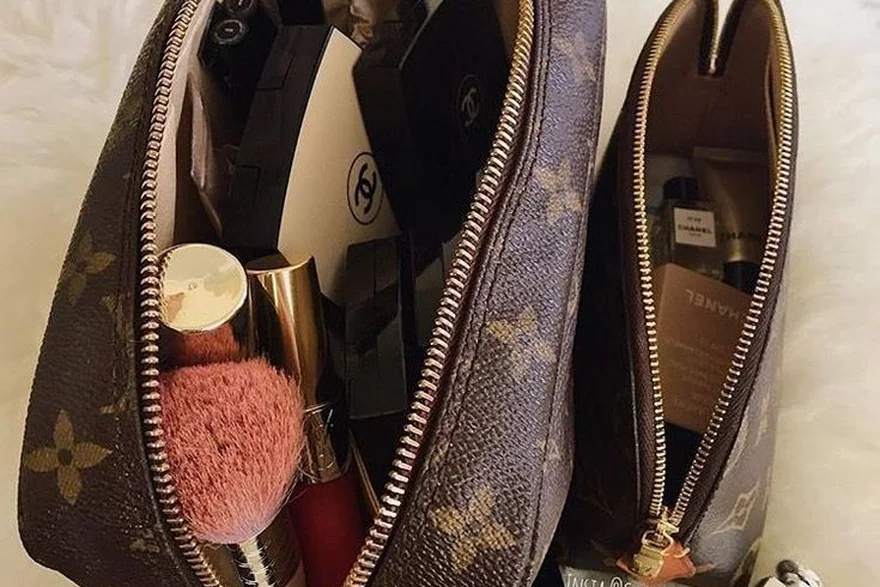
Transparency is not a single decision; it is a scale with three commercial positions. Fully opaque means no light passes through the shell at all. A clear window means an opaque shell with a transparent panel, usually 40-70 percent of the front face, welded or stitched into an aperture. Fully clear means the entire shell is film, with opaque binding, an opaque base band or an opaque back panel used only for structure and for the brand mark.
The three positions sit at different price and risk levels. A window adds an aperture cut, a weld or stitch operation and a second material purchase, typically 0.10-0.28 dollars per unit. A fully clear build removes the shell fabric but raises the film specification, because the film now carries every structural load including the zipper attachment. Buyers moving from a window to a fully clear bag should expect the film thickness to rise from 0.25 mm to 0.40-0.50 mm.
- Opaque: zero light transmission; best print and embroidery definition
- Clear window: 40-70 percent of the front face in film, welded or stitched into an aperture
- Fully clear: entire shell in film at 0.40-0.50 mm, opaque binding for structure
- Cost ladder: opaque base, window plus 0.10-0.28 dollars, fully clear plus 0.20-0.55 dollars
Demand data explains why the category keeps growing. Travel bag for toiletries draws roughly 110,000 monthly searches and toiletry bag records about 74,810 weekly Amazon searches (ASINSIGHT 2026.07). Much of that intent is functional: the shopper wants to see the contents, or needs a bag that satisfies a venue or checkpoint rule. That is very different from the purchase intent behind custom makeup bag, which runs 5,400-6,600 monthly searches and is overwhelmingly a branding and gifting intent served by opaque shells.
Programme mechanics are the same whichever position is chosen. Minimums are 500 pieces per style and colourway, sampling runs 6-10 working days and extends to 12-15 for complex constructions such as welded film with a moulded frame, bulk runs 35-50 days after sample approval, and lots are released against final random inspection at AQL 2.5 under ISO 2859-1. Typical unit prices on trade marketplaces span 0.45-12.00 dollars (Alibaba 2026.10), with clear builds clustering in the middle of that band.
Film Selection: PVC, TPU, PEVA and the Fogging Problem
Film choice drives clarity, hand feel, cold performance and compliance exposure. PVC is the cheapest and the clearest out of the box but stiffens in cold and carries plasticiser questions in the EU. TPU is the most expensive but stays flexible at low temperature and survives abrasion. PEVA and EVA sit between the two, softer and cheaper, with more haze. None of them is right for every channel.
| Film type | Typical thickness | Clarity after 500 h handling | Cold-flex limit | Relative cost index | Best use |
|---|---|---|---|---|---|
| PVC | 0.25-0.40 mm | Good, some haze at folds | Stiffens below 0 °C | 1.0 | Price-led promotional and GWP |
| TPU | 0.30-0.50 mm | Very good, low haze | Flexible to -20 °C | 2.2-2.8 | Premium travel and cold-chain markets |
| PEVA | 0.25-0.45 mm | Fair, hazes with abrasion | Stiffens below 5 °C | 1.2-1.5 | Checkpoint and venue bags |
| EVA | 0.30-0.50 mm | Fair, slight milkiness | Stiffens below 5 °C | 1.1-1.4 | Children and soft-touch programmes |
| RPET laminate | 0.35-0.50 mm | Good, slight tint | Flexible to -5 °C | 1.6-2.0 | Recycled-content claims |
| Coated nylon | N/A, woven | Opaque by definition | No limit | 1.3-1.9 | Opaque shell around a window |
Fogging is the failure buyers underestimate. Two mechanisms cause it: plasticiser migration to the surface after heat exposure in a container, and micro-abrasion from contents rubbing the inner face. A window that looks perfect on the approval sample can turn milky after eight weeks in a warehouse at 40 °C. The practical controls are to specify an anti-fog or low-migration grade, to avoid packing film against film without tissue, and to keep container temperatures below 50 °C where the routing allows it.
Compliance is a second axis. Restricted substances in softened PVC are governed in the EU by REACH, and children's products sold in the United States fall under the phthalate and lead provisions summarised in the CPSIA page. Buyers selling into both markets usually specify a phthalate-free TPU or PEVA from the start rather than testing a PVC build twice.
Third-party textile certification is often requested alongside chemical testing. OEKO-TEX Standard 100 covers the finished article against a restricted substance list and is accepted by most European retailers as evidence. Where a recycled-content claim is made on the film or the shell, the chain of custody is documented under the Global Recycled Standard, and the transaction certificate has to travel with the shipment.
The aperture geometry is a small detail with a large effect on durability. A window cut with square corners concentrates stress at four points and tears there under repeated flexing; the same window cut with a corner radius of 8-12 mm spreads the load and survives several times longer. Buyers should also keep the window at least 25 mm clear of the zipper tape and 20 mm clear of the base seam, because the film has no reinforcement in those zones and cannot take the stitch.
Size is a commercial as well as a technical choice. A window covering 40-50 percent of the front face reads as a hint and keeps enough print area for the brand mark; one covering 70 percent or more starts to look like a clear bag with a fabric frame, and the brand mark has to move to the binding or a label. Most programmes land at a panel of roughly 12 x 8 cm on a 22 x 15 cm front.
Name the film by polymer and thickness, not by trade name. A specification that says clear PVC without a thickness and a plasticiser statement will be quoted on three different materials by three different suppliers.
Welding, Seaming and Where Clear Builds Fail
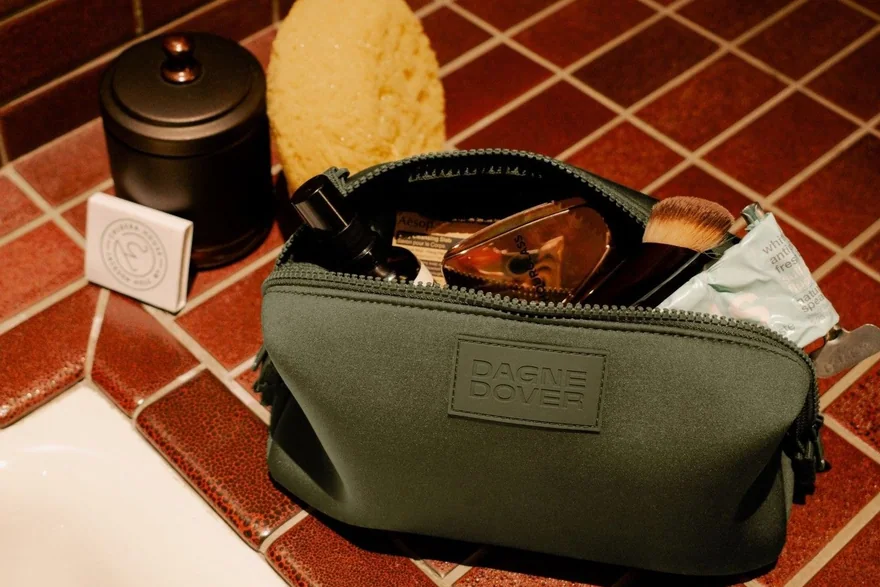
Film shells are joined by radio-frequency or hot-air welding rather than by needle and thread. Welding gives a watertight seam but is unforgiving: a weld that is 2 °C cool or 0.3 seconds short looks intact and peels under load. Where a clear panel is inset into a woven shell, the two are usually stitched with a binding tape, which is slower but far more forgiving and repairable in bulk.
| Failure mode | Where it appears | Root cause | Detection method | Fix in specification |
|---|---|---|---|---|
| Seam peel | Welded side seam | Weld temperature 3-5 °C low | Hand pull plus 5 kg static load for 60 s | Set weld temperature and dwell, add a seal test per shift |
| Haze at folds | Window creases | Film creased in packing | Visual under D65 light at 30 cm | Pack flat with tissue, avoid tight folding |
| Zipper bite | Film at the zipper tape | Film too thin for the coil | Cycle test 500 open-close | Move to 0.40 mm or reinforce with binding |
| Yellowing | PVC after UV exposure | UV-unstable grade | 500 h xenon exposure | Specify a UV-stabilised grade |
| Print lift | Logo on film surface | Ink not keyed to film | Cross-hatch tape test | Use a film-grade ink or a woven label |
| Cold crack | Winter shipments | PVC below its flex limit | Fold test at 0 °C after 4 h | Switch to TPU or PEVA |
Zipper attachment is the single highest-risk detail on a clear build. A #5 coil zipper sewn directly into 0.25 mm film tears out under load, because the stitch perforates the only structural layer. The standard remedy is a welded or stitched binding strip of coated webbing along both zipper tapes, which spreads the load and adds 0.04-0.09 dollars per unit. Coated fabric performance, including adhesion and blocking resistance, is assessed against ASTM D751.
Sampling catches most of this, which is why the sampling window exists. A standard window bag samples in 6-10 working days; a fully clear bag with welded seams, a moulded frame or custom hardware takes 12-15 working days, because the weld parameters have to be developed rather than copied. Buyers should use the sample to run the tests they intend to enforce later: a 500-cycle zipper test, a 5 kg seam load and a fold test at the destination's lowest seasonal temperature.
Inspection then holds the line. Final random inspection at AQL 2.5 under ISO 2859-1 sets the sample size for the lot, and haze, weld voids and print lift should be classified as functional defects rather than as minor appearance issues. A clear bag that has hazed cannot be reworked; it has to be written off, so a tight defect definition at the inspection stage is cheaper than a claim three months later.
Repairability is the practical difference between the two joining methods and it shows up in bulk yield. A failed stitch can be unpicked and re-sewn on the line at a cost of a few cents; a failed weld leaves a permanent mark on the film and the unit is scrapped. Programmes with tight margin should therefore prefer stitched window construction even where welding is quoted cheaper, because the scrap rate on a welded run is typically 1-2 points higher.
- Welding is unforgiving: 2 °C or 0.3 s short produces a seam that looks fine and peels
- Never sew a #5 coil directly into 0.25 mm film; add a coated webbing binding
- Specify film by polymer, thickness and plasticiser statement, not by trade name
- Classify haze and weld voids as functional defects in the AQL checklist
Channel Strategy: Which Transparency Level Sells Where
Transparency is a merchandising tool, and each channel rewards a different level of it. Airport and travel retail rewards full clarity because the product has a functional job at the checkpoint. Beauty specialty rewards a window because it shows the contents without exposing scuffs. Premium retail rewards opacity because the bag is a brand object, not a container.
| Channel | Recommended level | Reason | Typical retail band |
|---|---|---|---|
| Airport and travel retail | Fully clear | Contents visible at security screening | 9.95-19.95 dollars |
| Stadium and venue retail | Fully clear or 90 percent clear | Venue bag policies require visibility | 7.95-14.95 dollars |
| Beauty specialty shelf | Clear window 40-60 percent | Shows contents, protects the print area | 12.95-24.95 dollars |
| Premium and department | Opaque | Brand object, best embroidery definition | 24.95-59.95 dollars |
| Gift-with-purchase | Opaque or small window | Unit cost and print quality dominate | Gift at 39-59 dollar threshold |
| Subscription box | Clear window | Unboxing shows the contents immediately | Included in box value |
| Hotel and amenity | Opaque with a small window | Housekeeping can check contents fast | Bulk amenity pricing |
The liquids rule is the reason full clarity sells at all in travel. Under the TSA 3-1-1 liquids rule, liquids must be in containers of 100 ml or less carried in a single quart-size transparent bag, and screeners must be able to see the contents. A clear toiletry bag sized at roughly 20 x 15 x 6 cm fits that requirement and doubles as the packing bag inside the suitcase, which is the argument that closes the sale at the airport fixture.
There is a counter-argument that buyers should weigh honestly. Clear product shows everything, including powder spill, a bent brush and a half-empty interior. On a listing, a clear bag photographed empty looks like a plastic envelope and converts poorly; photographed full it converts well. Opaque product photographs consistently in any state. Where a brand does not control its lifestyle photography, opacity is the safer default even in travel.
Packing and display logistics also differ. Clear film blocks and scuffs against itself in transit, so cartons need tissue interleaving or individual polybags with the puller protected, which adds 0.03-0.07 dollars per unit. On shelf, clear bags need a stuffing form or they slump into a shapeless pouch; a kraft or board insert costs 0.05-0.12 dollars and should be in the display budget rather than discovered at the fixture.
Seasonality matters more for clear product than for any other build in the category. Demand peaks twice, in the summer travel season and again in the December gifting period, while the film itself performs worst in the heat of a mid-summer container. Buyers shipping clear goods for a summer on-sale date should place the order 20-30 days earlier than an equivalent woven programme, so the goods can move on a cooler routing and arrive before the peak rather than during it.
Price architecture follows the same logic as the channel table. A clear SKU positioned as a functional travel item holds 9.95-14.95 dollars and competes on specification; the same bag positioned as a branded beauty accessory holds 16.95-24.95 dollars only if the shell, the hardware and the print quality support it. Buyers should not expect clarity alone to carry a premium, because shoppers read a clear bag as a container rather than as an object.
If the bag is merchandised empty on a shelf, specify a board or kraft insert. Clear film without an insert loses its silhouette within a day of handling and the facing collapses.
The B2B Customisation View
Before a single metre of fabric is cut, the briefing stage settles the silhouette, the lining, the closure and the branding method for makeup bags and toiletry bags.
Standard terms: 500 pieces minimum per style and colourway, 6–10 working days for sampling (12–15 for complex builds), 35–50 days bulk production, AQL 2.5 inspection under ISO 2859-1, FOB Xiamen, T/T 30 deposit / 70 balance.
The commercial arrangement is straightforward: one sourcing partner, one technical pack, one inspection standard, one consolidated shipment.
Which Brand Types Benefit Most
Start-up brands usually choose a clear window rather than a fully clear shell, because a window lets the woven shell carry the brand mark and the structure while the film does the selling. A 22 x 15 x 7 cm bag with a 12 x 8 cm TPU window costs roughly 12-18 percent more than the same bag opaque and sits comfortably in a 12.95-19.95 dollar retail band. Established beauty brands tend to keep hero SKUs opaque and add one clear travel SKU per season, which captures the airport and venue demand without exposing the core range to scuff and haze complaints. Retailers with a house brand usually take a clear SKU for the travel fixture and an opaque SKU for the beauty fixture, sharing one Pantone set and one hardware family so the two never look like they came from different suppliers. Subscription operators are the one buyer type that can justify full clarity on a core SKU, because the unboxing moment is the product and the contents are already curated.
- Retailers with venue or airport concessions: fully clear, because the bag policy and the liquids rule make clarity a purchase requirement rather than a preference.
- E-commerce sellers: clear window on the main SKU for unboxing imagery, opaque for refill and gift SKUs where the print quality matters.
- Gift and hospitality buyers: opaque with a small window, so housekeeping can check contents without unpacking and the print still reads.
- Travel and outdoor brands: fully clear in TPU, because cold-flex matters for a bag that lives in a suitcase in a winter destination.
- Subscription and sample-box operators: clear window, since the box-opening moment is the marketing asset and the contents are the message.
- Promotional and event buyers: opaque, because printed artwork is the whole point of the unit and film reproduces fine type poorly.
Frequently Asked Questions
What thickness of film should a clear window cosmetic bag use?
A window inset into a woven shell works at 0.25-0.30 mm, because the shell carries the load. A fully clear bag needs 0.40-0.50 mm, because the film carries the zipper and the seams. Going thinner saves about 0.06-0.11 dollars per unit and typically shows up as zipper bite or seam peel within the first season of use. Where the window is welded rather than stitched, add 0.05 mm, because the weld thins the film locally.
Why does a clear PVC window turn milky after a few weeks?
Two mechanisms: plasticiser migrating to the surface under heat, and micro-abrasion from contents rubbing the inner face. A window approved at room temperature can haze after eight weeks in a warehouse at 40 °C. Specify a low-migration or anti-fog grade, pack film against tissue rather than film, and keep container temperatures below 50 °C where routing allows. A low-migration grade costs about 8-12 percent more per metre and is far cheaper than the review damage.
Is PVC or TPU better for a clear cosmetic bag sold in winter destinations?
TPU. PVC stiffens noticeably below 0 °C and can cold-crack when folded after a night in an unheated vehicle or an aircraft hold. TPU stays flexible to roughly -20 °C and costs 2.2-2.8 times more per metre. For a travel SKU sold into northern markets, the premium is usually cheaper than the warranty claims. Buyers serving both warm and cold markets often split the buy rather than compromise on one polymer.
Can a logo be printed directly onto a clear window?
Yes, but it needs a film-grade ink and a cross-hatch tape test to confirm adhesion. Screen print onto PVC lifts unless the surface is pre-treated; onto TPU it holds better. Where the brand mark must survive handling, a woven label or an opaque binding band with a heat-transfer logo is more durable and costs about the same. Where the artwork must stay fine, move the mark to the woven panel and leave the window clear.
How is a clear panel joined to a woven shell?
Usually by stitching with a binding tape rather than by welding, because the two materials have different melt points. The aperture is cut, the film is laid behind it and a binding of coated webbing or grosgrain is stitched around the opening. This adds a production step of 0.10-0.28 dollars per unit but is far more forgiving and repairable than a weld.
Does a clear toiletry bag satisfy the TSA liquids rule?
It can, provided the bag is transparent and roughly quart-sized, around 20 x 15 x 6 cm, and each liquid inside is 100 ml or less. The rule is published on the TSA liquids-rule page and screeners must be able to see the contents. Listing copy should state the dimensions and the capacity rather than imply blanket compliance for any size of clear bag.
What causes a welded seam on a clear bag to peel?
Almost always weld temperature or dwell time. A weld run 3-5 °C below the correct setting or 0.3 seconds short looks intact on the line and peels under a 5 kg static load. The control is to set temperature, dwell and pressure on the process sheet, and to pull-test one seam per shift per machine rather than relying on visual inspection.
Can a #5 zipper be sewn straight into clear film?
It can, but it should not be. Stitching perforates the only structural layer and the coil tears out under load. The standard remedy is a coated webbing binding along both zipper tapes, which spreads the load into the binding rather than the film and adds 0.04-0.09 dollars per unit. Coated fabric adhesion is assessed under ASTM D751. The binding also gives a cleaner line at the opening, which matters on a bag sold on its appearance.
Which compliance documents apply to clear cosmetic bags in the EU?
REACH restricted substance lists apply, and softened PVC draws scrutiny on plasticisers. Most European retailers also ask for OEKO-TEX Standard 100 on the finished article as evidence. Where a recycled-content claim is made on the film, the Global Recycled Standard transaction certificate has to travel with the shipment. Testing is scoped against the destination market named in the brief. Testing should be scoped against the destination market named in the brief rather than run generically.
Which compliance documents apply in the United States?
CPSIA covers lead and phthalates, with tighter limits where the product is marketed to children, and California adds Prop 65 warnings where applicable. Phthalate content is the relevant line for softened PVC. Buyers usually avoid the issue by specifying phthalate-free TPU or PEVA and testing once rather than testing a PVC build into two markets. Retailers frequently ask for the report at line review, so it should be requested before bulk starts.
How much more does a fully clear bag cost than an opaque one?
Typically 0.20-0.55 dollars more per unit at FOB, depending on the film. The increase comes from the thicker film, the weld tooling and the yield loss on cut pieces. Individual polybags with tissue interleaving add a further 0.03-0.07 dollars, because film scuffs against itself in transit in a way woven fabric does not. Buyers should weigh that against the higher conversion a fully clear bag earns in travel channels.
Do clear bags need a stuffing insert for shelf display?
Yes, if they are merchandised empty. Clear film has no memory and slumps into a shapeless pouch within a day of shopper handling. A kraft or board insert costs 0.05-0.12 dollars and should be written into the display budget. Alternatively, photograph and merchandise the bag filled, which also converts better on a marketplace listing. The insert can be printed with the brand mark, which turns a packaging cost into display value.
What minimum applies to a clear window cosmetic bag programme?
500 pieces per style and colourway. The window panel and the woven shell are treated as one style, so a bag offered in three colourways with the same window is three minimums of 500 pieces. Buyers sometimes consolidate by keeping one shell colour and varying only the binding and the print. Consolidating on one shell colour is the simplest way to keep the total order size workable.
How long does sampling take for a welded clear bag?
Six to ten working days for a stitched window inset into a woven shell. A fully clear bag with welded seams, a moulded frame or custom hardware takes 12-15 working days, because weld parameters have to be developed rather than copied from an existing profile. Bulk then runs 35-50 days after sample approval. Booking the inspection slot at the same time avoids a delay between packed goods and release.
How should haze and weld defects be classified at inspection?
As functional defects rather than minor appearance issues. Under AQL 2.5 under ISO 2859-1 the sample size and acceptance number are set by lot size, so the classification directly changes how many units pass. A hazed window cannot be reworked, so a tight defect definition at inspection is far cheaper than a claim filed three months later. State the defect classification in the inspection brief rather than leaving it to the inspector.
Which channels should stay opaque rather than go clear?
Premium and department retail, and any SKU where the brand mark is embroidered or debossed. Clear film shows scuffs, powder transfer and uneven packing, and it reproduces embroidery poorly. Opacity also photographs consistently whether the bag is full or empty, which matters for brands that do not control their own lifestyle imagery. A clear SKU works best as a seasonal or travel extension rather than as the core of the range.
People Also Ask
Are clear makeup bags better than opaque ones?
Clear bags win where seeing the contents is the buying reason: airport security, venue bag policies, and travel packing. Opaque bags win everywhere else, because they hide scuffs, hold print and embroidery better, and photograph consistently. Most ranges place one clear travel SKU alongside opaque core SKUs rather than converting the whole range. Starting from the channel rather than from the material makes the decision considerably easier.
Why do clear cosmetic bags go cloudy?
Haze comes from plasticiser migrating to the film surface under heat, and from micro-abrasion as contents rub the inner face. Both are accelerated by warehouse temperatures above 40 °C and by packing film against film. A low-migration film grade, tissue interleaving and a cooler routing keep a window clear for a full season. Storing stock below 40 °C and keeping it off a sunlit fixture both extend the clear life.
Can I put a clear makeup bag through airport security?
Yes, if it is transparent and roughly quart-sized and each liquid inside is 100 ml or less under the TSA 3-1-1 rule. A bag around 20 x 15 x 6 cm works. An oversized clear bag does not satisfy the rule, so the listing should state the dimensions rather than claim compliance by material alone. Screeners may still ask for the bag to be removed from the suitcase, so a carry handle helps.
What is the best material for a clear cosmetic bag?
TPU for premium and cold-weather markets, because it stays flexible to about -20 °C and resists abrasion. PEVA for checkpoint and venue bags where price matters and phthalate-free content is required. PVC only for price-led promotional runs sold into temperate markets, with a low-migration grade specified. Where price is the only constraint, PEVA gives a phthalate-free option at roughly half the cost of TPU, with more haze.
Request a Sample or a Written Quotation
Send the silhouette, dimensions, material preference and logo artwork, and the programme team will return a written quotation with MOQ, sampling window, bulk lead time and inspection standard.
Email: [email protected] · WhatsApp: +86 177 5002 0688