Vanity Bag vs Cosmetic Bag: A Complete Comparison for Retailers
Executive Summary
A vanity bag and a cosmetic bag are not the same product, and the difference is structural rather than cosmetic. A vanity bag is built to hold its shape: a frame, stiffener or moulded shell lets it stand open with bottles upright, and typical footprints run 26 to 32 cm wide. A cosmetic bag is a soft or semi-structured pouch, usually 20 to 26 cm wide, that folds flat when it is empty. The two overlap completely in purpose and diverge in every measurable cost driver.
For a retailer that divergence is commercial, not semantic. At 5,000 pieces a structured vanity case generally lands between $4.50 and $12.00 per unit against $0.45 to $6.50 for a comparable soft cosmetic bag, and it packs 12 to 18 pieces per export carton rather than 24 to 36. Both formats run on the same programme figures: 500 pieces per style and colourway, 6 to 10 working days for sampling, and 35 to 50 days for bulk after sample approval.
Where the Two Names Come From and Who Uses Each
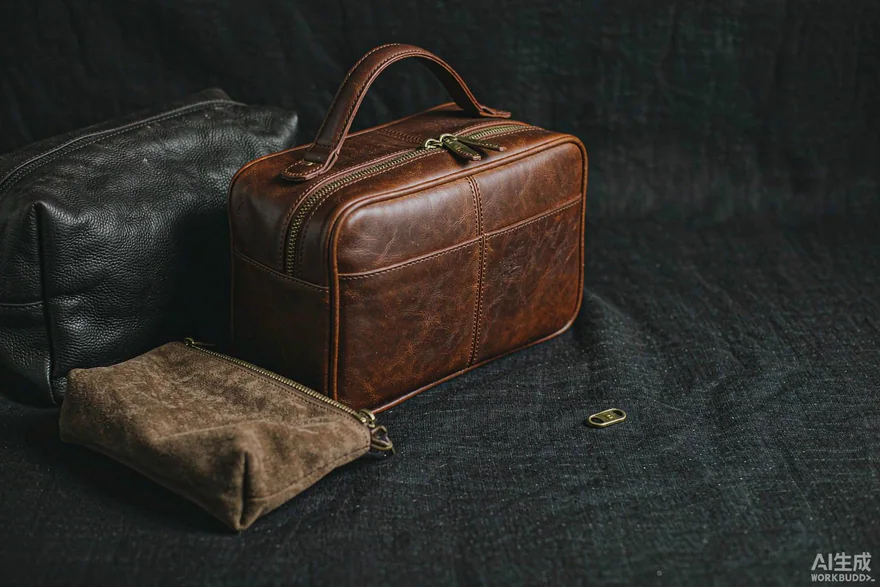
The two names entered retail language from opposite directions, and knowing which direction explains most downstream decisions about packaging copy, planogram placement and unit cost. Cosmetic bag is a contents label: it appeared alongside mass-market colour cosmetics and describes any container sold to hold lipstick, compacts and brushes. Vanity bag is a furniture label, taken from the vanity table or dressing table, and it describes a container meant to sit on that surface, open, with the contents visible and upright.
That furniture origin is why the structured object keeps acquiring second names. In British and European travel goods the structured case is a vanity case. In United States luggage the same silhouette is a train case, a name generally traced to railway travel, when a rigid case small enough to lift onto a berth carried a traveller's grooming kit. Department-store gift floors prefer beauty case, and airport and duty-free listings typically use vanity case. None of these is wrong, but each sets a different shopper expectation, and the expectation sets the price ceiling.
| Name | Where the term is standard | What the shopper pictures | Risk of using it loosely |
|---|---|---|---|
| Vanity case | UK and EU travel goods, airport retail | A rigid case that stands open on a surface | Shopper expects structure and will reject a soft pouch at that price |
| Train case | US luggage and department store | A box with a top handle and a lift-out tray | Shopper expects a handle and internal tray as standard |
| Beauty case | Gift sets, department store promotions | A mid-size structured case sold as a gift | Shopper expects presentation finishing, not a utility lining |
| Cosmetic bag | Marketplaces, drugstore, beauty e-commerce | A soft pouch that folds away | Covers a tenfold cost spread, so it cannot be costed from the name alone |
| Makeup bag | US mass retail and teen gifting | A small soft pouch for colour cosmetics | Shopper expects a lower price than a beauty case |
Cosmetic bag terminology runs the other way. Because it describes contents rather than construction, the term stretches from a 15 cm flat pouch to a 26 cm standing organiser without complaint. That elasticity is useful on a marketplace listing and dangerous inside a costed range plan: two items both called a cosmetic bag can differ by a factor of ten in unit cost, sewing minutes and carton pack-out. Buyers should treat cosmetic bag as a category word and vanity bag as a construction word, and never allow the two to be swapped in a specification sheet.
Regional habit also decides which word appears on the hangtag. A listing aimed at UK travel goods buyers converts better with vanity case; the same product aimed at US marketplace shoppers converts better with makeup bag or cosmetic bag. Because hangtags, care labels and carton marks are printed long before bulk cutting starts, the term has to be fixed at briefing stage. Changing it after artwork release means a reprint, and a reprint on a 5,000-piece programme is a pure margin loss.
- Cosmetic bag is a contents label; vanity bag is a construction label
- Vanity case and train case both imply rigidity, a handle and internal organisation
- Beauty case implies a gift presentation, not a utility interior
- Fix the printed term at brief stage, because label artwork precedes bulk cutting
Two Branches: The Structured Case and the Soft Pouch
Every product in this category sits on one of two branches. The structured branch runs from a soft-framed case through a board-stiffened case to a moulded EVA or ABS shell. The soft branch runs from a single-panel flat pouch through a gusseted pouch to a boxed bag with a base insert. Between them sits a genuine middle ground: a semi-structured bag with a base board and light wall stiffening that stands on a shelf but still folds for shipment. The branch chosen determines tooling, labour minutes and pack-out before any fabric is selected.
| Attribute | Structured vanity branch | Soft pouch branch | Where a hybrid sits |
|---|---|---|---|
| Shell | 600D polyester with PU coating, or moulded EVA 3-5 mm | 300D-600D nylon, or 12 oz canvas | 420D nylon with a light backing |
| Stiffening | PE board 2.0-2.5 mm in walls, 3 mm base board | None, or a 0.8 mm removable base insert | Base board only, no wall stiffening |
| Opening | U-zip across three sides with two pullers, opens near 180 degrees | Single top zip across 60-70 per cent of the perimeter | Wide top zip plus a boxed gusset |
| Interior | Elastic loops, bottle sleeves, lift-out tray, mirror panel | One compartment plus a slip pocket | Two compartments and four loops |
| Hardware | Base feet, top handle, metal hook, optional lock | Puller and optional wrist strap | Handle and puller only |
| Sewing time | 22-34 minutes | 6-9 minutes | 11-15 minutes |
| Footprint | 28 x 20 x 18 cm | 24 x 16 x 10 cm | 25 x 17 x 13 cm |
| Tooling | Aluminium mould for EVA shells; cutting die only for framed versions | Cutting die only | Cutting die plus a base-board die |
Labour is where the cost gap becomes visible. At a fully loaded sewing rate, the 16 to 25 extra minutes a framed case requires account for roughly $1.80 to $3.20 per unit before a metre of fabric is counted. Buyers who compare quotations on fabric alone will misread the difference every time, because the shell on a 28 cm vanity case and a 24 cm cosmetic bag can be the same 600D polyester at the same 180 g/m² weight.
Tooling is the second divider. A soft pouch in a new shape needs only a cutting die, produced in three to five days at a few hundred dollars. A moulded EVA vanity case needs an aluminium mould, which is a capital item amortised across the order: on a 500-piece run that amortisation can add $2.50 to $4.00 per unit, and by 5,000 pieces it falls below $0.40. Buyers should always ask whether mould cost is quoted separately or buried in the unit price, because the answer changes how the first reorder should be planned.
The hybrid is the most under-used option in the category. A bag with a base board, a boxed gusset and light wall stiffening stands on a shelf, photographs well, and still ships folded, so it packs 20 to 26 pieces per carton rather than 12 to 18. For a brand that wants the visual authority of a vanity case without the freight penalty, this is usually the correct starting point.
Coated and laminated shells on structured cases are assessed as coated fabrics under ASTM D751, which covers coating adhesion and hydrostatic resistance. Naming the standard in the enquiry removes vague waterproof claims from supplier quotations.
Channel, Price Architecture and the Gift Question
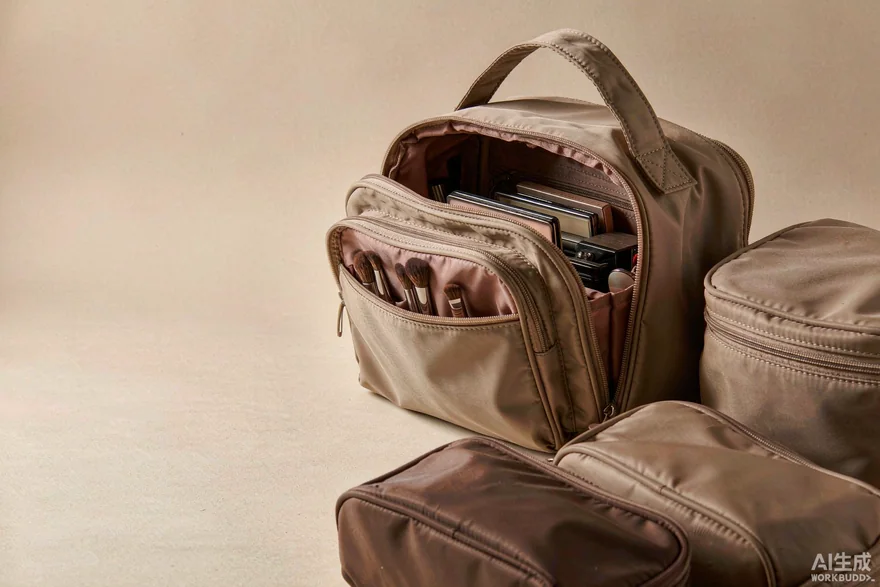
Channel decides which branch earns its margin. A structured case sells on perceived value: the shopper sees a rigid object with a handle and reads durability and giftworthiness into it. A soft cosmetic bag sells on price and colour turnover, and its margin comes from repeat purchase rather than from a single high-ticket sale. The two therefore belong in different planogram positions and different promotional calendars, even when the fabric and the brand are identical.
| Channel | Format that leads | Term printed on the label | Unit cost band | Pieces per carton |
|---|---|---|---|---|
| Airport and duty free | Structured vanity case | Vanity case | $7.00-$12.00 | 10-14 |
| Department store gift floor | Beauty case or boxed bag | Beauty case | $4.50-$9.00 | 14-18 |
| Beauty specialty retail | Boxed cosmetic bag | Cosmetic bag | $2.80-$6.50 | 20-26 |
| Marketplace and e-commerce | Flat or boxed pouch | Makeup bag | $0.45-$3.20 | 30-36 |
| Hotel and amenity | Flat pouch or amenity cube | Amenity pouch | $0.45-$1.80 | 36-48 |
| Gift with purchase | Flat pouch or quilted pouch | Cosmetic pouch | $0.90-$2.60 | 30-36 |
Price architecture follows pack-out as much as unit cost. A case that costs $7.00 and packs 12 per carton carries roughly three times the landed freight per unit of a pouch that costs $1.20 and packs 32. On a 5,000-piece order shipped FOB Xiamen, that difference can exceed the entire unit-cost gap between a mid-range pouch and a premium one. Buyers modelling margin should therefore work from landed cost per unit, not from the ex-works figure on the quotation.
Gifting is the one place where the two branches compete directly, and the structured case usually wins. A gift buyer wants an object that survives wrapping, holds its shape on a shelf and does not need explanation; a rigid case does all three. The soft pouch wins when the gift is a filler rather than the present itself, which is why gift-with-purchase programmes at the $0.90 to $2.60 band are almost entirely soft. A practical rule: above a $25 retail price point, structure is expected; below $15, softness is acceptable.
Assortment logic should follow the same split. A range built only on structured cases leaves the promotional and gift-with-purchase price points uncovered; a range built only on pouches has no anchor product to justify a premium brand position. A balanced capsule usually carries one structured case at the top, two boxed or semi-structured bags in the middle, and two or three soft pouches underneath.
Seasonality separates the branches as well. Structured cases concentrate into the fourth quarter, when gift buying peaks and a rigid object justifies a higher ticket; soft pouches sell more evenly across the year and carry the promotional calendar, gift-with-purchase tie-ins and colour refreshes. A buyer planning cash flow should expect the structured side of the range to tie up more working capital for a shorter selling window, which argues for ordering the case in fewer colourways and the pouches in more.
Packaging cost is the last line that differs by branch. A structured case often ships in an individual dust bag or a printed box, adding $0.35 to $1.20 per unit and increasing carton volume without increasing piece count. A soft pouch ships polybagged and flat at roughly $0.03 to $0.10 per unit. On a mixed programme the packaging line should be quoted per format rather than averaged across the order, because averaging hides the true margin on the case.
- Work from landed cost per unit: pack-out can matter more than unit cost
- Above a $25 retail price point, shoppers expect structure
- Gift-with-purchase bands sit at $0.90-$2.60 and are almost entirely soft
- A balanced capsule carries one structured case, two mid bags, two to three pouches
Choosing the Term for Packaging, Listing and Brief
Because the two names carry different shopper expectations, the labelling decision is a commercial decision rather than a copywriting one. The label term should match the construction the shopper will find when the bag is opened; the listing term should match the language the shopper types. Those two are frequently different, and the listing title is where the mismatch should be resolved, not the sewn-in label.
| Buying situation | Term for the label | Term for the listing title | Reason |
|---|---|---|---|
| Rigid case for airport retail | Vanity case | Vanity case with train case in bullets | Matches the shopper expectation of rigidity |
| Semi-structured bag for beauty retail | Cosmetic bag | Cosmetic bag with beauty bag in bullets | Avoids over-promising rigidity |
| Soft pouch for marketplace | Cosmetic pouch | Makeup bag | Makeup bag is the higher-volume search language in US marketplaces |
| Gift set for department store | Beauty case | Beauty case gift set | Beauty case reads as presentation-first |
| Hotel amenity programme | Amenity pouch | Travel amenity pouch | Amenity signals a disposable-use price expectation |
The brief should then state the term once and use it consistently across the tech pack, the artwork sheet and the carton marks. Inconsistent naming inside a single programme is a common cause of label reprints and of mismatched barcodes between the inner label and the outer carton. A single naming line in the brief, listing the label term and the listing term separately, costs nothing and prevents both problems.
- Minimum order quantity: 500 pieces per style and colourway
- Sampling: 6-10 working days, or 12-15 working days for moulded or framed constructions
- Bulk production: 35-50 days after sample approval
- Inspection: AQL 2.5 under ISO 2859-1
- Shipment: FOB Xiamen; payment T/T 30 deposit, 70 against bill of lading
Colours and coatings deserve one more check before the brief is released. Structured cases are frequently specified in a coated or laminated shell, and colour matching between a coated shell, a lining and a printed label is the most common source of shade disputes. Colour fastness of the shell is assessed under the ISO 105 series and print durability under AATCC methods; asking for the specific test number in the brief turns a subjective argument into a pass/fail result.
Finally, buyers should decide whether the two branches will be ordered together. A mixed order of vanity cases and cosmetic bags can share a container and a single inspection visit, which spreads the fixed cost of inspection and freight across both formats. What it cannot share is a single inspection lot: each style and colourway is sampled separately, so the inspection plan has to list every SKU individually even when the shipment moves as one container.
Timing follows from that decision. Because bulk runs 35 to 50 days after sample approval and sampling for a moulded or framed case runs 12 to 15 working days, a first structured programme needs roughly two months more lead time than a pouch programme of the same size. A buyer launching both branches for one season should brief the case first, approve the case sample before the pouch artwork is released, and hold both for a single consolidated shipment under one bill of lading.
Carton marking is frequently overlooked on mixed programmes. A case carton and a pouch carton differ in weight by a factor of three, and stacking a pallet with the heavy cartons on top is a routine cause of crushed structured cases in transit. Marking the cartons by format, specifying a maximum stack height, and stating the stacking pattern on the packing list costs nothing and prevents the single most common arrival damage claim in this category.
The B2B Customisation View
Programme planning for cosmetic bags starts with the end market: a hotel amenity run and a beauty-retail launch ask for completely different construction and compliance evidence.
Planning figures used across the programme: MOQ 500 pieces per style and colourway, 6–10 working days sampling (12–15 when moulding or multi-layer lamination is required), 35–50 days bulk lead time, AQL 2.5 to ISO 2859-1, FOB Xiamen, T/T 30/70.
The programme-management model exists because most import problems are documentation problems, and documentation is what this office produces and holds.
Which Brand Types Benefit Most
Which brand types benefit from running both branches depends on where the margin comes from. Start-up beauty brands usually begin with soft pouches, because the 500-piece minimum per style and colourway is reachable at $0.45 to $3.20 a unit and the 6 to 10 working day sampling window allows a colour range to be tested before capital is committed to tooling. Adding one structured vanity case later gives the brand an anchor product that justifies a higher price point without changing the supply programme. Established beauty brands run the reverse logic: an existing vanity case can be re-shelled in a seasonal colourway while the pouch line absorbs the promotional volume.
- Retailers and chain buyers: use the structured case as the anchor and pouches as the promotional layer, and model margin on landed cost per unit rather than ex-works price.
- E-commerce and marketplace sellers: lead with the search-language term in the title and keep the construction term on the sewn-in label to avoid mismatch returns.
- Gift and hospitality buyers: soft amenity pouches at $0.45-$1.80 for in-room use, structured beauty cases at $4.50-$9.00 for retail gift floors.
- Start-up brands: open with two pouch sizes in one colourway, confirm sell-through, then commission the structured case in a second season, when the mould amortisation can be spread across a larger reorder.
- Travel-retail and duty-free operators: specify the case at 26-32 cm with a handle and bottle loops, and expect 10-14 pieces per carton, so landed freight per unit must be built into the shelf price from the start.
- Programme coordinators handling mixed assortments: QUANZHOU JUNYUAN BAGS has coordinated bag programmes since 2014 against SGS-verified production floor space of 4,950 m² across 7 production lines and 149 machines, with monthly output capacity of 200,000 pieces, which suits mixed orders of cases and pouches under one inspection plan.
Frequently Asked Questions
Does the term vanity bag change what a supplier quotes for the same bag?
The name itself does not change the quotation, but the construction it implies does. A vanity bag implies a frame, wall stiffeners, a base board and usually a handle or feet, which adds 16 to 25 sewing minutes over a soft pouch. Buyers should quote from a tech pack that specifies stiffener thickness and hardware, never from the name alone.
How wide does a bag need to be before it is called a vanity case?
Width alone does not decide it; structure does. A 30 cm soft pouch is still a pouch. Most structured vanity cases fall between 26 and 32 cm wide with a depth of 16 to 20 cm, because that footprint lets 100 to 200 ml bottles stand upright. Below 24 cm wide, structure usually costs more than it returns.
Why is a train case heavier than a cosmetic bag of the same length?
A train case carries stiffeners in all four walls, a 3 mm base board, a handle with reinforcement plates, and often metal feet. Those components can add 250 to 400 g to an empty bag. A soft cosmetic bag of the same length carries at most a 0.8 mm base insert, which adds under 40 g.
What stiffener thickness keeps a vanity case standing when it is empty?
For a case in 600D polyester, PE board of 2.0 to 2.5 mm in the walls with a 3 mm base board is the usual specification. Below 1.5 mm the walls bow inward on a shelf. Moulded EVA shells at 3 to 5 mm need no separate stiffener because the shell itself carries the load.
Can a vanity case be built without any metal frame?
Yes. Most mid-price cases use a board-stiffened construction: PE or EVA board inserted into the wall panels and the base, with the frame effect coming from the board and the seam binding rather than from metal. Metal frame cases exist at the top of the category but add weight, cost and a corrosion risk in humid markets.
Which term do airport and duty-free listings normally use?
Vanity case is the standard term in airport and duty-free listings, and it signals a rigid, handled case to the shopper. Beauty case appears on gift floors and train case is largely North American. Using the wrong one in travel retail produces returns, because the shopper expects a case that stands open and will reject a soft pouch at a case price.
How much does an aluminium mould add to a moulded vanity case at 500 pieces?
A mould is a capital item amortised across the order, so at 500 pieces the amortised share can add roughly $2.50 to $4.00 per unit. By 5,000 pieces it typically falls below $0.40. Buyers should ask whether the mould cost is quoted separately or folded into the unit price before comparing two quotations, and should plan the second order to reuse the same tooling.
What handle specification suits a 28 cm vanity case carrying 3 kg?
A webbing handle 20 to 25 mm wide, box-stitched into the shell with a reinforcement plate behind the panel, is the standard answer. The load path should run into the wall stiffener rather than into the shell fabric, otherwise the panel tears under a full bottle load. Bar-tack the handle roots and specify a pull test on the first sample.
How is the base board specified to stop a vanity case sagging?
Use a 3 mm PE or PP board cut to the full internal footprint, with the lining folded over it rather than glued to it, so the load spreads across the whole base. Cases carrying glass fragrance bottles should also have the bottle sleeves stitched to the base panel, not to a side wall, and the board should be checked for bow after a 48-hour load trial.
Do vanity cases need feet on the base?
Feet are worth the cost when the case will stand on a wet bathroom surface or a retail shelf for long periods; four metal or moulded feet of 6 to 8 mm lift the base clear and protect the coated shell from abrasion. On a case that always travels inside a suitcase, feet add cost with little benefit.
What lining resists leakage from shampoo and fragrance oil?
A TPU-laminated or PEVA lining at 0.12 to 0.18 mm wipes clean and resists oil penetration better than plain polyester. Seams should be bound or welded rather than left raw. Fragrance oils in particular will wick through an uncoated lining and stain the shell within days, so the sample should be spot-tested with the actual product formula.
How long does sampling take for a moulded EVA vanity case?
Complex constructions run 12 to 15 working days against 6 to 10 working days for a soft pouch, because the mould has to be cut and trialled before a first sample can be assembled. Bulk then runs 35 to 50 days after sample approval. Buyers should plan the mould trial as a separate milestone and approve the trial shell before the lining is specified.
Can vanity cases and cosmetic bags ship in the same container?
Yes, and doing so spreads the fixed cost of freight and inspection across both formats. The restriction is on inspection, not on shipping: each style and colourway is sampled as its own lot under AQL 2.5, so the inspection plan must list every SKU separately even when everything moves in one container on the same bill of lading.
What inspection sampling level applies to a 2,000-piece vanity case order?
AQL 2.5 under ISO 2859-1 is the normal level for this category, which sets the sample size and the acceptable number of minor and major defects per lot. A structured case should also be opened and stood on a flat surface during inspection, because frame distortion and base sag are defects that a folded inspection misses entirely.
Which term should a hotel amenity programme print on the label?
Amenity pouch is the clearest term, because it sets a single-use or limited-use price expectation and avoids the structured-case implication that vanity case carries. Hotel programmes usually buy flat pouches at $0.45 to $1.80 per unit in large carton pack-outs of 36 to 48 pieces, and print the room category rather than a product name.
People Also Ask
Is a vanity case the same thing as a beauty case?
They overlap heavily but are not identical. A vanity case implies rigidity and travel use; a beauty case implies the same kind of object sold as a gift, often with softer presentation finishing and a lighter interior specification. A buyer should print the term that matches the channel in practice: vanity case for travel retail, beauty case for department-store gift floors.
What is a train case used for today?
A train case is a rigid, handled case used to carry cosmetics and grooming items, now sold mainly as a gift item and as structured home storage rather than for rail travel. Typical footprints are 26 to 32 cm wide, with a lift-out tray or elastic bottle loops inside, and retail prices usually sit above $25 in most markets today.
Are vanity bags still popular with shoppers?
Yes, particularly in travel retail and gifting, where a rigid case photographs well and reads as a present rather than as a plain container. Soft pouches sell in far higher unit volume because they sit at promotional price points and are bought as impulse extras. Most ranges need both formats: a structured anchor at the top and pouches underneath it.
How do I choose between a vanity case and a cosmetic bag for my store?
Start from the retail price point. Below $15, a soft pouch is accepted and protects margin. Above $25, shoppers expect structure, a handle and internal organisation, and a pouch at that price reads as poor value. Then check freight: a case packs 12 to 18 per carton against 24 to 36 for a pouch, so landed cost per unit climbs.
Request a Sample or a Written Quotation
Send the silhouette, dimensions, material preference and logo artwork, and the programme team will return a written quotation with MOQ, sampling window, bulk lead time and inspection standard.
Email: [email protected] · WhatsApp: +86 177 5002 0688